


 23:24 to watch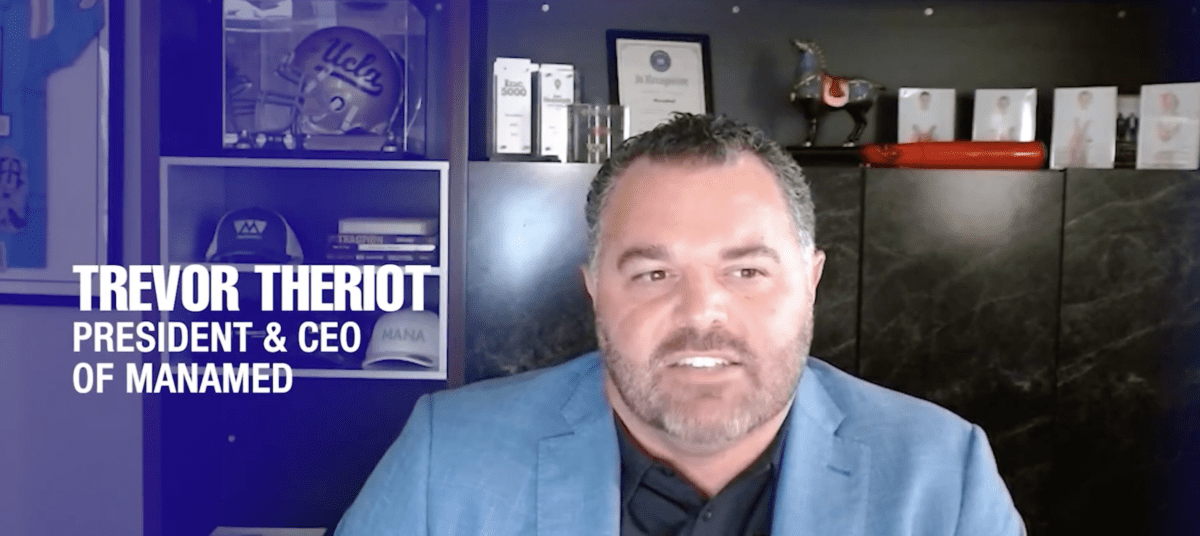

In this episode of Claim to Fame, Alex and Wayne sit down with Trevor Theriot, founder of ManaMed, to unpack his journey from standout UCLA athlete to med-tech innovator.
What’s Covered?
Trevor shares how he built ManaMed from the ground up in 2015, growing it into a self-funded, entrepreneurial powerhouse known for FDA-approved products like Plasma Flow and their expanding line of DME solutions.
He talks about the early grind, the regulatory hurdles, and the product wins that shaped the company’s reputation for quality, safety, and real patient outcomes. Trevor also gives a behind-the-scenes look at ManaMed’s ongoing innovation, including their work in red light therapy and what’s next in the med-tech space.
Podcast Transcription
Podcast Episode: Claim to Fame — Trevor Theriot, CEO & Founder of ManaMed
Guest: Trevor Theriot
Host: Alex
(0:00) Identifying a Gap in the DME Industry
Trevor explains that before founding ManaMed, he and his partners were “a bunch of old DME guys” working in billing and obtaining prescriptions from physicians. Over time, they realized there was a significant gap in the industry: existing devices could be improved, and there was an opportunity to shift from billing into full-scale manufacturing.
After ten years, ManaMed has secured more than eight Class II FDA approvals and continues expanding its design and development of DME products.
(0:24) PlasmaFlow: ManaMed’s Flagship Innovation
Trevor highlights PlasmaFlow as the product he is most proud of. PlasmaFlow helps prevent DVT in the home setting. Clinically, the highest risk periods are days 4–7 and 7–14 following orthopedic surgery. Patients often leave surgery centers with minimal pharmacologic options, so ManaMed aimed to lead the wearable med-tech movement with a regulated, FDA-cleared device suitable for home use.
(0:33) The Role of Optimism in Entrepreneurship
Trevor discusses how optimism is one of ManaMed’s core values. As CEO and founder, he feels responsible for creating a positive environment for employees and customers. Although he privately absorbs much of the pessimism and daily challenges, he remains outwardly optimistic.
ManaMed strives not only to lead in product development but also to grow its mission of giving back to patients, aiming to hear more stories of lives improved by the company’s devices.
(1:17) Introducing the Guest
Alex welcomes Trevor Theriot to the podcast, describing Claim to Fame as the number one DME podcast in the country. Trevor expresses his gratitude for being invited.
(1:27) Trevor’s Background: From UCLA Athlete to Med-Tech Entrepreneur
Trevor shares his story of growing up a standout high school athlete but receiving no Division I scholarship offers. He eventually walked on at UCLA, earned a starting position, and secured a scholarship through hard work and discipline.
After college, he entered healthcare distribution, representing brands like Ossur, DJO, and Breg. Recognizing opportunities to improve devices based on billing knowledge, reimbursement trends, and clinical needs, he transitioned into entrepreneurship and med-tech manufacturing.
ManaMed remained fully self-funded, growing slowly and grinding daily to serve its largely DME-based customer base.
(4:13) PlasmaFlow’s Clinical Rationale and Market Need
Trevor reiterates why PlasmaFlow has been successful: it supports DVT prevention during critical post-surgical periods. As the industry shifts toward opioid reduction and wearable medical technology, a compliant, FDA-cleared, prescription-only device fills a major gap for both surgeons and DMEs.
(5:01) Writing an FDA 510(k) From Scratch
Trevor explains the early challenge of writing a 510(k) submission with limited resources. After researching the FDA website, he realized the complexity and cost of hiring consultants. Instead, he wrote the entire submission himself—from summaries to clinical sections to performance testing.
ManaMed received FDA clearance on April 1, 2016 — which he initially believed was an April Fool’s prank. Since then, the company has served more than 2 million patients.
Importantly, ManaMeddoes not bill for its products, ensuring no competition with its DME customers.
(6:38) FDA Submissions: Class II vs. Class III
Trevor details the typical reliance on consultants for regulatory submissions. ManaMed’s first Class III approval — for Monofuse, an ultrasound bone growth stimulator — was especially meaningful because the FDA informed him he was the first non-consultant to personally author a Class III PMA submission since 1986.
Today, ManaMed has a full regulatory and quality team, but Trevor still pushes them by leveraging his hands-on experience.
He emphasizes that the FDA’s core priority is ensuring devices are safe and effective and that ManaMed aims to innovate while improving patient outcomes and speeding discharge times.
(8:31) Customer-Driven Product Development
Unlike large companies that may take 5–7 years to release a new product, ManaMed collaborates directly with DMEs to identify needs and prototype solutions quickly. If a device fits the company roadmap, they can produce a prototype within 30 days and secure FDA clearance in as little as eight months.
(9:06) Why ManaMed Avoids Billing and Focuses Solely on Manufacturing
Trevor outlines why ManaMed chooses not to act as a DME:
- They understand billing and coding but avoid conflicts of interest.
- They will not sell a device to a customer and then send a representative to take the same referral.
- Their model is purely manufacturing and partnering with DMEs for mutual growth.
They offer guidance on reimbursement trends, LCDs, and Medicare policy while maintaining clear legal boundaries.
(10:39) Working With Medicare and Developing New HCPCS Codes
ManaMed is currently developing a new product that will undergo the full HCPCS process, potentially establishing a new reimbursement code and fee schedule. Trevor hopes this becomes another legacy contribution to the industry.
(11:04) Challenges of Growing a Med-Tech Company
Trevor highlights the toughest aspects:
- Staying fully self-funded
- Navigating regulatory complexity
- Convincing providers to adopt new products
Despite having fewer than 30 employees, ManaMed has succeeded by hiring the right people and targeting specific segments of the DME industry.
(12:12) Maintaining Optimism in a Difficult Healthcare Environment
Trevor explains that competitive bidding and market pressures create significant pessimism within DME. However, patient outcomes and mission-driven innovation keep him motivated.
ManaMed also faces challenges from overseas device clones but remains focused on quality, customer relationships, and fair pricing.
(13:49) Patient Stories That Drive Impact
Trevor shares two powerful stories:
Early Career Knee Brace Fitting
Before founding ManaMed, he fitted a patient with a knee brace in her home. After adjusting the brace, her knee instability disappeared — a moment that reinforced the human impact of the work.
Lymphedema Patients Using Monoflow Devices
ManaMed introduced the first cordless pneumatic compression pump to receive a reimbursement code. Patients reported decreased swelling and appreciation for a simpler, tube-free solution.
(15:55) Measuring Success Beyond Revenue
Trevor believes true impact comes from:
- Improved patient outcomes
- Employee-driven innovation
- Clinician involvement in product design
He shares how employee suggestions led to ManaMed developing a red light therapy device, soon launching with USMCA compliance.
(18:04) Red Light Therapy and New Innovations
ManaMed aims to stay strictly in the medical device space — unlike consumer brands — but is excited to bring medical-grade red light therapy to orthopedic and DME partners.
The company is already exploring braced-integrated versions and rapid release timelines.
(18:56) Long-Term Vision for ManaMed
In the next 10 years, ManaMed aims to:
- Become the market leader in Class II wearable devices for DMEs
- Expand its product pipeline
- Build a strong reputation for patient impact (“this product saved my life”)
- Increase brand recognition, even imagining a future Super Bowl commercial
(21:01) Rapid Fire Round
Trevor responds:
- Game day or boardroom day? Game day
- Startup grind or corporate polish? Startup grind with a touch of polish
- Weight room workout or morning meditation? Weight room
- UCLA football win or product launch? UCLA win
- Big risk or steady growth? Big risk
- Coffee or protein shake? Protein shake
- Innovator or operator? Innovator
- Coaching or being coached? Coaching
(22:15) How to Reach ManaMed
Trevor invites listeners to visit ManaMed.com and contact the company directly. He encourages DMEs with questions about e-codes, competitive bidding, lymphedema codes (E0651/E0652), or new product opportunities to reach out.

Explore More Episodes