


 23:53 to watch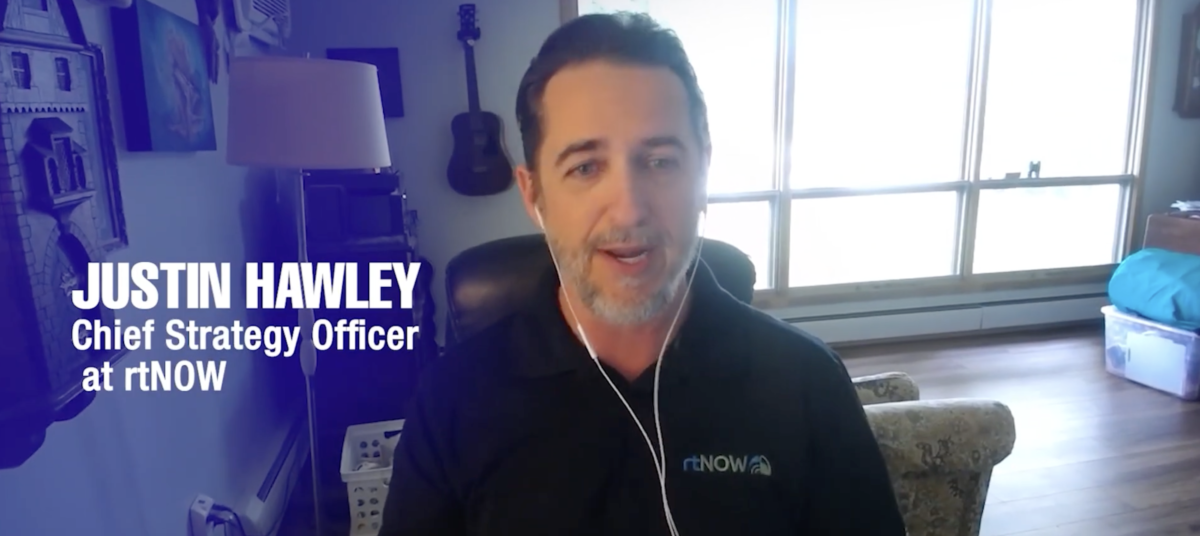
In this episode of the Claim to Fame podcast, Alex and Wayne interview Justin Hawley, co-inventor of tele respiratory care and a leader at rtNOW.
What’s Covered?
Justin shares his journey from a communication professional to pioneering telehealth solutions in respiratory care. He explains the evolution and operations of rtNOW, its impact on the industry, and how it addresses challenges like staffing shortages and regulatory issues. Justin also discusses the future of telehealth in the DME industry and provides insights into effective business positioning in healthcare. The episode concludes with rapid-fire questions and encourages listeners to tune in for more innovative discussions.
Podcast Transcription
Podcast Episode: Claim to Fame — Justin Hawley, co-inventor of tele respiratory care and a leader at rtNOW
Guest: Justin Hawley
Host: Alex & Wayne (NikoHealth)
(00:00) The Power of Relationships in Respiratory Care
Alex:
The strength of what we do at rtNOW is putting patients into a direct relationship with a respiratory therapist. That relationship is the secret sauce behind everything we do.
Alex:
How does rtNOW make respiratory therapist teams more efficient instead of replacing them?
Justin Hawley:
There’s been a respiratory therapist shortage long before COVID, and it’s only worsened. If a DME has respiratory therapists, the last thing you want is for them spending time on CPAP education when they should be focused on high-value clinical work. We exist to support them — not replace them.
(01:10) Welcome to the Claim to Fame Podcast
Alex:
We’re live on the Claim to Fame podcast. Today we’re joined by Justin Hawley. Welcome, Justin.
Justin Hawley:
Thanks for having me.
Wayne:
Happy to have you on, Justin.
(01:22) The Origins of Tele-Respiratory Care
Alex:
You’ve been called the co-inventor of tele respiratory care. How did this all begin?
Justin Hawley:
My background is in communications. I eventually joined a company focused on per-diem respiratory therapist staffing. At the time, therapists were driving hours to rural hospitals for short visits. It wasn’t scalable.
So I started asking: Is there a better way?
That question led to piloting tele-respiratory care at a rural hospital — and it worked so well that clinicians asked us to stay. That was the beginning of rtNOW.
(03:45) How rtNOW Supports DME Providers
Wayne:
How do DME providers use rtNOW today?
Justin Hawley:
We pioneered remote CPAP setup and adherence support. We handle virtual setups, 90-day adherence, and ongoing monitoring for CPAP, BiPAP, and NIV patients.
We document symptom improvement, usage, and settings to meet CMS requirements, and we proactively engage patients when issues arise. That helps DMEs stay compliant, improve outcomes, and set themselves up for resupply.
(06:44) Solving the Biggest DME Challenges
Alex:
What are the biggest challenges DMEs face today?
Justin Hawley:
Staffing shortages, thin margins, and constant regulatory change. Our role is to remove barriers between patients and licensed respiratory therapists — not dilute care or replace relationships with technology.
(09:28) Positioning in Healthcare
Alex:
What’s the secret to positioning a healthcare business in a way that’s hard to copy?
Justin Hawley:
Go where others won’t. When the industry sees obstacles, we see opportunities. We take incredibly complex problems and make them simple — and that’s very hard to replicate.
(13:15) The Future of Telehealth in DME
Wayne:
What role will telehealth play in the future of DME?
Justin Hawley:
It’s critical. Hospitals are moving into the home, and DMEs must offer more than supplies. The future is built on relationships, supported by technology — not replaced by it.
(22:27) Rapid-Fire Round
Big dream or small win?
Big dream
Start with the story or the data?
The story
Work late or wake up early?
Work late
Innovation or execution?
Innovation

Explore More Episodes