


 28:49 to watch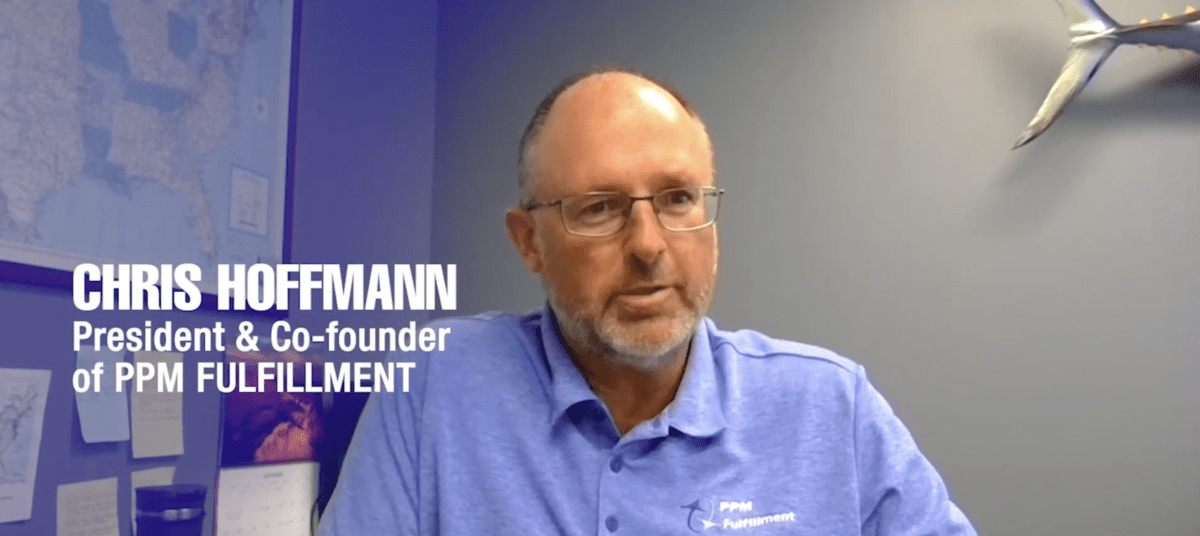
In this episode of the Claim to Fame podcast, Chris Hoffman from PPM Fulfillment shares insights on the journey of building a fulfillment company from 2009 to now.
Before You Press Play
Chris discusses his experience in supply chain distribution, the evolution of the CPAP supplies market, and the importance of being nimble and customer-centric in the fulfillment industry. He touches on the impact of COVID-19, the significance of e-commerce integrations, and the prospects of AI in logistics. Chris also emphasizes the value of outsourcing fulfillment for DME companies to enhance efficiency and reduce costs.
Podcast Transcription
Podcast Episode: Smarter Supply Chain for DME
Guest: Chris Hoffman, Co-Founder and President of PPM Fulfilment
Hosts: Alex & Wayne (NikoHealth)
Chris Hoffman: [00:00:00]
I’m a co-owner, one of the founders, and we started this in 2009. It kind of scares me when I think about that occasionally. What are we, 16 years in? A lot’s happened in this industry over the 16 years.
Alex: [00:00:11]
What do you think? Like, the traditional fulfillment world still gets wrong about supporting clients?
Chris Hoffman: [00:00:17]
That one size fits all, one price point fits all, one solution fits all. I don’t want to ever feel like I’m a cookie cutter company from that standpoint. You hate to just always plug people into the same solution.
Alex: [00:00:28]
Do you think the US fulfillment industry is ready for the next 5 to 10 years of demand? When it comes to the DME side of things?
Chris Hoffman: [00:00:35]
I really do. The competitors that are in this market with me—I can’t downplay them at all. They’re good competitors. They’re great. I just hope they acknowledge it. We do a good job in that standpoint, I think we’re going to be well suited for it. Everybody has a place. Everybody serves a special market. There’s so much change going on in the freight business. The thing we battle with is, man, they got a hold of surcharges during COVID, and they love that word. So we’re constantly battling with our carriers. One of the things we do, and I alluded to it, is we are in business outside of this too, to help bring that leverage back into this industry.
Wayne: [00:01:11]
Alright, we are live on the number one podcast in the USA. Claim to Fame, Chris Hoffman from PPM Fulfillment. Welcome to the show.
Chris Hoffman: [00:01:20]
Well, I’m glad to be here on the number one DME podcast. I like it.
Alex: [00:01:23]
Yeah. Welcome, Chris. Your first podcast.
Chris Hoffman: [00:01:26]
Yeah, very first. Listen to many. Hopefully, it’s not as bad as what I’ve heard in the past.
Wayne: [00:01:31]
Before we get too far, can you let everyone know a little bit about who you are and your company?
Chris Hoffman: [00:01:39]
You bet. Chris Hoffman, dad of one, husband of one. Been at PPM Fulfillment as co-owner and founder since 2009. Started with a small warehouse, hustling like crazy, no big backing. Over the years, we’ve advanced but always stayed in the Louisville, Kentucky area. One location, serving nationwide. The goal was always to streamline inventory for patients and customers.
Alex: [00:02:30]
Take us back before PPM Fulfillment. How did you first get into supply chain and distribution 16 years ago?
Chris Hoffman: [00:02:41]
How about Forrest Gump style? Before PPM Fulfillment, we were selling freight—FedEx, mail services—helping customers get lower rates. In 2008–2009, the resupply model in CPAP supplies started gaining momentum. We realized one manufacturer can’t control dropship entirely due to multiple devices and accessories, so we helped fill that gap. It was a lot of education back then; the way we spoke to customers in 2009 is drastically different from 2025.
Alex: [00:04:25]
Resupply is now a hot topic. Back then, was it educational?
Chris Hoffman: [00:04:30]
Yes, the golden age of DME. Not a lot of competition, so it was fun, but frustrating—teaching people new ways of doing things.
Alex: [00:04:54]
Were there others like you?
Chris Hoffman: [00:05:00]
We were first, maybe a week before another company. But in the early days, we partnered with Med Group, a group purchasing organization, and had contacts with Med Sage. It snowballed from there.
Wayne: [00:06:13]
You emphasize being nimble and custom. What does the traditional fulfillment world still get wrong?
Chris Hoffman: [00:06:25]
One size fits all solutions. I hate cookie-cutter approaches. We’ve done pricing in multiple ways for different customers—monthly vs. three-month supplies, e-commerce pricing, freight analysis. It’s all about not hurting clients with a one-size solution.
Alex: [00:08:01]
You work with startups and large companies. What’s the most common pain point for new clients?
Chris Hoffman: [00:08:15]
Change management is hard. Organizational issues and getting the right data upfront—garbage in, garbage out. Helping clients navigate the process without telling them they’ve made mistakes is key.
Wayne: [00:09:29]
Favorite type of client?
Chris Hoffman: [00:09:38]
Scrappy startups are fun, but they need to have a small established base. We help them grow, integrate with manufacturers, and improve systems. Watching that growth over years is rewarding.
Alex: [00:11:00]
System integration makes a huge difference.
Chris Hoffman: [00:11:12]
Absolutely. Sleep labs or doctor offices doing DME on the side have the hardest integration challenges.
Alex: [00:11:47]
Your service lowers the barrier of entry for new market participants?
Chris Hoffman: [00:12:03]
Exactly. You don’t need massive inventory. We focus on a few key manufacturers to keep it simple and open doors for patients.
Alex: [00:12:27]
Products beyond CPAP?
Chris Hoffman: [00:12:36]
Mainly CPAP. We’ve looked at diabetic products but the market consolidated quickly. We can hold inventory for experimentation. Mid-level and regional players are our target.
Wayne: [00:13:26]
Biggest logistics trend right now?
Chris Hoffman: [00:13:43]
COVID changed the market. Carriers love surcharges, and we battle that constantly. Settling of the market over the last 4–5 years has been the biggest trend. Customers now understand freight and shipping better than ever before.
Alex: [00:16:46]
Do you think the US fulfillment industry is ready for the next 5–10 years of demand on the DME side?
Chris Hoffman: [00:17:02]
I do. Competitors are strong, but everybody has their place. We focus on being customer-centric, helping with e-commerce, cash-pay, and retail integrations. This will prepare the industry for future demand.
Alex: [00:18:03]
Talk to us more about the e-commerce side. What’s the lay of the land?
Chris Hoffman: [00:18:14]
E-commerce is growing rapidly. Customers are educated that retail works. We handle Shopify, BigCommerce, WooCommerce, and API integrations to connect with client systems seamlessly. Some clients also run secondary businesses like garments or health/well-being products.
Alex: [00:19:37]
The economies of scale from other markets help lower costs in DME?
Chris Hoffman: [00:19:50]
Exactly. Volume and diversification give better leverage with freight companies, which benefits our DME clients.
Wayne: [00:20:25]
How do you see AI shaping up in your industry?
Chris Hoffman: [00:20:38]
AI will help upstream in resupply—understanding patterns, data on patients, and logistics optimization. Warehousing, package dimensions, cost reduction, and even assisting carriers are likely future applications. It’s happening fast.
Alex: [00:22:16]
AI robotics in warehouses is insane now.
Chris Hoffman: [00:22:33]
Shows like the one in Chicago demonstrate it—warehouses run with minimal human intervention. Adding AI will accelerate this further.
Wayne: [00:23:14]
Chris, what advice would you give owners overwhelmed by fulfillment challenges?
Chris Hoffman: [00:24:03]
Outsource fulfillment. Smaller companies often have employees multitasking with packaging, which is inefficient. Move value upstream—let experts handle fulfillment. Know your costs, factor in employee and inventory expenses, and remove headache costs. It’s critical for DME/HME companies.
Wayne: [00:26:55]
Rapid-fire segment: Faster shipping or lower costs?
Chris Hoffman: [00:27:11]
Both—fast response shipping.
Wayne: [00:27:26]
Warehouse technology: robots or people?
Chris Hoffman: [00:27:26]
People, due to complexity and SKU variety.
Wayne: [00:27:34]
API or Shopify integration?
Chris Hoffman: [00:27:34]
Shopify.
Wayne: [00:27:44]
Worst nightmare: inventory errors or late shipments?
Chris Hoffman: [00:27:44]
Inventory errors—they always lead to late shipments.
Wayne: [00:27:56]
Logistics: art or science?
Chris Hoffman: [00:28:02]
Science.
Wayne: [00:28:12]
How can listeners contact you or PPM Fulfillment?
Chris Hoffman: [00:28:12]
Visit pmfulfillment.com or email me at chris@pmfulfillment.com.
Wayne: [00:28:37]
Thanks so much for joining us, Chris.
Chris Hoffman: [00:28:34]
Thank you. It was a pleasure talking to both of you.

Explore More Episodes