


Are you considering starting a durable medical equipment (DME) company? With the DME market expected to surpass $76 billion by 2026, now is an excellent time to enter this rapidly growing industry. However, starting a DME company requires careful planning and adherence to strict regulations. This comprehensive guide will cover the essential steps to start a durable medical equipment business and position it for long-term success.
How to Start a DME Company [5 Main Steps]
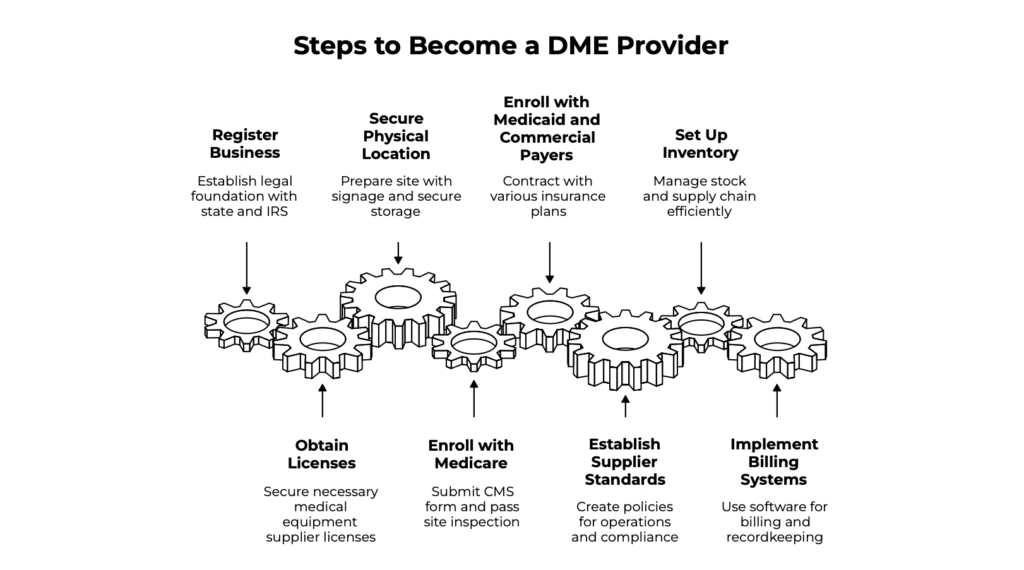
Starting a DME company is more than just selling medical equipment — it requires a balance of compliance, operations, patient care, and financial management. Each of the steps below plays a critical role in building a legally compliant, scalable, and profitable DME business.
By approaching these steps strategically, you can reduce startup risks and establish a strong foundation for long-term growth.
1. Understand the DME Industry and Regulations
Before diving in, it’s crucial to familiarize yourself with the DME industry and its regulations. DME includes a wide range of medical equipment intended for long-term use, such as wheelchairs, oxygen equipment, and hospital beds. The federal government closely monitors the DME industry to prevent fraud and ensure quality care.
2. Obtain Necessary Licenses and Certifications
To start a durable medical equipment business, depending on your state and business model, you may need various licenses and certifications to operate legally. This may include a business license, sales tax permit, and specialized DME license. If you plan to bill Medicare or Medicaid, you’ll need to register as a provider.
3. Establish Supplier Relationships and Inventory
Building strong relationships with reputable DME suppliers is crucial for ensuring a steady supply of high-quality products at competitive prices. Research distributors and negotiate favorable terms to reduce your overhead costs. Carefully select your inventory based on market demand to avoid overspending on slow-moving items.
4. Hire Qualified Staff and Set Up Your Facility
Depending on your business model, you may need a physical location or operate primarily online. Ensure your facility meets all necessary regulations and accessibility requirements. Hire knowledgeable and compassionate staff members who can provide exceptional customer service and support.
5. Implement Effective Marketing Strategies
In the competitive DME market, effective marketing is essential for attracting and retaining customers. Develop a comprehensive marketing plan that includes a user-friendly website, social media presence, targeted advertising campaigns, and community outreach efforts. Building strong relationships with healthcare providers and referral sources can also be invaluable.
Understand Costs, Reimbursement, and Profitability
Startup costs can vary, but many industry guides estimate that starting a full-fledged DME business in the U.S. typically falls between about $70,000 and $150,000 or more, including licensing, accreditation, inventory, staffing, and operational needs. Revenue often depends on insurance reimbursements, which require accurate documentation and timely billing. Some products generate one-time revenue, while others (such as CPAP supplies or diabetic products) offer recurring income.
Revenue in the DME industry largely depends on insurance and Medicare reimbursements, which require meticulous claims documentation and adherence to Medicare medical necessity criteria to avoid denials and ensure cash flow. CMS data shows DMEPOS reimbursement is governed by detailed Medicare fee schedules and billing rules, and suppliers must enroll and maintain compliance to continue billing.
Startup and profitability in the DME industry depend on managing high upfront costs while leveraging recurring-revenue products to stabilize long-term cash flow.
Sustainable revenue relies on accurate billing, strict documentation, and compliance with Medicare and insurance rules set by Centers for Medicare & Medicaid Services to avoid claim denials and reimbursement delays.
How Technologies Help in Starting DME Business
Technology is a major advantage for today’s DME companies, especially as your business starts to grow. DME-specific software can simplify everyday tasks like billing, inventory tracking, order management, and compliance paperwork, all in one place.
Automating these processes helps reduce manual errors, shortens reimbursement timelines, and gives you a clearer picture of how your business is performing. With scalable systems in place, it’s much easier to add new products, serve more patients, or even open additional locations without putting extra strain on your team.
Investing in the right technology early on sets your business up for smoother operations and stronger long-term profitability.
How to Start a DME Company with NikoHealth?
As you embark on your DME business journey, consider partnering with NikoHealth, a leading provider of innovative DME/HME software solutions. NikoHealth offers a comprehensive suite of solutions designed to streamline operations and optimize performance for DME businesses. From inventory management to order processing and billing, NikoHealth’s integrated platform empowers you to focus on delivering exceptional care while efficiently managing your business operations. With NikoHealth as your partner, you can confidently navigate the complexities of the DME industry and position your business for success.

FAQ About How to Start a DME Company?
How much does it cost to start a DME company?
The cost to start a durable medical equipment company typically ranges from $50,000 to $150,000, depending on your business model and location. Major expenses include business formation, licensing, accreditation, insurance, initial inventory, and billing software. If you plan to carry inventory, warehouse space and upfront product purchases can significantly increase costs.
Companies that focus on dropshipping or limited product lines often start on the lower end. Ongoing costs such as staff, compliance, and renewals should also be budgeted from the beginning.
How to start a medical supply business?
To start a medical supply business, begin with market research to identify demand, competition, and profitable product categories. Next, register your business, obtain required state licenses, and secure liability insurance. Accreditation and payer enrollment are essential if you plan to bill insurance or Medicare.
You’ll also need supplier relationships, a compliant billing process, and inventory or fulfillment systems. Finally, develop a marketing strategy to reach referral sources such as physicians, clinics, and home health agencies.
How to open a DME company?
Opening a DME company involves several structured steps focused on compliance and operations. First, form a legal business entity and obtain a tax ID and business bank account. Then complete accreditation, obtain a surety bond, and enroll with insurance payers if applicable.
You must also set up compliant documentation, delivery processes, and customer service procedures. Once approved and operational, you can begin accepting patients and fulfilling equipment orders.
Is durable medical equipment business profitable?
Yes, the durable medical equipment business can be profitable, but success depends heavily on compliance, efficiency, and payer mix. Profit margins vary by product, with items like CPAP supplies, mobility aids, and recurring consumables often generating steady revenue. Insurance reimbursement rates and billing accuracy play a major role in profitability.
While startup and compliance costs are high, well-managed DME companies can achieve long-term, scalable income. Strong referral relationships and operational discipline are key drivers of sustained profits.
 Abby Rapcienski">
Related Articles