


 36:14 to watch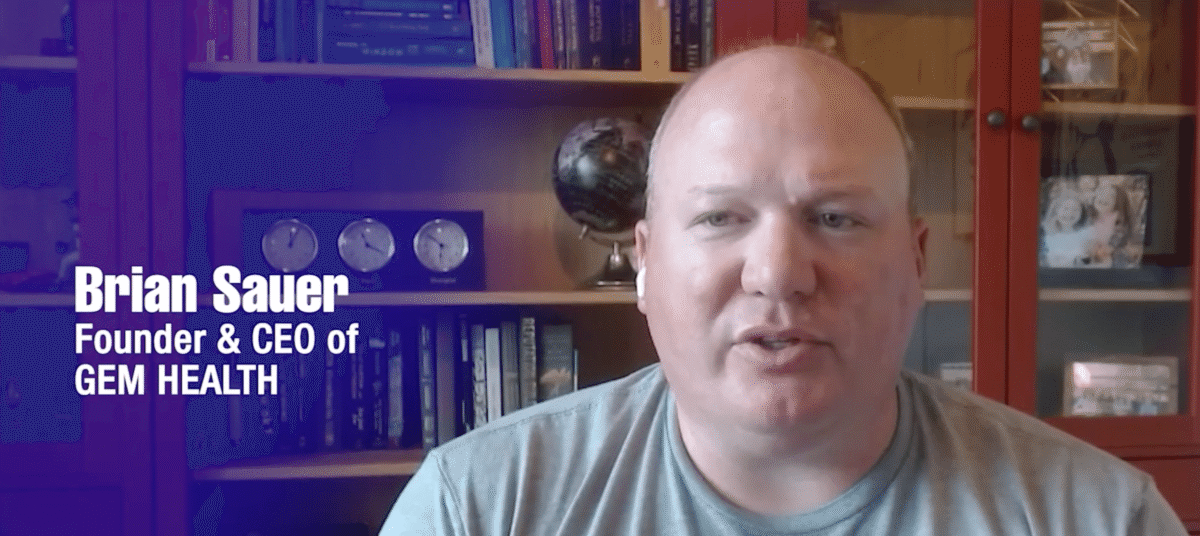
In this episode of the Claim to Fame podcast, Alex and Wayne sit down with Brian Sauer, CEO of Gem Health and a 40-year veteran of the healthcare industry.
What’s Covered?
Brian shares the personal and professional experiences that inspired him to launch Gem Health, a virtual clinic focused on modernizing sleep apnea diagnosis and treatment. Frustrated with outdated, fragmented processes, Brian created Gem Health to deliver a streamlined and patient-centered experience.
He breaks down the most common gaps in sleep apnea care, the innovative solutions Gem Health provides, and how they support patients from diagnosis through long-term treatment. Brian also talks about insurance coverage, the role of technology, and how Gem Health plans to expand into additional specialty areas.
Podcast Transcription
Podcast: Claim to Fame – The #1 DME Podcast
Guest: Brian Sauer, CEO & Founder of Gem Health
Hosts: Alex & Wayne (NikoHealth)
(00:00) The Problem: Dead Ends in the Sleep Apnea Journey
Brian:
In healthcare, a lot of systems have dead ends — some intentional, some just “set it and forget it.”
For me, the dead end was simple: I wasn’t willing to sleep in a sleep lab.
(00:12) How Do You Measure Success?
Alex: How do you measure success effectively?
Brian:
There are three core measures:
- Clinical outcomes — Are patients actually improving?
- Experience — Do patients feel supported and guided?
- Cost — Are we reducing the financial burden for patients and payers?
(01:12) Introducing Brian Sauer & Gem Health
Alex: Welcome Brian!
Brian:
I’m a 20+ year healthcare veteran — UnitedHealth Group, Optum, and previously CEO of Velo Health.
I founded Gem Health 3.5 years ago, largely from a personal experience with sleep apnea.
I didn’t want to wait 3–4 months for a sleep lab.
When I looked at the landscape, it was clear:
The sleep apnea journey was fragmented, slow, confusing, and full of dead ends.
Gem Health/Gem Sleep exists to fix that.
We’re a virtual clinic integrated all the way through treatment — diagnosis, CPAP initiation, coaching, supplies, and long-term support.
(03:04) What Felt Broken as a Patient & Leader
Brian:
Three main issues stood out:
- Sleep labs as the only path — a dead end for many (including me).
- Online home tests were mostly cash-pay — another dead end for many patients.
- After diagnosis, patients were abandoned — “Here’s your CPAP. Good luck.”
Gem was built to solve all three:
- Insurance-covered care
- Virtual visits
- Home sleep testing
- Full treatment and support pathway
“Clinically sound, patient-centered, insurance-covered.”
(05:38) What Happens When a Patient Visits the Site?
Brian:
We run two sites:
- gem.health – corporate site
- mygemsleep.com – patient-facing experience
We built the journey to meet people where they are:
Path A: “I think I might have sleep apnea.”
Start with a quick assessment → virtual visit → home sleep test → treatment.
Path B: “I’m diagnosed but stuck.”
We help them start therapy (CPAP or alternatives).
Path C: “I’m on CPAP but need help.”
We offer:
- Coaching
- CPAP resupply
- Data-driven optimization
Speed Matters
Gem reduces an industry-standard 2–3 month process to 2–3 weeks:
- Virtual visit in days
- Home sleep test in 7–10 days
- Diagnosis in 24–48 hours
- CPAP delivered in 5–7 days
(09:22) Why People Avoid Traditional Sleep Testing
Brian:
Many patients are reluctant – they don’t believe they have sleep apnea or fear the sleep lab.
Gem’s virtual, home-based approach removes that friction.
Net Promoter Score (NPS): 70+, exceptionally high for healthcare.
For the ~5% who need higher-touch care, Gem doesn’t abandon them – we refer to labs or specialists.
(11:21) How Brian’s Background Shaped Gem
Brian:
I’m a product and ops guy. My approach:
- Build what patients actually want, not just digitize old processes.
- Test every device and mask personally.
- Pair clinical rigor with consumer-grade usability.
Insurance Matters
People want care that works with their insurance.
Gem originally launched cash-pay but saw far higher adoption once insurance was added.
(15:18) How Gem Convinces Payers & Providers
Brian:
We work with payers who:
- Are progressive about virtual care
- Care about member experience
- Track cost-of-care improvements
Value to payers:
- Lower episode cost
- Higher patient satisfaction
- Faster access
- Prevention of downstream comorbidities
(17:09) What Success Looks Like
Brian breaks it down:
- Clinical outcomes. Reduced AHI, improved sleep quality, long-term health risk reduction.
- Experience outcomes. High NPS, satisfaction, ease of use.
- Cost outcomes. Traditional pathway: $1000–1500
Gem pathway: $300–400
(19:30) The Human Side
Brian:
Patients tell us daily that Gem exceeded their expectations—speed, cost, ease.
A recent patient summarized our entire value prop in a single post:
“Convenient, cost-saving, and unbelievably easy.”
Those stories are the fuel.
(22:06) What Excites Brian About Innovation
Telehealth has evolved dramatically—licensing, integrations, virtual visit infrastructure.
A product that once took 12 months to launch now takes 6 months…
With AI, maybe 6 weeks.
AI’s Role
- Automating low-touch workflows
- Faster iteration
- Better integrations
But healthcare still requires human oversight:
“What deserves a human touch vs. a technology touch?”
Gem uses AI where appropriate but keeps humans in the loop.
(25:45) Connecting the Dots in Specialty Care
Sleep apnea is the starting point, but not the end.
Demand signals from patients:
- Insomnia support
- GLP-1 related sleep/weight issues
- Broader sleep conditions
- Potential expansion into other specialties once infrastructure is scaled
Gem will expand thoughtfully – master sleep first, then broaden.
(28:40) How Gem Approaches Resupply Differently
Resupply only makes sense when tied to outcomes.
Example:
If AHI spikes + mask hasn’t been replaced in 6 months → coach intervenes → show data → resupply becomes purposeful, not automatic.
Gem’s approach is patient-first, not protocol-first.
They also believe strongly in oral appliance therapy and plan to expand offerings.
(32:05) Brian’s Billboard Message to Healthcare Leaders
“Put the patient first.”
Don’t lead with clinical ego, provider needs, tech capabilities, or marketing.
Lead with what patients actually need.
(34:12) Quick Hits with Brian
- Coffee or emails first? Emails (Brian doesn’t drink coffee)
- Sleep mask or blackout curtains? Sleep mask
- Startup chaos or corporate structure? Startup chaos
- Book smarts or street smarts? Street smarts
- Perfect 8 hours or unlimited energy? Perfect 8 hours – long-term health matters
- Video on or off for meetings? Video on (virtual care culture)
- Netflix binge or live sports? Live sports game

Explore More Episodes