


 33:00 to watch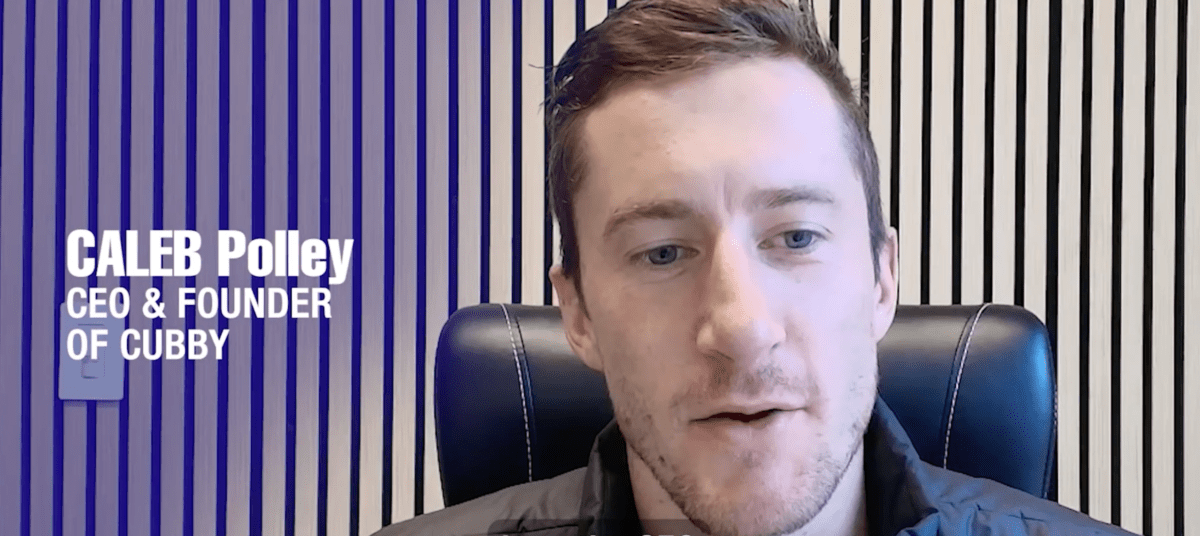
In this episode of the Claim to Fame Podcast, Caleb Polley, CEO and founder of Cubby Beds, discusses his journey from a teenage entrepreneur to creating innovative smart safety beds designed to support children with disabilities.
What’s Covered?
Caleb shares the inspiration behind Cubby Beds, driven by the need to improve sleep, safety, and sensory regulation for children with conditions such as autism, cerebral palsy, and Down syndrome. He emphasizes the importance of real-world feedback in product development and highlights the impact of Cubby Beds on improving the lives of children and their families. Caleb also reflects on the business challenges faced, particularly during the onset of COVID-19, and outlines the future vision for the company, including technological advancements and potential new products. The episode wraps up with a rapid-fire round, adding a fun and personal touch to the insightful discussion.
Podcast Transcription
Podcast: Claim to Fame – The #1 DME Podcast
Guest: Caleb Polley, CEO & Founder of Cubby Beds
Hosts: Alex and Wayne (NikoHealth)
(00:00) Introducing Cubby Beds
Caleb Polley:
I’m the CEO and founder of Cubby. We build smart safety beds designed primarily for kids with disabilities and special needs. Our beds support sleep, safety, and sensory regulation – three areas that deeply impact both children and their families.
(00:12) Why Families Needed Something Better
Alex:
What were you seeing in families’ experiences that made you think, we have to do better than what exists today?
Caleb:
Many families were building beds themselves — in backyard workshops, with Amish craftsmen, or by modifying adult-sized cribs. These DIY beds often looked frightening: oversized wooden boxes with bars and ceilings.
We wanted the opposite — something friendly, modern, calming, and safe. We designed Cubby Beds with premium fabrics, a home-decor feel, and integrated technology that elevates both safety and comfort.
(00:32) What’s the Future of Cubby?
Caleb:
We have huge ambitions. Right now, nearly one million people have signed up to express interest and complete our 20-question qualification survey. That demand represents an enormous opportunity to help more families — and to grow a large, sustainable business.
(00:58) Welcome to the Claim to Fame Podcast
Alex:
We’re live with Caleb Polley from Cubby Beds. Caleb, thanks for joining us.
Caleb:
Thanks for having me. Excited to be here.
(01:12) What Does Cubby Do?
Caleb:
Cubby makes smart safety beds for kids with a wide range of disabilities — autism, cerebral palsy, epilepsy, Down syndrome, and more than 100 unique conditions. We focus on three core needs:
- Sleep: Many of these children sleep only a few hours a night, affecting the entire family.
- Safety: Risks include falls, elopement, and seizures.
- Sensory Regulation: Anxiety and sensory sensitivities often worsen sleep and safety issues.
(02:26) What the Product Actually Is
Caleb:
It’s hard to picture without seeing it, but imagine a tech-enabled, protective “pod bed” that sits over a traditional mattress.
Features include:
- Soft, padded enclosure
- Entrapment-prevention safety sheets
- Circadian rhythm lighting
- White noise, music, and nature sounds
- Vibration pads for tactile input
- Aromatherapy and weighted blankets
- Cameras, microphones, and sensors for remote monitoring
- Alerts for movement, sound, and behaviors
Parents can monitor their child from anywhere. Providers can use recorded data to adjust care plans — for example, reviewing footage after a seizure.
Most importantly, the majority of Cubby Beds are funded by insurance or Medicaid. Navigating coverage has become almost a “second product” for us.
(04:16) Customization for Each Child
Caleb:
Every child has different needs. Age, diagnosis, sensory preferences — all of that affects how we configure the bed. Our software and hardware are designed to adapt.
(04:35) Caleb’s Entrepreneurial Roots
Wayne:
Apparently you were running a six-figure e-commerce company at age 15?
Caleb:
I was. I imported electronics and clothing before Alibaba existed, built a big eBay business, and got in early on Google Ads and affiliate marketing. Those ventures paid for my first car and college — and taught me lessons I still use today.
(07:18) Early Lessons That Still Matter
Caleb:
Two big takeaways:
- Talk to users. Don’t build in a vacuum. Ship, get feedback, iterate.
- Hire for slope, not intercept. I look for people who learn fast, not just those with decades of entrenched experience. High-growth learners outperform in most roles.
(10:39) The Inspiration Behind Cubby Beds
Alex:
Cubby wasn’t just a business idea — it was inspired by someone in your life, right?
Caleb:
Yes. A childhood friend with Down syndrome. Helping him shaped my empathy and taught me how deeply disabilities impact families. My mom is a clinical researcher; my brother also worked closely with a child with cerebral palsy. That environment made me want to build something truly meaningful — at scale.
(12:09) The Long Road to the Final Product
Caleb:
Cubby actually started as a privacy pod for shelters and hostels. That business failed — those customers couldn’t sustain a scalable model.
After working in high-growth software and going through a major acquisition, I realized I wanted to build something that mattered. I spent years prototyping a friendlier, tech-enabled version of special-needs beds and launched Cubby in 2020.
I bootstrapped to our first million in revenue as the sole employee.
(13:58) Why Current Products Weren’t Enough
Caleb:
Most competing beds were built by parents out of necessity — often modified wooden cribs sized for adults. I respect those companies deeply; many paved the way for insurance coverage and FDA pathways.
But I felt the category needed:
- Friendlier design
- Soft, home-like materials
- Integrated sensory technology
- Modern monitoring tools
- A digital-first go-to-market strategy
We didn’t reinvent everything — we improved it.
(17:01) The Hardest Part of Scaling Cubby
Caleb:
Early on, COVID hit just weeks after launch. Factories shut down. Shipping collapsed. Steel prices exploded. My personal runway shrank from 2–3 years to seven months.
But demand skyrocketed. Families were suddenly home without support services, and sleep and safety challenges became overwhelming.
That year we grew 5×. Then we triple-triple-doubled. Now we’re a team of 40 in Denver and over 100 across manufacturing and logistics.
The challenge today? Coordinating a rapidly growing team and supporting DME partners handling unprecedented online demand — at one point 250,000 website visitors per month.
(20:29) Impact Stories That Matter Most
Caleb:
We hire both “missionaries” and “mercenaries” — people motivated by impact and people motivated by building big businesses.
But the impact stories are what keep us grounded.
We’ve seen:
- Kids go from 2–4 hours of sleep to 6–8 hours a night
- Dramatic reductions in ER visits, hospitalizations, and medication
- Children hitting developmental milestones for the first time
- Families reclaiming stability
- Entire state Medicaid programs changing coverage policies after our advocacy
One father shared that his daughter’s Cubby bed kept her from eloping at night. He had been sleeping in a chair by the front door to prevent tragedy — and falling asleep at the wheel as a truck driver.
Six months after getting the bed, his daughter was safe, he was back in his bedroom, and he’d kept his job.
That ripple effect is why we do this.
(25:03) Celebrating Wins
Caleb:
It’s hard to slow down, but we try. After a major revenue milestone, we surprised the team with stretch limos, a night out in Denver, and a celebratory dinner. The mission never stops — but moments like that matter.
(26:30) What’s Next for Cubby Beds?
Caleb:
Three major areas:
1. Fixing Access
We have nearly a million qualified families, but many get stuck securing prescriptions, documentation, or insurance approvals. We’re focused on building the infrastructure to remove those barriers.
Our first peer-reviewed clinical study shows meaningful health improvements and cost savings.
For Down syndrome, Cubby can pay for itself in 7 months of avoided medical costs.
2. Transforming Reimbursement and Advocacy
We’re working with Medicaid programs, insurers, and policymakers to establish Cubby as a standard of care — not an experimental product.
3. Next-Generation Technology
We’re developing non-contact monitoring:
- Sleep quality
- Stress via HRV
- Breathing irregularities
- Incontinence
- Potential seizure detection
Kids who are nonverbal can’t always express what’s wrong. With sensors, software, and caregiver inputs, we can give them a voice. At scale, tens of thousands of data points could unlock entirely new clinical insights.

Explore More Episodes