


 32:24 to watch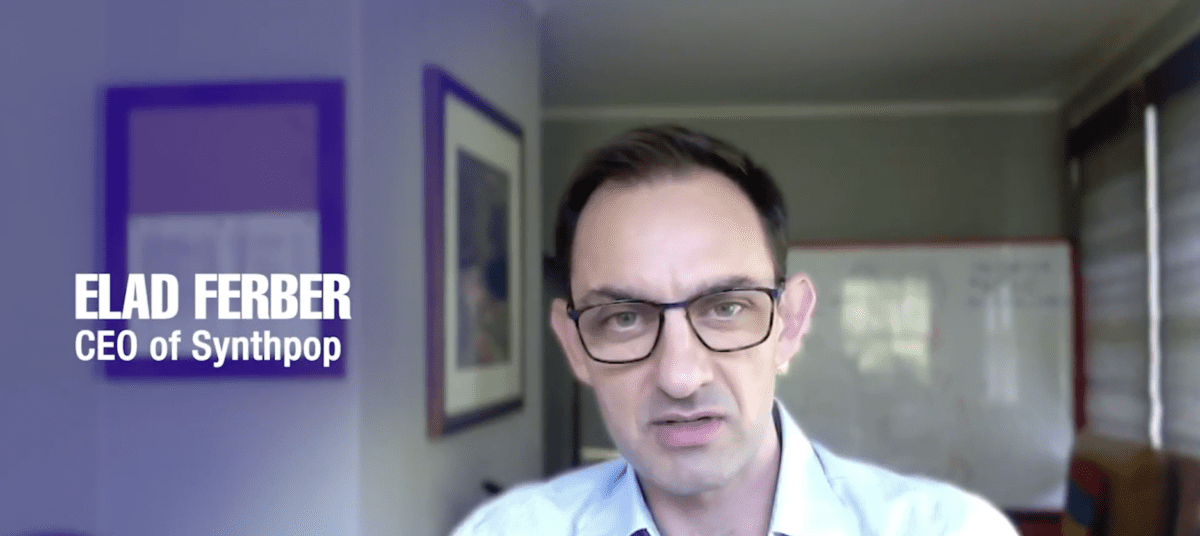
In this episode of the Claim to Fame podcast, Alex and Wayne sit down with Elad Ferber, CEO of Synthpop, to discuss his path from aerospace engineering to healthcare and how that journey shaped his mission to fix the industry’s administrative burden. Elad breaks down how Synthpop uses AI to streamline healthcare workflows, reduce manual tasks, and improve patient experiences.
What’s Covered?
The conversation dives into the realities of building trust in AI, why models must constantly adapt, and how strong partnerships make or break successful healthcare technology adoption. Elad also shares insights on future-proofing organizations and why flexibility and collaboration are essential as the healthcare landscape continues to evolve.
Podcast Transcription
Podcast: Claim to Fame – The #1 DME Podcast
Guest: Elad (Allad) Furber, CEO & Co-Founder of Synthpop
Host: Alex
(0:00) Seeing the Opportunity: Why Synthpop Was Created
Elad explains that he and his co-founder, Jan, saw an enormous opportunity to transform healthcare using the breakthroughs happening in AI. They recognized how much administrative burden weighed down healthcare organizations and believed AI-native technology could fundamentally reshape how care is delivered.
This insight inspired the launch of Synthpop a little over two years ago, with the goal of bringing powerful, AI-driven workflows to healthcare organizations.
(1:16) Introducing the Guest
Alex welcomes Elad to the podcast. Elad thanks him and prepares to dive into his background and the origins of Synthpop.
(1:27) Elad’s Background: From Aerospace Engineering to Healthcare Innovation
Elad shares that he is an engineer by training who began his career in aerospace, working on autonomous systems and drones for nearly a decade. He later transitioned into healthcare, founding a medical device company and eventually serving as a VP at Zoll Medical.
Throughout these experiences, one theme became clear: the administrative load in healthcare is overwhelming. Recognizing both the problem and the potential for AI to solve it, Elad and Jan launched Synthpop with a mission to bring AI-native automation across healthcare.
(1:52) Synthpop’s Mission: An AI-Native Approach to Reducing Administrative Burden
Synthpop aims to meaningfully reduce administrative friction across healthcare, starting with DME but expanding across multiple specialties.
Unlike tools that focus on a single workflow, Synthpop was built to be AI-native from day one, enabling it to orchestrate broad, interconnected administrative processes across patient journeys.
(2:26) From Drones to DME: A Title Elad Embraces
Alex jokes about titling the episode “From Drones to DME,” and Elad laughs, agreeing that the framing is accurate – his career has spanned aerospace, medical devices, and now healthcare AI.
(2:32) Elad’s Early Passion for Building
Elad describes how he has loved building things since childhood, working on projects with his dad in Israel. Even during his time working on drones, he always had side projects involving computer vision and machine learning.
His co-founder, Jan, shares a similar background, having built major online music platforms and even selling a company to Napster. Together, they bring deep expertise in distributed systems, autonomy, and AI.
(4:47) The Meaning Behind “Synthpop”
The name reflects both founders’ love of Synthpop music and the concept of synthetic populations, a core idea in testing and validating AI models safely using synthetic patient data.
The dual meaning captures both their passion and the company’s technical foundation.
(5:39) Lessons From Space and Stanford: Bringing People Together
Elad explains that working on ambitious projects (like landing a lunar lander) taught him a critical leadership skill: bringing people with strong opinions and expertise together to build something bigger than any one person.
He isn’t the best engineer, salesperson, or solutions architect on his team, but he excels at uniting people to solve hard problems, something that has shaped Synthpop’s culture and approach with customers.
(6:39) Partnering With Customers for Multi-Year Value
Synthpop views healthcare organizations as long-term partners, not one-off software customers.
Many clients lack the internal IT resources to continuously adapt workflows, deploy new AI models, and integrate tools across the patient journey.
Synthpop steps in as an extension of their team, which naturally leads to multi-year collaborations and expanding use cases over time.
(8:13) AI Isn’t “Set and Forget”: Continuous Training and Adaptation
Alex notes that both humans and AI require continuous training. Elad agrees – AI evolves through ongoing exposure to data, workflows, and exceptions.
Synthpop differentiates itself by building systems that adapt, not just automate.
They support a wide range of use cases across referral intake, patient interaction, billing, payer workflows, and revenue cycle operations.
(9:03) A Broad, Modular Platform for Healthcare Automation
Unlike competitors that specialize in one narrow function, Synthpop builds the “building blocks” of automation across the patient and revenue cycle.
This allows them to orchestrate workflows end-to-end.
They typically start with the customer’s largest need (often referral intake for DMEs) and expand into additional workflows as value is proven.
(10:14) Three-Step Implementation Framework
Synthpop’s deployment follows a structured progression:
- Shadowing: Their AI agents mirror real human workflows to validate understanding and accuracy.
- Assist Mode (“Trust but Verify”): The AI performs work while staff oversees results.
- Full Automation: Once executives trust performance, Synthpop takes the “steering wheel”, creating major ROI.
This phased approach ensures reliability, trust, and measurable outcomes.
(11:36) Growing Value Through Relationship-Driven Engagement
After solving the first problem, customers usually ask Synthpop to automate more workflows.
This is by design: they built a model that meets customers where they are – not a rigid, one-purpose tool.
Elad notes that this approach is less “cookie-cutter” but delivers far more strategic value.
(12:16) The Importance of Partnerships and an Open Ecosystem
Alex highlights the importance of open APIs and collaboration between vendors.
Elad agrees, emphasizing that NikoHealth’s flexibility is a major benefit – Synthpop and NikoHealth exchange large volumes of data seamlessly.
This interoperability enables AI systems to operate on clean, structured data and makes high-value automation possible.
(13:18) Is Referral Intake the Most Broken Workflow?
Alex asks whether referral processing is the biggest pain point.
Elad explains that while referrals are a major issue, especially with unstructured faxed data, the landscape is shifting quickly.
Revenue-cycle and payer interactions are becoming equally pressing, especially with new CMS rules like upcoming prior authorization changes.
Synthpop’s modular approach allows them to address whichever need is most urgent.
(15:13) Using AI to Reduce Payer Delays and Accelerate Reimbursement
Elad notes that payer workflows remain highly complex, and many clients face long reimbursement cycles.
Synthpop’s conversational agents can handle tasks like eligibility checks and benefits verification, often by calling payers directly when needed.
This closes revenue gaps that are otherwise difficult to manage manually.
(17:10) Building Trust in AI: The Core Challenge
Trust is one of the biggest barriers to AI adoption in healthcare.
Elad explains that organizations depend on critical workflows (like patient intake) to function perfectly.
Adopting AI is an existential decision, not a toy experiment.
Healthcare leaders must trust the system completely, which is why Synthpop provides deep support, rapid incident response, and transparent evaluation.
(18:53) Training AI Through Shadowing and Workflow Alignment
Trust-building begins with transparency.
During the shadowing phase, organizations compare Synthpop’s performance directly to historical human performance, seeing clearly where AI excels and where guardrails are needed.
This ensures workflows are safe, effective, and consistent before automation begins.
(20:06) Differentiating Synthpop From Other AI Vendors
Elad explains why Synthpop stands out:
- They establish dedicated teams for each customer
- They deeply map workflows and product portfolios
- They customize algorithms and orchestration
- They continue engaging long after initial implementation
Synthpop does not deliver a simple, standalone tool – it’s a long-term operational partner.
(21:29) Making Healthcare More Human Through Automation
Synthpop’s vision is to free staff from low-value administrative work so they can focus on complex, human-centered care.
AI can complete ~80% of tasks in many workflows, allowing:
- instant service for most patients
- faster resolution for complex cases
- dramatically improved patient experience
Automation isn’t about replacing people – it’s about enabling them to do more meaningful work.
(23:02) The Biggest Challenge: The Leap of Trust
Healthcare is highly regulated, high-stakes, and inherently cautious.
Moving from manual work to AI-based work mirrors the earlier transition from paper to digital records – a massive paradigm shift.
Organizations must trust AI with mission-critical operations, and that trust must be earned carefully, with support structures, guardrails, and clear accountability.
(25:58) Realistic Expectations: What AI Can and Cannot Do
Elad emphasizes honesty about limitations.
AI has gaps in reasoning and cannot perfectly replicate human judgment in all cases.
The key is designing workflows and safeguards that maximize AI strengths while mitigating weaknesses, delivering consistent, reliable ROI.
(28:06) The Future: What Healthcare Looks Like if Synthpop Succeeds
In the next 5–10 years, Elad envisions:
- near-instant patient intake and eligibility confirmation
- collapsed administrative timelines
- faster diagnostic scheduling
- dramatically improved patient experience
- broad adoption across specialties (DME, fertility, diagnostics, and more)
In this future, a patient may be referred and receive a text or call within one minute, confirming eligibility and offering next steps – something that today can take days or weeks.

Explore More Episodes