


 29:27 to watch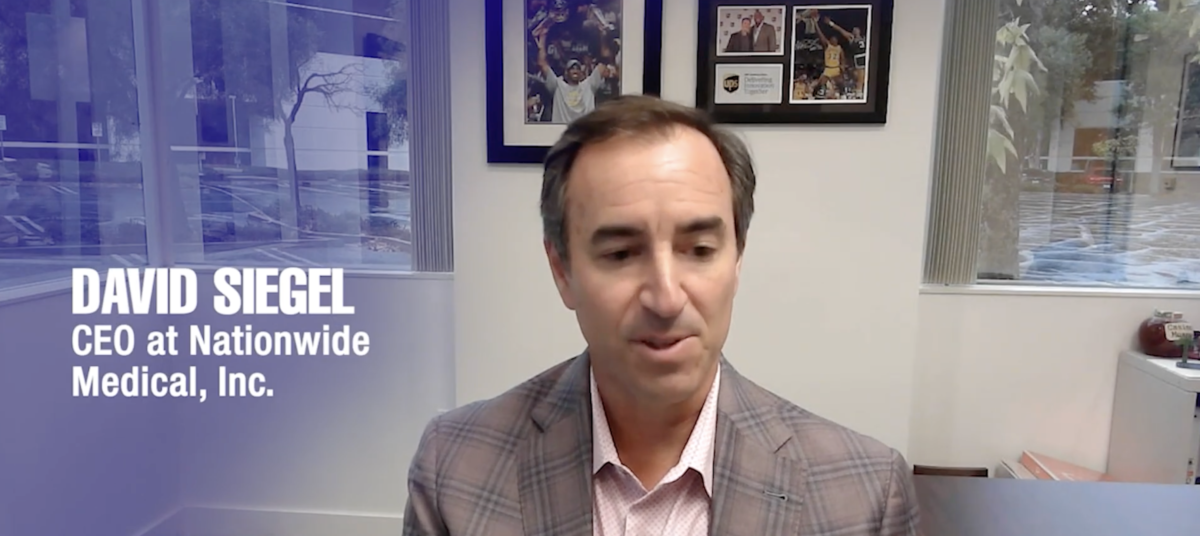
David Siegel, CEO of Nationwide Medical, joins Claim to Fame to reflect on more than 23 years of building one of the most recognizable names in sleep and respiratory care.
Here’s What We Talked About
He shares the customer follow-up strategies that helped Nationwide stand out early, how lessons from the life insurance industry shaped their approach, and what it takes to stay resilient through constant change in DME. We also talk private equity, technology evolution, industry advocacy through AAHomecare, and how to stay motivated over the long haul.
Podcast Transcription
- Podcast Episode: David Siegel, CEO of Nationwide Medical, on DME Growth, Technology, and Private Equity
- Guest: David Siegel, CEO of Nationwide Medical
- Hosts: Alex & Wayne (Claim to Fame)
Episode Overview
David Siegel: We’re not going to ever be as big as some of those big nationals are, nor do we quite desire to. But I do think that with our agility, and if we can partner with the right kinds of folks out there, we can really get to a really powerful size. That means something to the manufacturers, and that means something to the physicians out there, and most importantly, means something big to the patients.
Alex: You’ve been leading Nationwide for over 20 years, and most businesses don’t even last half that long. What would you say is like the secret that kept it growing and relevant throughout so much industry change?
David Siegel: You know, I think a lot of people get too much into running toward the shiniest, brightest object. At the time, we kind of stayed true to ourselves and really kind of stayed in the CPAP lane, if you will.
Alex: What do you think others in this industry potentially still get wrong about the patient experience?
David Siegel: I think what we don’t always appreciate is that so many things are out of a DME’s control. It kind of feels backwards to me that we provide a service and a product, and yet we have to go lean on a doctor or a sleep lab or whatever it happens to be, so that we get paid for the service and the product we provided. I will tell you — and I probably shouldn’t share this on a platform like this — but…
Alex: All right, we are live on the number one podcast in the country — Claim to Fame. Today’s episode we have David Siegel from Nationwide Medical. David, welcome to the show.
David Siegel: Yeah, thanks for having me.
Wayne: Welcome, David. Happy to have you on here. Happy Friday.
David Siegel: Right back at you.
Alex: Awesome. Well, David, you’re obviously a veteran in the industry, but for anyone who doesn’t know who you are or what you do or anything about your company, we always like to start from the top.
David Siegel: Sure. Thanks. Yeah — David Siegel, CEO of Nationwide Medical. We’ve been in business for about 23.5 years, and the ups and the downs… got plenty of scars to prove that I’ve been around for about a quarter of a century or so.
From Life Insurance to Sleep Care
Alex: David, Nationwide Medical has become a household name in sleep and respiratory care. Take us back to what problem you were trying to solve when you started it.
David Siegel: You know, if you indulge me a few seconds here, I’ll give you how we got involved. Both my father and myself were in the life insurance industry prior to finding our way to healthcare. One of our unique approaches in that space was not just thinking in terms of selling a life insurance policy and then hoping the person cancels — or hoping they don’t cancel — and just moving on to the next. The thought process was: a person’s going to buy multiple policies throughout their life. So if you stay in touch with them, if you follow up with them, when it comes time to buy a disability policy or mortgage protection or whatever it ends up being, we could end up being that solution.
So as we started to segue our way into this space and we started looking at the CPAP machine, the idea was: don’t just sell a CPAP machine and hope they never want to return it. The idea is to follow up with them. Maybe they need additional support — or, as it turns out, supplies. And sure enough, here we are, nearly a quarter century later. Resupply is such a common thing among all companies that serve in the respiratory space. But for us, it really started way back in the insurance industry — staying in touch with your customer and making sure they have what they need.
Alex: Yeah, that’s unique — because, to your point, you’ve been leading Nationwide for over 20 years, and most businesses don’t even last half that long. What would you say is the secret that kept it growing and relevant throughout so much industry change?
David Siegel: Yeah. That’s a good one. You can go a lot of different ways with that, and luck would certainly have to be in that formula. But I think a lot of people get too caught up running toward the shiniest, brightest object. At the time, we kind of stayed true to ourselves and really stayed in the CPAP lane, if you will. We have branched out a little to some other verticals, but make no mistake — CPAP and sleep and treating sleep apnea has really been our core focus. We kind of resisted a lot of the temptations of running wherever the new code or the new way to make money was, so to speak. I think that gave us an advantage as the hills and valleys tend to follow wherever the new shiny object is.
The Early Days of Resupply
Wayne: That’s a great piece of advice, David. We love learning how it all started. You were there since the beginning — reaching out to patients who hadn’t heard from anybody in years. What did those early days look like for you?
David Siegel: Yeah. I mean, I will even confess — I was part of those calls that reached out. And what you found is people were literally saying, “I’m duct-taping my tube to the machine because it keeps coming off.” It just wasn’t thought of. I know it seems crazy in this day and age because everybody talks resupply. There are fulfillment companies that support such actions. But back then, even the manufacturers weren’t focused on it. It was anything they could do to get you to buy the machine, and they would almost throw masks in as part of a deal to sweeten it.
So really, we took the reverse approach and thought about building it out. I won’t name the manufacturer, but when we first started trying to do resupply, we worked with one of the manufacturers that had all this 3PL capability — and they couldn’t handle the filters and the tubing and the headgear and the chin straps and all those small pieces. It was just so convoluted. We ended up hiring a guy from a mall who worked in our office, and we literally hand-packed the items to send them out. We were able to do it more efficiently than those major manufacturers who had just never done all these small parts. They had always focused on the machines.
So we kind of joked about it for a number of years after that — it took a retail guy from a mall to figure out how to do resupply.
Alex: That’s why we love hearing about the beginning. It’s always interesting, scrappy stories — people starting out of their garage sometimes. Same concept.
David Siegel: Well, make no mistake, people are much smarter today than we were back then.
Wayne: Yeah. I was just thinking — I kind of read that your team started calling patients who hadn’t heard from anybody in years. What was the moment you realized you were onto something much bigger?
David Siegel: Yeah. Again, it wasn’t day one, but it was early stages, because the concept came from our life insurance days. I spent about eight years in that space. When I would call customers up, they literally hadn’t had any contact with their life insurance agent after the initial sale was done. Even just for customer service reasons — like maybe you needed to change your beneficiary — that starts the building of trust.
The same concept applied here. When we started reaching back out, it wasn’t that people were saying, “Oh, I want all these supplies.” It was, “Hey, how are you doing on your therapy? What challenges are you coming across?” Maybe their pressure was too tight, or maybe their mask was leaving a mark on their nose that they didn’t like when they had to go to work the next day. You start uncovering those problems. Even way back in the beginning, it really made a difference — figuring out that there really is something to this. And you need a revenue component to match putting all that effort in. That’s how we looked at it.
Patient Experience & What DMEs Still Get Wrong
Alex: It sounds like you’ve been doing patient follow-up and resupply long before it was the hot topic. What do you think others in this industry potentially still get wrong about the patient experience?
David Siegel: You know, it’s hard to point a finger and say a whole bunch of bad things, because I think we’re all out there trying to do our best. We have a lot of different components to deal with. I think what we don’t always appreciate is that so many things are out of the DME’s control. It kind of feels backwards to me that we provide a service and a product, and yet we have to go lean on a doctor or a sleep lab or whatever it happens to be so that we get paid for it. Patients don’t understand what we have to go through. Physicians don’t have the same empathy for us in terms of what we do to get paid.
In terms of what I think DMEs don’t do well — I think they’re maybe just not putting enough resources toward giving a real experience to the patient. We can’t go as far as Apple can go. If you’ve ever bought an Apple phone, the presentation the phone comes in is pretty sophisticated. They have stores with customer service agents there to do education, training, all these kinds of things. We would love to do more of that in our space. But realistically, our reimbursement doesn’t allow it — we can’t charge $1,400 for an iPhone. So some of it is our fault, but some of it is also the reimbursement level just doesn’t give us what others in the retail space can do.
Resilience Through Recessions, COVID & Curveballs
Alex: David, you’ve been through recessions, supply chain chaos, major shifts in reimbursement. I’m sure COVID was an interesting time. What core values helped you stay ahead through all of this?
David Siegel: Yeah. Like everyone — between recalls, COVID, we all have our own challenges within our industry. We actually had a rare curveball of our own. I was pretty friendly with our landlord, and we were up for a renewal of our space. He said, “Oh, we’ll go ahead and renew your lease. Don’t worry about it. I’ll come by in a few months and we’ll sign the paperwork.” I hadn’t heard from him for a couple of months. I said, hey, we’re coming up to the renewal date — I just want to make sure we get this knocked out. He comes over the next day and says, “I’m dreading this, but I’ve got to move you. The other tenant in my building wants your space. They’re a big company. I need you to be out in a few months. But I have another building down the freeway just a few miles — I will give you a good deal, but you’re going to have to move.”
Well, I don’t know how familiar you are with moves, but it’s not like you just pick up and go — not with all the licensure, Medicare inspections, Department of Health requirements, all that stuff. So in a couple of years’ span, to your point, we had all these different “once-in-a-decade” type experiences happen all at once. And it really just fortified our team. We were blessed to have great people who have been with us for lots of years. The perseverance they showed through all these curveballs — it’s amazing when you think you got through it. But at the same time, it bonded us in a way that’s pretty unique and pretty special. And I’m sure a lot of you listening have similar stories and shared experiences with your people that you wouldn’t trade for anything. That’s certainly how I feel.
Technology, AI & the Future of Resupply
Alex: You know, there’s always some headwind looming in DME. But there’s also a lot of exciting technology and advancements. Where do you think resupply and follow-up care are heading with this next wave of technology and AI?
David Siegel: Oh yeah. I am so bullish on the next set of years — not only because I think there are a lot of undiagnosed patients out there who will eventually flow through the funnel, but the technology piece is so massively different than it was even five, ten, or fifteen years ago. When I think about resupply and retouching with patients, I’m definitely excited about where the next generation of technology is taking us.
The last few years have really been about intake — how can we wrangle data, use more sophisticated OCR, improve scripting, get away from the fax machine, all of that. But the next leap ahead is agentic AI — the ability to make and take phone calls, become more efficient, so people don’t have to go through long phone trees or Q&As on a website. That is super exciting to me, because I feel like you can give a real patient experience, and then your people can really focus on the things that genuinely require human judgment.
Alex: Yeah, absolutely — they call it “human in the loop.” Empowering us to do more with less and ultimately take care of more patients, which is amazing for the industry. What’s next for you and Nationwide? Where do you see yourselves in the next three to five years?
Private Equity, Acquisitions & Building a Dream Team
David Siegel: Well, we did a big thing last year. After being a family-owned company for over two decades, we went through a process and ultimately partnered with a private equity firm. We were fortunate enough to find a great healthcare-focused PE that really believed in our team and our mission. Instead of coming in and replacing people or doing any of that, they wanted to come in and support us with resources and sophistication — things that, as a family-owned company for so long, we just didn’t have access to.
It’s been an exciting year. It’s elevated what I do on a daily basis and given us resources to enter the acquisitions world. We’ve got some that are brewing right now that I’m really excited about. It’s a space we just never were able to partake in years ago, because we were family-owned and didn’t have the resources to go after it.
David Siegel: You watched all these big national companies buying up folks left and right. Our take is a little different. We’re not going to ever be as big as some of those big nationals, nor do we quite desire to. But I do think that with our agility, and if we can partner with the right kinds of folks, we can really get to a powerful size — one that means something to the manufacturers, means something to the physicians, and most importantly, means something big to the patients. I’m excited about the next five years from a growth standpoint. We just have to avoid the curveballs that could come from the externals — competitive bidding or things of that nature that are out of our control.
Alex: Congrats. That’s really super cool. When you say acquisitions, do you mean acquiring similar businesses and leveraging economies of scale?
David Siegel: Yeah — and not only that. I’m a huge fan of talent. I’ll use a sports analogy: let’s say it’s your turn to pick in the draft. You might need a point guard, but there might be a sensational forward available. I say, give me the can’t-miss forward and I’ll figure out how to run with multiple good players at the same position. So a big goal with acquisitions isn’t just to buy something and cut it down to make one plus one equal three. I’m looking at it more as: who can we partner with, especially as we traverse and go deeper around the country? Who are the thought leaders that could work well together as a team? I’m very collaborative, and I’m looking for folks that want to put an all-star team together — and then lead the way and do some things that maybe aren’t the norm.
Industry Advocacy & AAHomecare
Alex: I know you’re very active in the industry through AAHomecare. Is there anything on that side of the DME world that you think would be helpful for our followers to hear — any insights from an advocacy standpoint?
David Siegel: Yeah, happy to share — my passion will probably come out in this answer. A number of years ago, I got approached by Josh Marks and Bill Gaudet, who are longtime veterans in the space at one of the Medtrade shows. They talked to me about joining AAHomecare. To be honest, I’d probably seen the emails, but we were pretty much in our bubble for the first 17 or 18 years, and it just wasn’t on my radar. Being out in California as opposed to Washington, D.C. — the other side of the country — it just wasn’t something I thought I could even make an impact on.
Those guys got me to attend a meeting. One thing led to another — next thing I know, I was on the Respiratory Committee, then the Education Committee, then they asked me to be part of the Executive Committee, and it’s just kind of taken off from there. I’m even leaning into taking an even more active role going forward. I’ve had a chance to go to D.C. a number of times and be part of our fly-in as a collective industry. I always feel like if we do good for the industry, everybody does well. It’s been fun to take that message to legislators and advocate on behalf of patients and fellow companies — because it doesn’t just have to be about how do I make Nationwide Medical great. It can be about how do I make our industry more visible, better reimbursed, with more backers, so we don’t just get cut the second there’s a need for money.
Alex: We actually had Stephanie Legree from AAHomecare on the podcast before — she was great. But if you wanted to elaborate and let the DMEs listening know what kind of benefits they could expect as a member of the association, that would be great.
David Siegel: Yeah, there really are a lot. I could fill the podcast on that. First and foremost to me is the networking — being under the hood, being in the tent, so to speak. You’ll get on some kind of committee. Even if you don’t want to participate verbally and just want to listen, you’re going to be in a Respiratory Committee or Diabetes Council or Payer Council — whichever fits your organization — participating with folks who are dealing with a lot of the same issues, maybe at different points in time than you. So someone you sit next to on a committee has probably already tackled a hiring challenge, a payer contract, an audit situation — and can steer you in the right direction.
By far and away, I have come across various forms of technology and consultants through AAHomecare that I probably wouldn’t have known about if I’d just stayed in my bubble. That alone pays for itself in spades. And then there’s the good that comes from doing right by your industry — when you’re willing to share, people are willing to share back. So lean in. The advocacy work you’re doing is only helping your own company too.
Wayne: That’s a great message. We even had Jim Rosen, who runs the MAMES conference out of Minnesota, on the show. A big part of what he preached was that technically a lot of these companies are competitors — but it doesn’t feel like that. They’re all working together to move the ball down the field. It’s not about “this is my patient” or “their patient.” It’s really about how we collectively push the industry forward. Hopefully we’ll get even more people to join AAHomecare.
David Siegel: Wow, that’s awesome of you guys to give a platform like that. I know Tom Ryan, who leads AAHomecare — he puts so much passion into everything he does. He’s got a great team, and I think of Jay Whitter, who’s out there lobbying every day, and Laura Willard and so many others that make up that team. They truly care so much and they try so hard. We’re in the battle right now trying to figure out competitive bidding. Whatever happens, no stone is being unturned to try to battle for our industry and make sure we can do the work we do — which is care for patients.
Staying Motivated After Two Decades
Alex: It’s cool to hear people so motivated and so driven. On a personal level — how do you stay motivated after being in this space for over two decades?
David Siegel: Yeah. I guess I’m a pretty motivated guy in general — I think it’s in the DNA to some degree. I’ve been going to Medtrade and all the other conferences for years. So many people in this industry have become my closest friends. Maybe that means I’m working too much and not spending enough time on my social life — I can certainly argue that. But you feel like you’re part of a sisterhood/brotherhood type thing, and you want to be able to contribute. You want to keep up with the Joneses, be successful, and support all the employees who’ve stayed through the thick and the thin.
And I will tell you — I probably shouldn’t share this on a platform like this, but I absolutely love the game of poker. I go to the World Series of Poker every single year. I moved to Las Vegas a few years ago, so if you want to play in that world, you’ve got to have a good living so you’re not bluffing the rent money away at the poker table. So that’s a little bit of the motivation too.
Wayne: That’s awesome. I’ll have to text you for some tips next time I’m in Vegas.
David Siegel: My number one tip is — play blackjack. But I’m not good at it. Actually, my number one tip is don’t gamble. But if you like it and you want to enjoy it and you can keep it in control… now I sound like a Gamblers Anonymous ad. But yeah.
Wayne: I saw this device — it’s like a little mini box safe. Every time you win at gambling, you put your chips in this box, it’s locked, and your key is back at your hotel room, so you can never take out your winnings. I was like, if I had a problem, that would be a really cool idea.
David Siegel: That is a good one. Maybe I’ll start incorporating that.
Legacy & What He’s Most Proud Of
Alex: David, one last question before we close this out. When you look back on this journey so far — what is the one thing you’re most proud of?
David Siegel: You know what — I’ll lend it to where it all starts. I’ve been blessed with so many great employees who come to work every day and grind for the patients. They do it knowing patients might scream at them, that things didn’t go right, that somebody had a bad night of sleep — it’s not the patient’s fault, but they’re taking it out on you. And I’ve had employees who have stuck with me for over two decades. Most of them are over a decade at least. That’s kind of unusual for that many folks to stay that long.
To me, if there is such a thing as legacy, that’s it. I’ll look back and think: I watched these people who were teenagers or in their 20s, and now they’ve got kids who have come and started working here at Nationwide Medical. We’ve had tons of employees’ kids come through over the years — and that is just beyond special to me. Including my own kids who have spent time here and ground away. I think DME is one of the greatest breeding grounds you could ever have for how to deal with work and life.
Rapid Fire Round
This or That — quick-fire questions to close the episode.
Alex: If your coffee machine broke, would you fix it yourself or order a replacement immediately?
David Siegel: I have no chance of that happening, because I’ve never had a cup of coffee in my life. So I don’t see mine breaking anytime soon.
Alex:Dream vacation — totally off the grid, or five-star resort with Wi-Fi?
David Siegel: Oh, totally five star. For me, camping is like opening a window at a hotel room.
Alex: Would you rather relive your startup days, or fast forward ten years to see the industry’s future?
David Siegel: That’s a good one. The first pass through, with all the ups and downs, we got to the other side and we’re here — so I don’t need to redo that one. I’d love to see what comes next. It’s pretty dang exciting. I’ll look ahead for sure.
Alex: If you could automate one part of your daily routine, what would it be?
David Siegel: Can I automate my morning run so that I don’t have to do it? But probably emails — they still come in at voluminous amounts. The more technology can assist with that in the future, that’s probably where I’d lean.
Alex: Who would play you in a movie about Nationwide — Tom Hanks or Jason Bateman?
David Siegel: Oh gosh — I’d love Tom Hanks, but Jason Bateman is so great too. Well, if Tom Hanks were willing to take the part, you can’t go wrong. I’ll go with him.
Connect with David
David Siegel: Shoot me an email at dsieg@nationwidemedical.com. I’ll respond and connect from that point. I’m a guy that likes to give as much as anyone. If I can help you, I’m not looking for something in return. If I’ve got something I’ve learned along the way, I probably picked it up from somebody else — so happy to share it. Hey, we’re all doing good work out there. Keep battling and keep grinding. We’ll make it through one way or the other. Thanks for having me today.
Alex: Well, David — thanks so much for joining. This has been a really fun episode. And anyone who has not yet subscribed to the podcast, please do so. David, thanks so much for joining us today.
David Siegel: Have a great weekend.

Explore More Episodes