


 21:00 to watch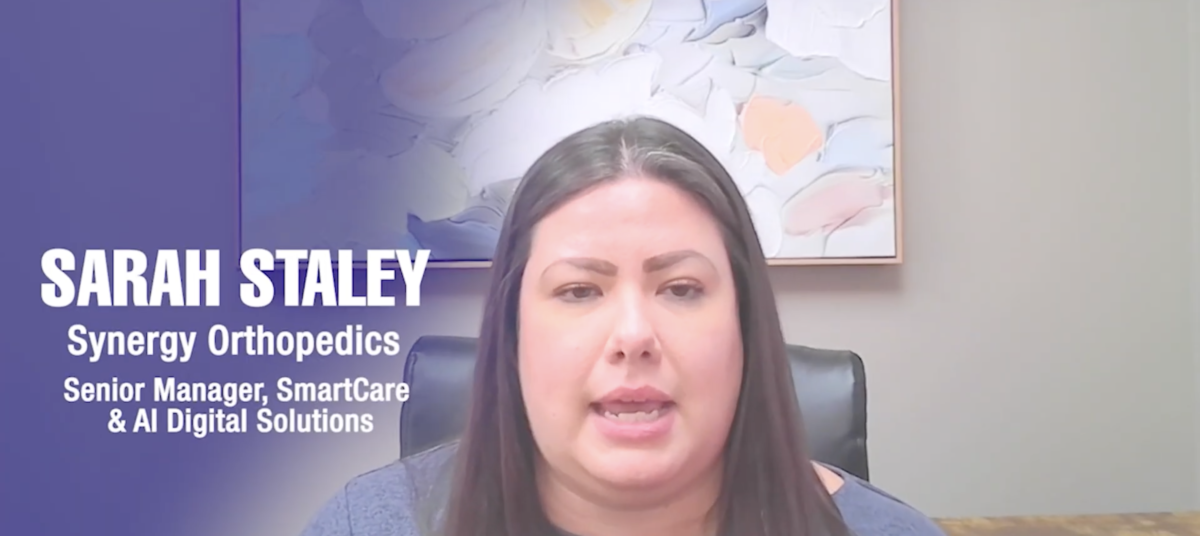
In this episode of Claim to Fame, Alex and Wayne interview Sarah Staley from Synergy Orthopedics to discuss her journey from DME coordinator to leading smart care and AI digital solutions.
Top Insights From This Episode
Sarah shares insights into the operations of Synergy Orthopedics, including their focus on orthotics, prosthetics, and bracing, serving regions across the eastern U.S. She emphasizes the importance of innovation, compliance, and the impact of AI in streamlining DME processes. Sarah also addresses the challenges of managing a large team and navigating compliance while integrating new technologies. The episode wraps up with rapid-fire questions about her preferences and experiences in the healthcare industry.
Podcast Transcription
- Podcast Episode: Innovating Orthopedic DME with AI
- Guest: Sarah Staley from Synergy Orthopedics
- Hosts: Alex & Wayne (NikoHealth)
(0:00) Introduction — Who Is Sarah Staley?
Sarah Staley is welcomed onto the Claim to Fame podcast as a guest from Synergy Orthopedics, a medical equipment supplier specializing in orthotics, prosthetics, and bracing. The company is headquartered just outside of Philadelphia and services the eastern portion of Pennsylvania, along with New Jersey, Maryland, Delaware, parts of Virginia, and parts of New York and North Carolina.
Sarah has been with Synergy for well over a decade, rising from a DME coordinator role to leading the company’s smart care and AI digital solutions initiatives — a journey that reflects both personal growth and the rapid evolution of the DME industry itself.
(2:16) From Athletic Training Aspirations to DME Leadership
Sarah traces her path into healthcare back to a childhood ambition: she originally wanted to be the athletic trainer for the Philadelphia Phillies. While that dream quickly evolved, her commitment to healthcare never wavered. Athletic training gave her a strong foundation in medical terminology and orthopedics, which she credits as the bedrock for everything she does today — particularly her ability to read and interpret medical policy with precision, train others on compliance, and stay closely aligned with what both patients and providers need.
Working at Synergy has allowed her to stay meaningfully connected to patients and the healthcare world while also maintaining the kind of work-life balance that athletic training simply doesn’t offer. It’s a combination she says has kept her engaged and committed to the space for over a decade.
(2:57) What Innovation Actually Looks Like in an Orthopedic DME
When asked what innovation means from inside an orthopedic DME, Sarah’s answer is grounded and operational. The primary goal right now is compressing the timeline between a patient receiving a prescription and actually receiving — and being billed for — the equipment they need. Five to ten years ago, that process could take a month or even six weeks, depending on the physician and the type of product ordered. Synergy is now working to bring that down to a one-week turnaround.
That kind of improvement isn’t just a quality-of-life upgrade for staff — it directly affects patient outcomes, cash flow, and the company’s ability to scale. Faster throughput means patients get what they need sooner, and the business gets paid more quickly. In an industry with notoriously tight margins, that compression is everything.
(4:12) The Evolving Compliance Landscape Over Ten Years
Sarah reflects candidly on how dramatically the compliance environment has shifted since she joined the industry. Ten years ago, she notes, things were more relaxed — there was more room to maneuver, and the consequences of loose documentation were less immediate. That’s no longer the case. Medicare has significantly tightened its scrutiny of medical policy, and fraudulent providers are being identified and removed from the market with increasing frequency.
Synergy’s response has been proactive rather than reactive. The team prioritizes training, stays ahead of Medicare announcements, works closely with referring providers to ensure strong documentation and accurate diagnosis codes, and treats compliance not as a burden but as the foundation of the business. In Sarah’s view, staying compliant isn’t just the right thing to do — it’s the only sustainable path forward, especially with upcoming competitive bidding changes on the horizon.
(5:20) The Hardest Career Pivot: From Colleague to Boss
Sarah is candid about the most challenging transition in her career — and it wasn’t a technical one. Moving from being a peer to being a manager of people who had been her coworkers, and in some cases had been at Synergy longer than she had, required a significant adjustment. The shift from friend to boss is never easy, and Sarah acknowledges it took two to three years to fully navigate.
What helped most was the loyalty and experience of two long-tenured team members — each with 14 and 15 years at the company — who provided early training, mentorship, and institutional knowledge that proved invaluable. Today, the average employee tenure across the organization is around four years, a number Sarah points to with pride as a sign of a stable, engaged team culture.
(6:24) Managing Billing Across Hundreds of Locations
Synergy processes north of 12,000 patient encounters per month across hundreds of locations — a scale that demands both strong systems and strong leadership. Sarah describes herself as deeply goal-oriented, relying on benchmarks and targets to keep herself and her team motivated and focused. Watching things improve over time — seeing the metrics move in the right direction — is genuinely motivating to her, and she acknowledges she tends to bring her team along on that journey with a fair amount of enthusiasm.
The company’s transition to NikoHealth, approximately six weeks prior to the recording, has already started to make a tangible difference in how efficiently claims are processed. Sarah describes the experience as exciting, even at this early stage, and sees it as part of a broader digital transformation trajectory the organization is committed to.
(7:26) AI in Practice: What’s Actually Working
Sarah discusses Synergy’s AI journey with measured optimism. The team has been working with an AI platform and has found both the technology and the team supporting it to be strong. But the more revealing part of her answer involves a separate digital transformation that began several years earlier.
Synergy originally used DocuSign for document signing, but as costs continued to rise, the team began evaluating alternatives. They eventually adopted Formstack, which has grown far beyond its original use case. Today, Synergy uses it to collect patient information digitally in the field: a rep can visit a patient’s home with just a phone or tablet, gather all necessary information, have the patient sign on the spot, and have everything in Sarah’s inbox within 30 seconds. That kind of friction reduction — collapsing what used to be a multi-day paperwork process into a real-time workflow — is exactly the type of operational change that makes a measurable difference in the referral-to-payment timeline.
(9:16) Advice for Newer and Growing DMEs
When asked what single piece of advice she’d give to newer or growing DMEs, Sarah doesn’t hesitate: stay compliant, and do everything the right and legitimate way. She’s seen too many companies take shortcuts — billing for items patients never received, cutting corners on documentation — and eventually face the consequences. Medicare is actively working to identify and remove fraudulent providers, and the scrutiny is only increasing. For smaller DMEs just getting started, playing by the rules isn’t optional. Those who don’t will simply be washed out.
(10:35) Balancing Compliance and Efficiency
Sarah acknowledges the inherent tension between compliance rigor and operational speed — and the challenge of communicating that tension to a sales team that wants to move fast. Her approach is data-driven: she uses audit results as a concrete report card, showing the team in real terms how their documentation practices translate to claim outcomes. If 95 out of 100 audited claims pass, that becomes tangible evidence of why the compliance processes exist. It shifts the conversation from “you’re slowing us down” to “here’s exactly what’s at stake.”
The underlying philosophy is one of teamwork. Sarah doesn’t see herself as an obstacle to patient care — she sees compliance as what makes patient care financially sustainable. Getting the whole organization aligned on that framing is an ongoing effort, but one she considers essential.
(11:20) What Separates Thriving DMEs from Struggling Ones
In Sarah’s assessment, the single biggest differentiator between DMEs that thrive and those that struggle is financial resilience in the face of audits — particularly prepayment audits. When reimbursements are delayed or withheld during an audit process, the cash flow impact can be severe. For smaller companies without adequate reserves, those delays can be existential. The DMEs that survive are the ones that have built enough margin and operational efficiency to weather those windows.
(12:10) Maintaining Compliance Discipline Through an AI Transition
Maintaining compliance discipline while integrating AI and automation is largely a matter of trial, error, and organizational trust. Sarah’s long tenure at Synergy — and the respect it has earned her across the team — gives her a meaningful advantage. When she commits to a new direction, people follow. But she’s clear-eyed about the fact that no amount of seniority replaces thoughtful change management. Getting people on board requires showing your work, explaining the reasoning, and being willing to adjust as you learn.
(12:45) Clearing Up AI Misconceptions
Sarah is direct about one of the most common misconceptions she encounters around AI in healthcare: the belief that it will simply solve everything automatically. It won’t. AI is a tool, not a replacement for human judgment — and in a compliance-heavy industry like DME, that distinction is critical. Medicare doesn’t accept “AI did it” as a justification for a billing error. The human element remains essential: staff still need to review AI outputs, verify accuracy, and take ownership of the claims they submit.
The other misconception she addresses is the fear that AI is coming for people’s jobs. While she understands why employees feel anxious when they hear the term, her experience has been that AI takes on repetitive, time-consuming tasks and frees staff to focus on higher-value work. The human review layer isn’t going away — it’s becoming more important, not less.
(13:42) Where AI Can Have the Biggest Impact in DME Operations
Asked where she sees the greatest AI opportunity in DME, Sarah points to the communication and information flow between referring providers and DMEs. The current system is deeply fragmented: a physician operates in one platform, faxes documentation to the DME, and the DME enters it into a completely separate system. The lag time, transcription errors, and administrative burden that result from that handoff are significant — and largely unnecessary. Sarah sees AI as the most promising tool for bridging those gaps, streamlining the way information moves between all the parties involved in a patient’s care journey.
(14:23) The Magic Wand Question: Eliminating Same and Similar
When asked what single process she’d eliminate if she could wave a magic wand, Sarah’s answer is immediate: same and similar. This Medicare rule prevents patients from receiving a replacement or duplicate item if they’ve already received something comparable in the past — even if the original item was obtained years ago, has been lost, or is no longer usable. It’s a source of significant friction for providers like Synergy, and more importantly, it can prevent patients from accessing equipment their physician has explicitly determined they need. Removing that barrier, in Sarah’s view, would meaningfully improve patient outcomes and simplify operations for a large swath of orthopedic DMEs.
(15:05) Where Orthopedic DME Is Headed in the Next Five Years
Sarah sees a meaningful structural shift underway in how patients access acute orthopedic care. Emergency rooms have long been the default destination for injuries like sprained ankles and fractured wrists — but that’s changing. Urgent care centers are proliferating rapidly and absorbing a growing share of those visits, particularly as ERs become increasingly overwhelmed. For Synergy, this is a positive development: the company already does significant business with urgent care facilities, and the trend toward urgent care as the preferred first stop for non-emergency orthopedic injuries plays directly to their existing relationships and referral model.
(16:35) Advice on Modernizing Your Tech Stack Without Overwhelming Your Team
Sarah’s advice for DME leaders considering a technology overhaul is simple: shop around, do your research, and don’t settle for a platform that asks you to fit into its model rather than adapting to yours. Synergy spent roughly two years evaluating billing software options before choosing NikoHealth — going through demos and deep-dive sessions with seven or eight different platforms, multiple rounds each. It was exhausting (demo fatigue is very real, she confirms), but the thoroughness was worth it.
The key criteria that ultimately drove the decision wasn’t just feature parity — it was flexibility. Synergy operates a lot of stock-and-bill consignment locations, which is a relatively uncommon model, and they needed a partner willing to adapt to that structure rather than forcing them to change how they operate. That same philosophy applies to AI partnerships: the right vendor asks how they can help your business, not just how you can fit into their product.
(18:22) Rapid Fire Round
AI or intuition? Intuition — at the end of the day, it really does come down to the human.
Paper claim or digital submission? Digital, without question.
Billing call or tech troubleshooting? Tech troubleshooting — billing calls tend to end up being complaints.
Automate or delegate? Lean toward automation, because it can be repeated in the future — but delegating remains important too.
First word that comes to mind when you hear prior authorization? No thank you.
If you could automate one daily task forever, what would it be? Answering emails.
Audit week or EMR update week — which is more stressful? Audit week, because of the fear of them finding something.
If AI had a personality, what kind of coworker would it be? A helpful intern.
Phillies game or Eagles game? Phillies.

Explore More Episodes