


 35:12 to watch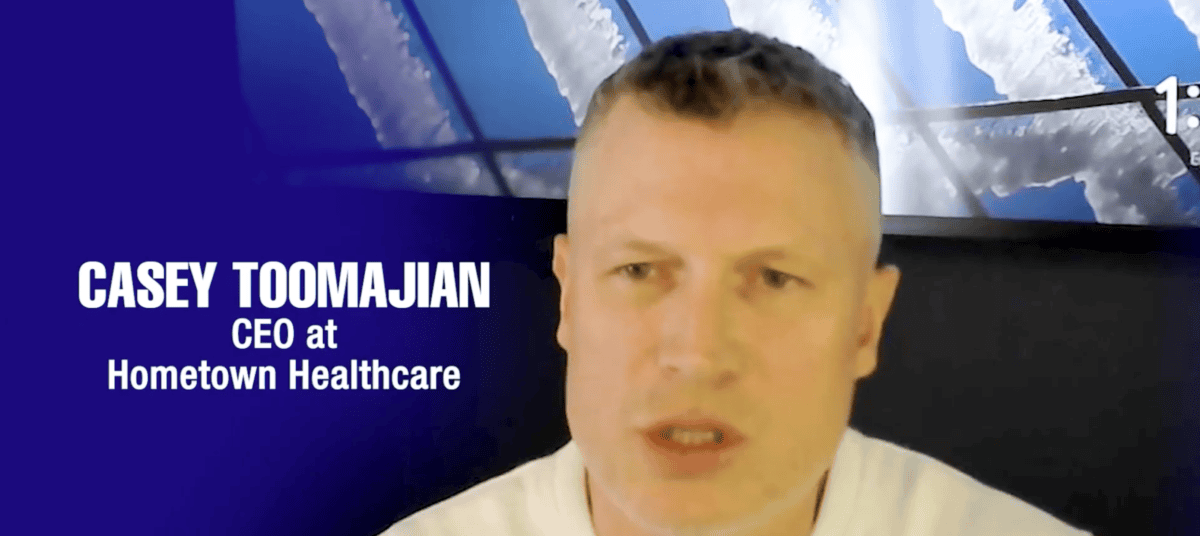
In this episode of Claim to Fame, Alex and Wayne interview Casey Toomajian from Hometown Healthcare.
What’s Covered?
Casey shares the compelling origin story of his family-owned, respiratory-focused DME company in upstate New York, which has grown to serve 14 counties with a core product line including CPAP, oxygen, ventilators, and sleep supplies. The conversation covers the challenges of transitioning from a small pharmacy, founded in 1953 by Casey’s grandfather, to a modern medical equipment provider, as well as the hurdles of running a family business. Casey discusses the importance of maintaining a shared organizational conscience, balancing compassion with high performance, and aiming for purpose-driven success. The episode concludes with Casey offering insights on leadership, family business dynamics, and his vision for the future of Hometown Healthcare.
- Podcast Episode: From Pharmacy to Respiratory Care: Casey Toomajian’s Inspiring Journey with Hometown Healthcare
- Guest: Casey Toomajian, Co-Owner of Hometown Healthcare
- Hosts: Alex & Wayne (NikoHealth)
(1:19) Introduction — Who Is Casey Toomajian?
Casey Toomajian co-owns Hometown Healthcare, an upstate New York respiratory-focused DME company built around four core product lines: CPAP, oxygen, ventilators, and sleep supplies. The company — 37 employees strong, all referred to internally as “hometowners” — covers a roughly 14-county range along the eastern corridor of upstate New York, near the Vermont border. It’s family-owned and operated, with Casey and his brother Aaron as 50/50 owners today.
(2:24) The Real Origin Story — Not Quite What Casey Expected
Casey is upfront that he usually tells this story as the hero, and it isn’t quite true. The business actually traces back to 1953, when his grandfather and a partner started a community pharmacy in Watervliet, New York, about ten miles north of Albany. Casey’s father and uncle took over as pharmacists in the 1980s and, as national chain pharmacies began squeezing prescription margins, had the foresight to add medical equipment — bath safety items, lift chairs — in place of what used to be a gift and novelty section. After college and a stint at Maxim Healthcare Services (where he learned how to sell in a healthcare setting), Casey left in 2004 to build a referral-driven DME model out of the family pharmacy. For two straight months, nothing happened — no calls came in despite him walking hospital floors daily trying to understand what a good DME partner looks like. Then, in June 2004, a case manager called needing a pair of Lofstrand crutches delivered within the hour. Casey didn’t know what they were, found a pair in the basement, got a crash course in fitting them, and made the delivery — becoming the catalyst for Hometown’s reputation as the company that could get equipment to a hospital fast. His brother Aaron joined a few years later and brought the systematic, scalable structure the fast-growing but chaotic early business needed.
(8:25) What Was Harder Than Expected About Building the Business
Casey describes DME as one of the more difficult industries out there — regulations, payer medical policies, and the constant pressure of hospital discharge timelines catch people off guard, even those coming from demanding industries like banking or tech. One early struggle: as the company grew and brought on more people, quality started to dip. The fix wasn’t more oversight — it was building what Casey calls a shared organizational conscience, so that if something bothered him (like a patient being underserved), it bothered the whole team enough to act on it, not just him.
(10:29) Moments of Doubt
Casey recalls repeatedly finding himself back in the warehouse cleaning equipment or answering phones himself, long after he assumed the business would have grown past that. Those moments made him question the decision to start the company at all — but he frames that pain as the exact motivation needed to build something more resilient and less dependent on any one person holding it together.
(11:51) Professionalizing Without Losing the Family Feel
Casey says he arrived at this realization later than most. The real turning point came from crisis — specifically, Medicare competitive bidding, which destabilized pricing and triggered what became the first of three or four business turnarounds. Facing the real possibility of losing significant money in a single year forced the company to focus on building an elegant, engaging system of work — one designed by the people closest to the work, not dictated top-down.
(14:00) Balancing Compassion With High Performance
Hometown’s guiding principle: don’t aim at profit directly. Aim at purpose, and let profit follow as a byproduct. Casey compares it to counter-steering a motorcycle — turning left to go right feels wrong until you understand why it works. The company had to define a core ideology — principles that wouldn’t shift regardless of management trends, new technology, or competitive pressure — and connect that purpose to daily operations. Counterintuitively, leaning fully into purpose rather than splitting focus between purpose and profit produced the highest profitability the company has seen.
(17:01) What Employees Taught Casey About Leadership
Casey learned early on that being dogmatic about specific methods — insisting on “my way” as the founder — either produces yes-people or drives good employees out entirely. The better approach: be unwavering about principles, but let the people doing the work define the methods themselves.
(19:11) What’s Uniquely Hard About a Family-Run Business
For Casey, the challenge is exactly what it sounds like — the family being involved. There were points where the business relationship with his brother Aaron nearly broke down entirely, to the point of considering walking away from the business to protect the relationship. An org chart might say one person defers to another, but in practice, family dynamics don’t work that way. Casey credits his brother’s refusal to simply defer to him — despite Casey having joined the business first — as one of the things that kept the company on solid footing.
(21:48) How Casey and Aaron Separate Business From Family Dynamics
Two habits made the difference: first, Casey learned to “drain the emotional content” out of an idea before bringing it to Aaron, who is a naturally critical thinker wired to pressure-test ideas rather than agree with them. Second, the brothers started a daily 7:30–8:00 a.m. call to stay aligned in small, frequent increments — replacing the old pattern of Casey sitting on an idea for weeks and then dropping it on Aaron out of nowhere.
(23:38) Advice for Second-Generation Leaders
Casey’s own son is about to head to college, which has him thinking about succession. His view: founders and early operators get “battle tested” by necessity — there’s no one else to solve the problem for them — and that experience is hard to replicate for the next generation growing up more insulated from those pressures. He references a well-known pattern used by other family businesses: requiring the next generation to work elsewhere first, get promoted on their own merit, and then start at the bottom of the family business rather than stepping into a senior role. Casey says he’d apply a similar principle with his own son — making sure he never reports directly to Casey, to protect the family relationship above all else.
(27:33) Where Hometown Healthcare Is Headed Next
Growth through acquisition was a real point of tension between Casey and Aaron — Casey wanted to scale the way industry peers were scaling, while Aaron consistently pushed for mastery first. That debate shaped Hometown’s current strategic focus: proving the company can meaningfully transform outcomes for respiratory patients, particularly those with COPD and sleep apnea. Casey believes disease management programs built around reducing COPD exacerbation-related hospitalizations could save the healthcare system on the order of $100 million a year, while better long-term sleep apnea therapy adherence — keeping patients from falling off treatment the way many abandon exercise routines after hitting a short-term goal — represents a similar opportunity.
(30:16) What Success Looks Like Now vs. Then
In the early days, success was as simple as a new hospital case manager trusting Hometown enough to hand them a referral. Today, Casey measures success through patient stories — a ventilator patient finally sleeping soundly in a chair after struggling to breathe for so long, a patient regaining quality of life through a lightweight portable oxygen setup. He also points to employee stories as an equally important signal, referencing the idea that a direct manager can have more impact on a person’s wellbeing than their primary care physician — meaning a big part of success is building a place people are genuinely glad to work.
(33:56) Rapid Fire Round
- Coffee or energy drinks? Coffee.
- Early mornings or late nights? Early mornings.
- Hire slow or move fast? Hire slow — really slow.
- Texting or calling? Calling.
- Road trip or flying? Road trip, with the right people.
- Pizza or tacos? Tacos.
- Big family gathering or quiet night in? Big family gathering — which, as the hosts point out, is basically every day for him.

Explore More Episodes