


 36:29 to watch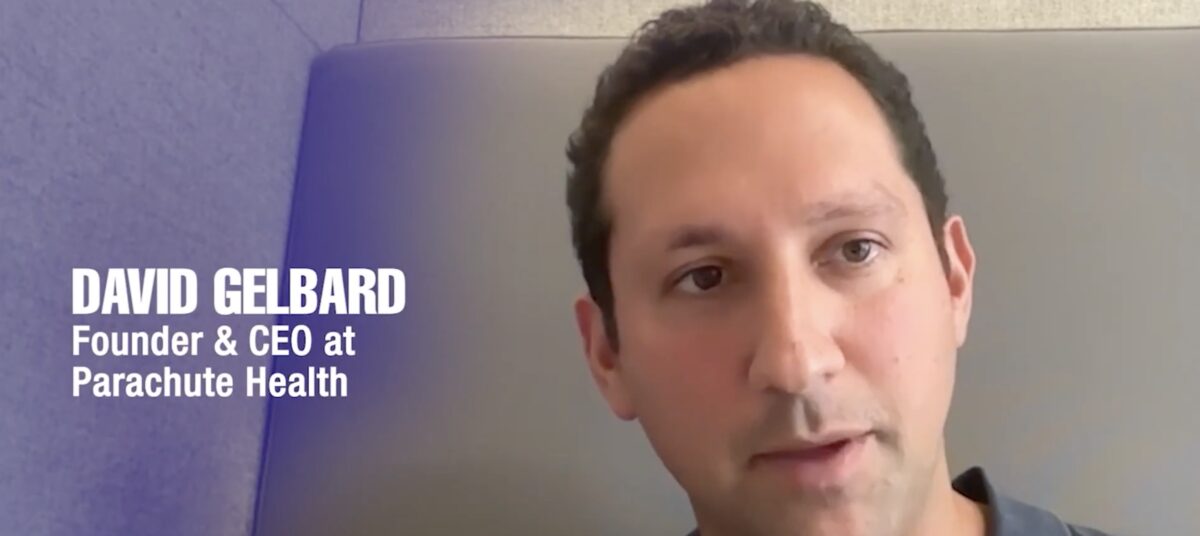
On the Claim to Fame DME podcast, hosts interview David Gelbard, CEO and co-founder of Parachute Health, about building a national DME e-prescribing network. Gelbard explains Parachute was inspired by his father not receiving a post-surgery walker due to a failed fax process, and describes the platform as enabling clinicians to place online DME orders that are validated against insurance criteria to reduce rework and delays.
In This Episode
He discusses why fax persists—fragmented systems, data interoperability gaps, and trust issues across clinicians, DMEs, and payers, and compares e-prescribing to e-commerce’s qualified orders, lower processing costs, and faster payment. He also outlines new efforts to measure and surface DME service quality via patient satisfaction scores, Parachute’s focus on transparency and auditability, the next priority of faster payer authorization/payment, practical uses and limits of AI, and advice for healthcare founders to be patient and listen to customers.
- Duration: 36:29
- Guest: David Gelbard, CEO and Co-Founder, Parachute Health
- Hosts: Alex and Wayne (Claim to Fame DME Podcast)
(1:41) Introduction — The $4 Walker That Never Arrived
David Gelbard started Parachute Health a little over 11 years ago, after a stint running turnarounds on bankrupt companies and, earlier, summers working in his family’s mom-and-pop pharmacy in upstate New York. The company exists because of one order that failed. His father had life-saving back surgery and never received the walker meant to be delivered to his house — instead “furniture walking” from the bed to the bathroom, and falling. When Gelbard called the hospital, they said they’d faxed the order. When he called the supplier, they confirmed receiving the fax, said it was missing insurance information, and threw the order out. Nobody called. “Obviously couldn’t afford it, a $4 walker. But the fact that such a lack of a non-transparent process — that’s what enabled me to create Parachute, to fix the process, get rid of the fax.”
(2:57) What Parachute Health Actually Does
Parachute is the national leading DME e-prescribing platform. Where a clinician once faxed a DME company, they now place the order online, and the order is assessed against the insurance criteria at the point of prescribing to confirm all required data has been captured. By the time it’s signed and routed, the DME has a fully built order and no back-and-forth. Gelbard’s benchmark for the old way: “It used to be a 50% rejection rate on faxes.” Twelve years in, the network spans more than 300,000 prescribers nationwide and has helped north of 15 million patients — close to a quarter of the market now flowing through e-prescribing, and growing rapidly.
(4:09) Why the Systems Don’t Talk: It Starts With One Patient
Scale, for Gelbard, is just his father’s story multiplied: for every hundred patients helped, fifty would have had an issue — an oxygen tank, a wheelchair, a diabetes product stuck somewhere with nobody able to say what happened. And it’s nobody’s fault: “the systems don’t talk to one another. An EMR doesn’t speak DME insurance.” The core of the product is letting the clinician see what the DME is looking for, because that’s what the insurance company is looking for.
(5:10) Why the Fax Has Been So Hard to Kill
There’s a million NPIs and a long history of everyone digitizing separately. Clinical facilities went through a massive modernization to get health records digital; payers, care management systems, and DME ERPs each did the same inside their own four walls. “But the part that was never figured out was then how do you connect interoperably all the data.” The data in an EHR is stored very differently from an ERP or a payer platform, HIPAA adds real constraints on transport, and doing it at scale requires systems of record to open up, which is not the norm, since much of this data is deliberately protected inside a hospital, payer, or DME.
(7:13) The Industry’s First Reaction: “You’re Getting Involved in My Business”
Did the industry immediately see the need for shared digital data? “No. Yeah. No, not at all.” Any change to how things work draws an immediate negative reaction, and early on e-prescribing was read as intrusion. Gelbard’s frame is the watershed moment in retail when e-commerce arrived and brick-and-mortar operators could call it a fad or embrace it. E-commerce did three things: made the order fully qualified at the point of purchase, enabled self-service that lowered processing cost, and got the seller paid faster. E-prescribing does the same for DME, making sure the buyer knows exactly what’s needed so there’s no abandonment and no labor spent on back-and-forth. Early adopters, he notes, used it as outright competitive advantage and took market share.
(9:37) Your Insurance Card Should Work Like a Credit Card
The original transparency failure — no one knew if the insurance would cover the order, so the order got thrown out — points at what’s still missing. “Your insurance card doesn’t act like a credit card. You don’t get to walk into a Starbucks, swipe your credit card, validate, authorize — and then get back in two weeks.” Gelbard wants payers engaged enough to give a real-time determination at the point of care: authorized and paid for, patient served faster, and the DME knowing it will get paid, which speeds everything downstream. Automating authorization at the point of purchase or intake is “the next big thing we’re working towards.”
(11:15) Fighting Commoditization: Making DME Service Quality Measurable
Gelbard’s other concern is the race to the bottom on price, driven by the fact that nobody measures the quality difference in service. As the son of a mom-and-pop DME pharmacy, he watched the weekend deliveries and after-hours calls and on-site repairs firsthand: “that patient service has never been quantified in any sort of meaningful way. You can’t point to something and be like, oh yeah, that’s the service index.” So Parachute launched patient satisfaction scoring this year — the offsetting variable of quality that keeps the category from being commoditized on price alone.
(13:48) How Patient Satisfaction Scoring Works
When a clinician prescribes, Parachute sends the patient a link telling them where the order is going and whose call to expect, which is itself why orders don’t get abandoned. Attached to that is a one-to-five survey: Was it communicated clearly? Was it delivered on time? How was your overall experience? DMEs then use that data with their clinical partners and payers. The point is third-party validation: “It’s not me talking about me. It’s not like it’s my mom. If I’m great, my mom says I’m great.” He compares it to picking a doctor with good bedside manner, or to knowing whether a DoorDash restaurant made someone sick.
(14:51) What AI Can’t Do
Automate the payment side, get orders to the right place — but “AI isn’t going to remove the human judgment, relationship, problem-solving aspect that only humans can do.” What gets elevated as process work is automated is exactly the human part: how you answer the call, how you problem-solve, how you listen. Gelbard ties that directly to aging in place — most people today want to retire in their home, which makes the DME’s role in that transition vital.
(16:18) What It Takes to Build a National Network
Twelve years, and “a lot of pain.” The biggest thing is listening to the market: some years the clinical side needs enhancing, some years the DME side, some years you need to bring the payer into the fold. What holds it together is a single North star — if the patient is getting what they need faster, you know you’re doing a good job, which makes the next priority reasonably clear, whether that’s integrating another EHR or ERP, building reorder workflows, or patient engagement.
(17:54) Trust Is the Missing Piece — and the Audit Log Is How You Build It
Getting a network started required transparency across three parties. Parachute has communication and visibility into everything happening with an order, which resolves disputes with evidence rather than blame: a clinician upset the DME didn’t deliver can look at the audit log and see the clinician never answered the DME’s question. “I think that’s the big thing the DME industry is missing is trust. No one trusts each other. The payers don’t trust the DME. The DME doesn’t trust the clinicians to send the right documents.” The patient is the bystander absorbing the consequences in delays. Parachute’s position is deliberately non-aligned: “We don’t have one necessarily partner. We try and make the system work better for everyone’s benefit.”
(20:07) Enablement, Not Replacement — and the Competitive Bidding Moment That Made It Work
Different moments called for focus on different sides of the system, depending on where the friction sat in a given order — clinical workflow, DME workflow, or payer workflow. What Parachute won’t do is try to be the EMR, the ERP, the claims system, or the care management system: “we’re not replacement software, we’re enablement.” Plenty of entrants promise to replace everything, which he considers very hard against decades of built-out workflow. He’s candid about the rough early days — the system shutting down mid-order, blaming the clinician’s Wi-Fi — and about timing: Parachute landed right after competitive bidding cut reimbursement roughly 50%, when DMEs had to figure out how to survive again. Many say e-prescribing reduced their cost of doing business enough to get them through, and some went on to major growth, M&A, and new markets. Reorders came next, then deep integrations upstream with Epic, Cerner, and Athena.
(23:02) The Next Arc: Getting Paid Faster
Ordering will keep growing, but Gelbard’s next frontier is payment. “A lot of teams do a lot of work and they always then live wondering, am I going to get paid?” It’s the same gap e-prescribing closed between clinicians and DMEs, applied now to DMEs and payers: send the order digitally so the payer can auto-authorize it, since the clinician already signed off on exactly the clinical data required. Faster authorization means faster processing, lower cost of doing business, and faster payment — “it’s a full win.” Payers weren’t very engaged in DME until recently; the upside of that engagement is more rapid, transparent payment and less time spent asking whether something is authorized.
(24:59) Are Payers Actually Open to Digital Ordering? Yes — They Want It
The recurring early worry was whether payers would accept e-prescribing. Gelbard found the question absurd in context: “my biggest competition at the time was walking with a doctor. I was seeing a drawer of pre-signed prescriptions.” E-prescribing has digital tracking, is more compliant, and shows everything happening with an order — “if you were running a business today and you could do credit card or cash, which one’s easier to manage as a bank?” The real problem is the trustworthiness gap: payers don’t trust the DME, and the DME doesn’t believe it will get paid. Payers do want e-prescribing, because it lets them clinically validate faster.
(26:27) Compressing Time to Authorization
E-prescribing tells the clinician what the payer’s requirement is. It doesn’t force the payer to decide on the spot, but it hands them the data to decide faster. Gelbard frames the stakes in patient terms: while everyone waits on authorization, the patient is waiting to start therapy after a conversation with their doctor — and by the time approval lands, they may have moved on entirely. Compressing time to authorization is the next step, and he notes it works best in partnership with the systems handling inventory and logistics, since “you start and stop somewhere.”
(27:50) The Most Complex Moment in Twelve Years
Payers are managing the space more actively, pricing pressure is coming from multiple directions, the e-commerce analog has already landed against brick-and-mortar operating models, AI is being layered into everything with real questions about ROI, and referral sources have their own patient care demands. “There’s a lot of moving pieces now in a way where there wasn’t really that five, ten years ago.” Running through all of it is the price-versus-quality question, and the need to make the quality delta between a high-quality provider and one that won’t come fix a broken hospital bed visible and believable.
(29:42) Practical Innovation vs. AI Hype
Every Parachute product now has an AI edge — agentic ordering, AI embedded in intake to automate capture — because parts of the technology can automate what was historically manual. Zoomed out, AI does two things: it makes technology cheaper to produce, and it makes manual work cheaper and more productive. But the workflows still have fundamental problems, and Gelbard’s warning is about where teams aim it: “I’ve noticed that through AI, a lot of people focus internally inside their house.” Most AI has gone to internal tooling, while businesses are won by fixing the customer’s problem — and for a DME, the customers are the referral source and the payer, which makes it a collaboration problem. “They’re not really going to care that you’ve got rid of their fax wranglers.” Value sits in getting patients what they need faster, showing payers transparently that the patient needed the benefit, and getting paid faster. Efficiency is important, but he’d question it as the first priority when the market is moving.
(32:40) Identify the Problem, Then Pick the Tool
Gelbard admits Parachute failed early by promising more than it could deliver, and learned hard lessons from it, which is why he cautions against promising the world with AI. Identify the problem, define the success criteria, then solve it for a business benefit, whether the tool is AI, a workflow, or an agent. “You just get more tools now to use to go attack the problem, but the problem is the more important one.” If he were running a DME, the top aims would be growing order volume by delivering better service, getting paid faster and keeping the money, and driving quality up continuously.
(34:13) Advice for Healthcare Founders: Patience, and Actually Listening
For anyone trying to disrupt a legacy healthcare workflow, Gelbard’s advice is patience — these are complex workflows in a highly regulated environment. He goes further and questions venture funding as the default methodology, because the returns expected on that clock force short-termism that conflicts with the customer: a 50-year-old business navigating a regulated industry methodically is on a completely different timescale. The real cost of that pressure is what it destroys: “it usually turns off the ability to listen, which I mentioned earlier is the most important thing when we were building Parachute. Our customers tell us the way.”
Connect with David: david@parachutehealth.com, or reach the team through the Parachute Health website

Explore More Episodes