


 27:58 to watch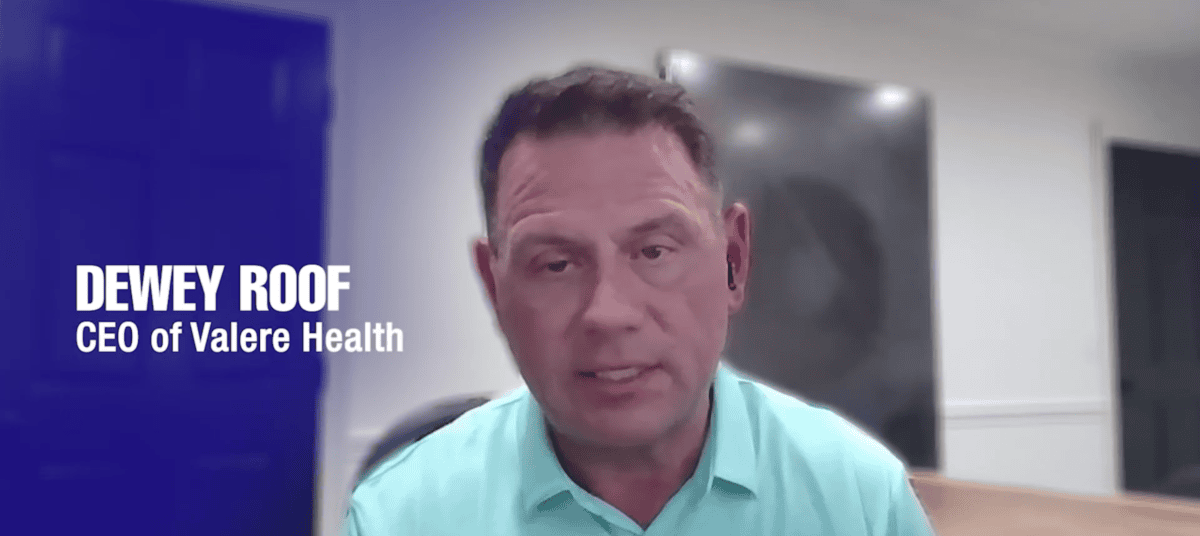
On the Claim to Fame podcast, Dewey Roof of Valere Health shares his 30-year DME/HME background, including selling an HME to Adapt Health in 2021, and explains how Valer Health emerged from internal software built around 2016–2017.
What Will You Learn in This Episode?
After shifting strategy with CTO Doug Thornton, Valere adopted a data event streaming architecture to act as an underlying “utility” or “central nervous system” that connects fragmented DME tech stacks and automates workflows without relying on a single UI. Roof highlights key inefficiencies like manual intake, fax-based orders, eligibility and authorization delays, and rekeying data across systems, arguing that clean, complete, compliant data is the essential starting point to reduce audit risk and improve net revenue. He outlines Valere’s CAST approach—Clean, Accelerate, Scale, Transform—predicts increasing automation adoption, and emphasizes preserving human touch in patient care while moving staff from busy work to oversight and decision-making.
- Podcast Episode: Clean Data, Interoperability, and Scaling DME Operations with Dewey Roof
- Guest: Dewey Roof, CEO, Valere Health
- Hosts: Alex and Wayne (NikoHealth)
(1:15) Introduction — Who Is Dewey Roof?
Dewey Roof spent almost 30 years in the DME industry, starting in sales and working up through operations, leadership, and eventually partnership and full ownership of a DME provider. He exited that business to AdaptHealth in 2021. Around 2016-2017, his team had already started building internal software to manage the chaos of running the operation — software that never got monetized on its own until after the sale, when Roof set out to turn it into a standalone product.
(3:29) From LifeHME to Valere Health: Building an Interoperability Utility
Roof’s early approach bundled order intake with an outcomes-management add-on and asked providers to buy into the whole package — a strategy that didn’t land. A meeting with Doug Thornton, now Valere’s Chief Technology Officer, changed the direction: instead of building a system that did the work for providers, Valere would give providers a utility that enables their existing systems to work together. Built on data event streaming architecture, Valere launched in 2022 and describes itself as a central nervous system that takes in information, processes it, and deploys actions — not a dashboard providers log into, but infrastructure that sits underneath their existing tools.
(5:01) The Biggest Inefficiency: Bad Data at the Source
Roof’s CAST framework starts with Clean for a reason: bad information entering a system compounds every step downstream. He points to disconnected, incomplete, and duplicate data as the root of most operational problems, and frames compliance risk in stark terms — DME providers often operate as if presumed guilty until proven innocent under audit scrutiny, even when errors are unintentional rather than fraudulent. Getting data clean, complete, and compliant at the point of entry is what makes everything built on top of it defensible.
(7:01) Common Manual Processes That Shouldn’t Exist Anymore
Roof describes staff still waiting on hold for authorizations and eligibility checks, and re-keying the same information from one screen to the next. Intake is the clearest example — faxes still arrive, and staff manually convert them into orders and patient files. He’s careful to note the specific bottleneck varies by company: some providers have solved stat wrangling but are still stuck on prior authorizations or QA/QC, so there’s no single fix that applies everywhere.
(8:41) What Interoperability Actually Means for a DME Business
For Roof, interoperability means getting every system in a provider’s stack — no matter how well each one performs its own job — working together automatically. Valere sits underneath those systems, picks up an event from one platform, and routes the resulting workflow to wherever the right person is working next, without requiring someone to manually move the data. He credits NikoHealth’s API as an example of the openness the industry needs more of.
(10:12) The Real Problem: Cleaner Revenue, Not Just More Automation
Applying this thinking to his own former business, Roof worked line by line down the P&L: cost of goods first (better inventory control and procurement), then labor (automating and realigning what staff spend time on), with efficiency as the remaining lever for growing net revenue without growing cost proportionally. The goal wasn’t necessarily higher top-line revenue — it was cleaner revenue, with less written off to denials and errors.
(14:03) Solving Multi-System Problems, Not Single Tasks
Roof distinguishes Valere’s approach from typical point-to-point API integrations, where a failure on one side of a connection tends to break the other. In Valere’s model, a breakdown in one workflow doesn’t cascade through the rest of the system. He notes that the problems providers bring to Valere are rarely isolated — a single issue usually has downstream implications across multiple endpoints, which is why the fix has to address the full path rather than one connection at a time.
(16:01) Is DME Behind Other Industries on Technology Adoption?
Roof says yes, and attributes it to fragmentation: with so many disconnected systems and few shared standards, it’s difficult for new technology to take hold across the industry the way it has elsewhere in healthcare. Larger national and regional providers have more resources to solve these problems internally, but the broader base of smaller providers doesn’t — which is part of why Valere aims to serve organizations of every size.
(18:31) Are We Near a Tipping Point for Automation?
Roof sees real acceleration but not yet a plateau — plenty of companies are entering the automation and AI space, and quality still varies widely. He expects the next year to bring another meaningful step forward as agentic and adaptive technologies help close the gap between rigid, one-size-fits-all tools and what individual providers actually need. Within three years, he doesn’t expect any provider to be running without multiple automations in place.
(20:52) What a Modern DME Operation Looks Like in 5-10 Years
Roof expects the industry to standardize and simplify considerably, making it harder to run a sloppy operation and easier to scale. His concern is consolidation driven purely by cost-cutting, which risks narrowing patient access to a “race to the bottom” on product and service quality. He frames Valere’s long-term goal as helping providers demonstrate value-based care — the full value delivered to a patient, not just the lowest price paid for equipment.
(23:01) Where Human Touch Still Matters
Roof is direct that care itself will always require a human element, even as AI takes on more of the administrative load — pointing to AI agents already conducting video check-ins with patients as an example of how far automation has come without replacing the in-person relationship. He also frames human oversight as a resource of accountability: automation should shift people from repetitive busy work toward reviewing exceptions, interpreting data, and making decisions — not eliminate the need for people entirely.
(25:04) The First Step for an Owner Feeling Stuck
Roof’s advice returns to CAST and its order: Clean, Accelerate, Scale, Transform. He acknowledges it’s a general answer, but the sequence matters — identify where data isn’t clean, compliant, or complete first, whether that’s in purchasing, intake, or delivery, since that starting point is different for every provider.
(26:06) Rapid Fire Round
- App you’re saving if your phone hits 1% battery? Messages.
- Go-to fast food order? Dave’s Double at Wendy’s.
- Give up coffee or your phone? Phone.
- Free flight tomorrow — where are you going? Ireland.
- If you weren’t in healthcare, what would you be doing? College basketball coach.

Explore More Episodes