


 35:52 to watch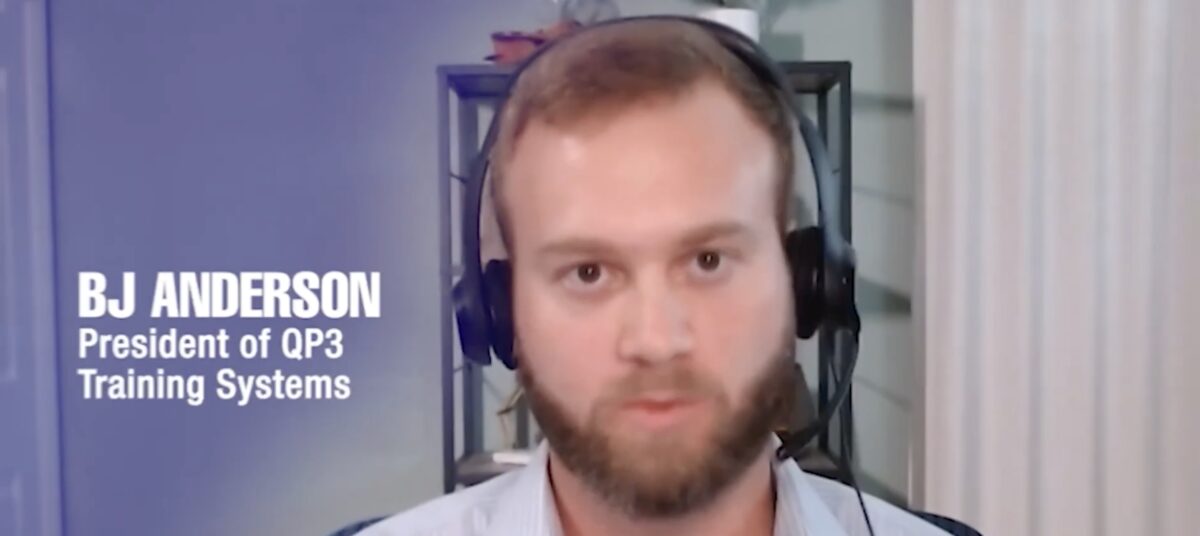
On the Claim to Fame DME podcast, Alex and Wayne interview BJ Anderson, president of QP3 Training Systems, a second-generation family business specializing in growing organic DME and CRT revenue through referral sales training.
In This Episode
Anderson says many teams fail to grow referrals because reps don’t explicitly ask for the business, don’t define differentiators, and get commoditized by selling products instead of outcomes. He argues most teams lack process and confidence, not knowledge, and emphasizes questioning referral sources to solve their problems, keeping patients out of the hospital, and engaging all stakeholder roles (gatekeepers to physicians). Anderson defines predictable “clean, billable” referrals as driven by reps who know good vs. bad orders, train sources to submit complete documentation, and align sales and operations to avoid backlog, delays, and lost trust.
Duration: 35:52
Guest: BJ Anderson, President, QP3 Training Systems
Hosts: Alex and Wayne (Claim to Fame DME Podcast)
(1:35) Introduction — Second-Generation Leader of a 30-Year Training Business
BJ Anderson is president of QP3 Training Systems, a family business his father started roughly 30 years ago that specializes in growing organic revenue for DME and CRT clients. It began as a leadership seminar company, then his father landed a DME company on the rise — training its sales reps, area managers, branch managers, and regional managers. That client turned out to be Lincare, and the business grew organically from there. His father was also a serial entrepreneur running six other businesses simultaneously, which is where Anderson learned the DME business. He took over running the company about two and a half years ago and has been expanding the client base since.
(3:02) What Most Teams Get Wrong: Not Asking, and Not Differentiating
Anderson splits the problem into buckets. The first is what QP3 calls physician referral sales, and the biggest failure is simple: “they’re not asking for the business.” He sees it at every size of company, including those with joint ventures or hospital system relationships who assume owning the relationship guarantees the referral — and then bleed leakage. Asking is a one-on-one conversation between the rep and the referral source, whether that’s the physician, the referral coordinator, or the MA. The second bucket is failing to define a differentiator. In respiratory especially, everyone sells oxygen, CPAP, and NIV. “They’re selling products instead of selling outcomes and they’re not selling benefits. And so they get commoditized right off the bat.” You can’t negotiate on price in this world — you negotiate on what you can do for the patient and for the practice.
(5:49) Not a Knowledge Problem — a Process and Confidence Problem
DME companies naturally put the information in front of their people: qualifications, diagnoses, the patients they serve. “I think the problem is they don’t tell them what to do with that information.” Left without a process, the rep starts spewing facts and figures disconnected from any outcome, and the driver sees something in the home without knowing what to do next. Anderson’s real example: a driver delivering oxygen found Mr. Smith using a foot massager to vibrate mucus out of his chest. Having a process to identify moments like that, and actionable steps to capture the resulting organic revenue, raises revenue per patient while delivering more value to the referral source and the patient. “So now you’re helping your community and you’re growing your business.”
(7:27) What Referral Sources Actually Want
Anderson has an unusual advantage: when he works with a company, he can be introduced as a new hire or someone in training, “because then I get to play dumb,” and physicians love educating people who are curious. He asks them directly what they’re looking for from someone starting this career, and the answer comes back without fail: new information, and how it’s going to help their patients. Underneath that, the biggest problem he hears is keeping patients out of the hospital through proactive care and proactive solutions — and not being told how to treat their own patients. A pulmonologist with deep expertise doesn’t have to listen to anyone, “but they choose to listen to people that provide value to them.”
(8:52) Where Reps Lose the Conversation: “If the Doctor’s Not Talking, They’re Walking”
The loss happens right away, at the introduction, when the rep doesn’t ask questions. “You’re seeing the referral source stand there, nod their head, and they’re looking behind you to see who can get me out of this conversation.” Anderson’s field-call observation is the opposite: an engaged referral source will give you 20 minutes, because you’re asking questions and solving a problem they have. The failure mode is showing up and throwing up — leading with who you are, what you do, and what you carry. They already know what a DME company does. He compares it to a first date where one person never shuts up. Good questions: what are they currently doing, what are their biggest problems, where do they need the most help, what’s important to their patients. And the questions have to span every level — gatekeeper, MA, coordinator, physician — because each has different needs and each has a role that leads to a referral. Solve all of their problems and you beat the competition by taking care of the provider holistically.
(11:08) Why Reps Default to Features and “Just Checking In”
It’s comfortable, and it feels like taking action. Reps are doing what’s expected — calling on accounts, reporting pipeline — so they tick boxes rather than put themselves out there. Anderson’s view is that learning requires looking a little silly in front of a referral source, ideally one that isn’t sending you 20 oxygens a month. His framework is deliberately minimal: start with a question, ask at least one follow-up before you talk about what you’re selling, and hold a clear idea of the source’s greatest need that you can actually solve. “If you haven’t, then you shouldn’t be talking.”
(12:47) What “Clean, Billable Referrals” Really Means
“Providing more orders is useless if you can’t bill for them.” The top performers Anderson meets on discovery visits share three traits: they know what a good and a bad order is, they’re very good at training their referral sources to give them only good orders, and they hold those sources accountable — nicely and fairly — to submitting clean ones. That lets the back office process orders quickly and efficiently. Turning down bad business is part of it. Making it predictable requires documented process, which matters doubly in an industry with real turnover among drivers, CSRs, and reps: with a process, “I don’t have to keep them here to keep the lights on. I can plug and play with a new hire.”
(14:56) Why Referral Quality Matters as Much as Volume
Volume without quality inundates operations fast. Anderson sees sales and operations butting heads almost everywhere — and sees extraordinary results, efficiency, and profitability the moment they work together, with give and take on both sides. The strongest reps protect the relationship at the front end, because “the last thing they want to do is spend time going back to a referral source that they got an order from and apologizing because they didn’t get that patient set up in time. And that’s going to kill your business.” It kills the rep’s credibility on delivering what they promised and the referral source’s confidence at the same time.
(16:37) Helping Referral Sources Submit Better Information — Without Adding Work
Technology in the last five or six years has made submitting a clean order far easier. The rest comes down to the rep being knowledgeable enough to answer questions — not doing the work for the source, but recommending what will help qualify a patient, and walking through an order explaining what’s needed and why. Explaining the why is what makes it leadership rather than bureaucracy: this is what this specific insurance requires, this path triggers a peer-to-peer, this alternate path — equally legal and within guidelines — gets the patient set up faster and makes the equipment pickup cleaner later.
(18:13) What This Industry Actually Sells
Anderson’s keynote question gets a consistent answer: “improved outcomes, reduced hospitalizations, greater quality of life, more birthdays and more holidays with their families.” He demonstrates it live by asking the hosts why they exercise — mood, body, longevity, confidence — and pointing out nobody ever answers with the Peloton in the garage or the squat rack at the gym. “They never talk about the equipment. They always talk about the outcome.” In DME the buyer is the referral source, and what changes their mind is their patients and their practice: fewer callbacks, patients out of the hospital, better quality of life, a more profitable practice. He’s blunt about product-level pitches: physicians largely don’t care which POC you carry. “They want to know, can you get them out the fastest? Can you make sure that they don’t call me back with problems?”
(21:59) Principles vs. Applications: CRT, Sleep, and Everything Else
Selling outcomes is a principle, so it transfers across CRT, DME, and outside the industry entirely — software included, where what’s being bought is an easier ordering process, easier onboarding, and fewer headaches, not technology. The applications differ: CRT has different funding and different referral sources like PTs and OTs, so the outcomes you speak to change accordingly. Running the business this way also makes upselling — “maybe upselling is like a dirty word” — far easier, because you’re actively looking for value to deliver upstream and downstream. “That’s when you start seeing just really predictable and explosive growth that seems a lot easier than it feels like it should.”
(23:50) Why One-Off Sales Training Doesn’t Stick
Anderson admits he used to look down on motivational speakers, because a room gets excited for 45 minutes and the company is back to its old habits two weeks later. The hard part isn’t the idea, it’s making it repeatable week after week, quarter after quarter — which requires breaking complex ideas into processes simple enough that everyone understands them, can act on them, and has the confidence to implement them independently. Done right, “you turn into a literal growth engine that you’re just throwing gasoline on.”
(25:38) “Confidence Is the Precursor to Action”
For training to stick it has to be relevant to the person’s role and daily activities, and actionable starting next week. Anderson’s critique of typical rep training: “here’s what you need to be doing, go out and learn how to do it, and I’ll coach you along the way” — instead of a stated day 30, day 60, and day 90, with the coaching areas named in advance. Putting someone into a role or activity they aren’t ready for destroys confidence. His father’s line, which confused him for years, is the principle underneath: confidence is the precursor to action. People take action when they feel set up for success, when the risk feels safe, and when they know they’ll be supported. Without guardrails and a plan, you get a failed program, unconfident reps upset at their manager, and corporate wondering what happened.
(29:13) What High-Performing Teams Have in Common
Across Lincare, Quipt, BGM, and many regional providers, the common threads are good leadership structure, knowing what motivates the team, and a high level of trust between leadership and the people on the ground. Anderson pays attention to how leaders take accountability, set people up for success, and listen to the problems the field is reporting. Structure matters too — reward the behaviors you want repeated. His pointed example: most clients have reps on commission; the ones that don’t “wonder why their sales reps leave,” and it’s the good reps who leave, to a competitor that does. He boils the whole thing down to mentality: “There’s two roles of a DME company. The first is to provide excellent patient care to the patients in your community. And the second one is to make money… And if you’re doing the first one, you’re going to do the second one. Good patient care is good business.”
(31:49) One Piece of Advice for More Clean, Billable Referrals
Set the expectation of what a clean, billable order is, hold to it, and communicate it to your referral sources and — more importantly — inside your own team. Then take the ego out of it, so a returned order reads as someone doing their job rather than an accusation. Make what’s at stake explicit for each role: the rep doesn’t get commission until the order is set up and billing; the billing coordinator should be asking how much a send-back delays the patient, what they can do on their end to speed setup, and how to communicate with the rep or CSR who made the mistake so it’s caught earlier next time. The goal is “reducing that adversarial mindset that we have between billing and operations and operations and sales.”
Rapid Fire Round
- Sales training or leadership training? Leadership training.
- Referral volume or referral quality? Referral quality.
- Most underrated role in a DME company? The driver.
- Biggest referral killer? Going back to ask for something after you dropped the ball.
- Most overused healthcare sales phrase? “Gatekeeper” — not that it’s bad.
- Keynote stage or workshop room? Workshop room.
- Airport lounge or get there last minute? Get there last minute — he knows it’s exactly 44 minutes from his house in the Clearwater/Dunedin area to a Tampa gate with TSA PreCheck, and once made a rebooked flight from a cancellation at Medtrade with 45 minutes to spare.
- Podcast or playlist? Playlist.
- If QP3 had a mascot? Scooter, his dog — half husky, half beagle, blue eyes, blonde hair.

Explore More Episodes