


 17:11 to watch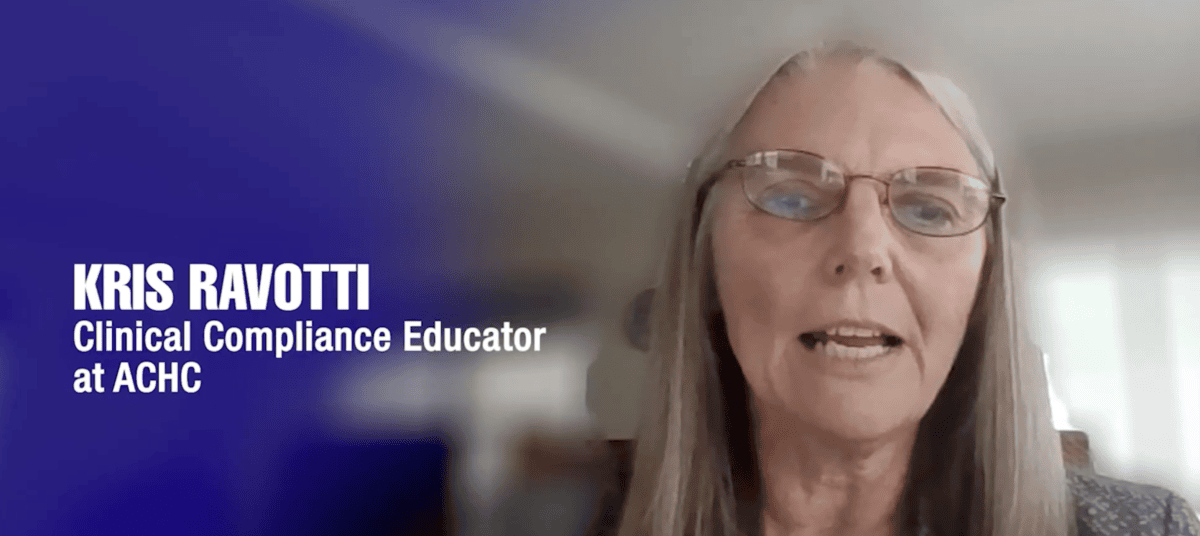
This week on the Claim to Fame podcast, Alex and Wayne interview ACHC’s Kris Rivotti (clinical compliance educator for DMEPOS) and Deborah Panza (associate program director for DMEPOS, sleep, and mobile dentistry) about ACHC’s education-focused accreditation approach and recent CMS Final Rule changes.
Inside This Episode
They explain that many suppliers will now be surveyed and reaccredited annually (with prior cycles honored if accredited before January 1), discuss survey readiness through updated policies, routine adherence to standards, mock surveys, and use of accreditor tools, and clarify location and corporate office survey requirements, including sampling rules for large chains (20–100 locations/year). They outline patient record review requirements (minimum five real patient files) and note surveys may be delayed if records aren’t available. They also cover change-of-ownership rules requiring new surveys/accreditation, possible new PTANs within 36 months, removal of temporary accreditation for new branches, common survey failures, and CMS’s fraud, waste, and abuse oversight intent.
- Podcast Episode: ACHC on CMS Final Rule: Annual DMEPOS Accreditation, Survey Readiness, and Ownership Changes
- Guests: Kris Ravotti, RRT, RCP, Clinical Compliance Educator, ACHC; Deborah Panza, BS, RRT, RPSGT, Associate Program Director for DMEPOS, Sleep, and Mobile Dentistry, ACHC
- Hosts: Alex and Wayne (NikoHealth)
(1:50) Introduction — Who Are Kris Ravotti and Deborah Panza?
Kris Ravotti has spent nearly 39 years in the DME industry and has been with ACHC since 2005, including almost 15 years as a full-time employee after several years as a contract surveyor. As clinical compliance educator for DMEPOS, she trains surveyors, oversees survey operations and regulatory compliance, and educates industry stakeholders on accreditation requirements. Deborah Panza has spent nearly 30 years as a registered respiratory therapist and registered polysomnographic technologist, working in hospital-based critical care, sleep labs, and DME before joining ACHC. As associate program director for DMEPOS, Sleep, and Mobile Dentistry programs, she draws on firsthand experience being surveyed as a provider to inform her work today.
(3:05) ACHC’s Education-First Approach
Ravotti and Panza describe ACHC’s foundation as education and customer experience rather than pure enforcement. Their reasoning: a supplier who doesn’t fully understand a standard or regulatory requirement faces a much higher risk of non-compliance, so properly educating suppliers directly supports the ultimate goal of accreditation — quality patient care.
(4:11) What Changed Under the CMS Final Rule
The most significant change: DMEPOS suppliers must now be accredited annually rather than every three years. Suppliers accredited before January 1 keep their existing cycle until it expires; anyone accredited on or after that date moves to the annual cycle. Ravotti stresses that the stakes are high — failing to get accredited on time risks losing Medicare billing privileges entirely.
(5:36) What Survey Readiness Looks Like Every Day
Ravotti outlines the core components of staying survey-ready: policies and procedures that reflect actual current practice, a current version of accreditation standards being routinely met, and regular mock surveys with corrective action plans for anything found deficient. She recommends suppliers use accreditor-provided compliance tools and treat standards adherence as a normal part of daily operations rather than something to scramble for before a survey.
(6:37) Multi-Location and Corporate Survey Requirements
For chains with fewer than 25 service locations, every location must be surveyed. CMS still allows sampling for larger chains, with a minimum of 20 and a maximum of 100 locations surveyed per year, using whatever sampling process the accrediting organization had in place before January 1. Corporate offices must be surveyed annually as well; those without a PTAN can receive an announced, virtual survey that doesn’t count toward the location sampling total, while corporate locations with a PTAN require an unannounced, on-site survey like any other location. Corporate surveys must account for all supplier locations and include reviews of policies and procedures, licensure and certification verification, and personnel requirements.
(8:13) New Patient Record Review Requirements
Surveyors must now review a minimum of five patient records, and those records have to belong to real patients actually receiving covered products and services from that specific supplier location — mock files, templates, or another supplier’s records don’t qualify. Medicare patients must be used if the supplier has any Medicare claims on file; non-Medicare payers can only be used for initial accreditation surveys where a supplier genuinely has fewer than five Medicare patients, and even then, ACHC has to confirm that with CMS. If a surveyor can’t complete the five-file review on-site, the survey itself is delayed until that review is finished — making it worth auditing records for missing documentation well before survey day.
(10:16) What Changes with a Merger, Acquisition, or Sale
Any change in ownership must be reported to the accreditor and the National Provider Enrollment (NPE) contractor within 30 days of the effective date. Under the Final Rule, accreditation no longer automatically transfers through a merger, acquisition, or sale — a new survey and new accreditation are required for any majority ownership change. If that change happens within 36 months of initial Medicare enrollment or the most recent ownership change, the supplier must also enroll as a new DMEPOS provider and obtain a new PTAN; a tax ID change likewise requires a new survey and new supplier number. Given the current moratorium on Medicare enrollment, Ravotti notes this can create real delays for sellers and buyers alike.
(11:36) Other Triggers for a New Survey
Beyond initial and renewal surveys, a new survey is now required for a change of location, a change of ownership, adding a product code, changing or adding a service, investigating a complaint, or whenever CMS directs one. CMS has also removed the provision that allowed temporary accreditation for a new branch — a survey must be completed and accreditation granted before that branch can operate.
(12:42) Where Suppliers Most Often Fail a Survey
Panza points to a lack of preparedness as the most common failure point: no appropriate staff available, being closed during posted business hours, incomplete or inaccessible personnel and patient records (especially when the one person with access isn’t there that day), expired licenses, and gaps in documenting equipment maintenance, staff training, or competency assessments. Her recommendation is a backup plan for every critical piece of documentation, since surveys are unannounced.
(14:03) What Separates Suppliers Who Pass Easily
Suppliers who pass with fewer issues tend to know the DMEPOS quality standards thoroughly, stay genuinely compliant with them day to day, and keep appropriate staff on-site during posted hours. They’re also prepared well in advance — with more than one person able to manage a survey — keep PECOS and licensure current across every state they ship into, and apply early enough to leave time for the full survey and corrective action process. Ravotti’s summary: evidence should be ready and waiting, not something staff scramble to find on survey day.
(15:52) Is This the Start of More Frequent Oversight?
Ravotti points to CMS’s stated intent behind the Final Rule — reducing fraud, waste, and abuse — as the driver behind the added reporting and accountability requirements for accrediting organizations. While she can’t predict exactly what comes next, she doesn’t expect this oversight push to fade.

Explore More Episodes