


 30:47 to watch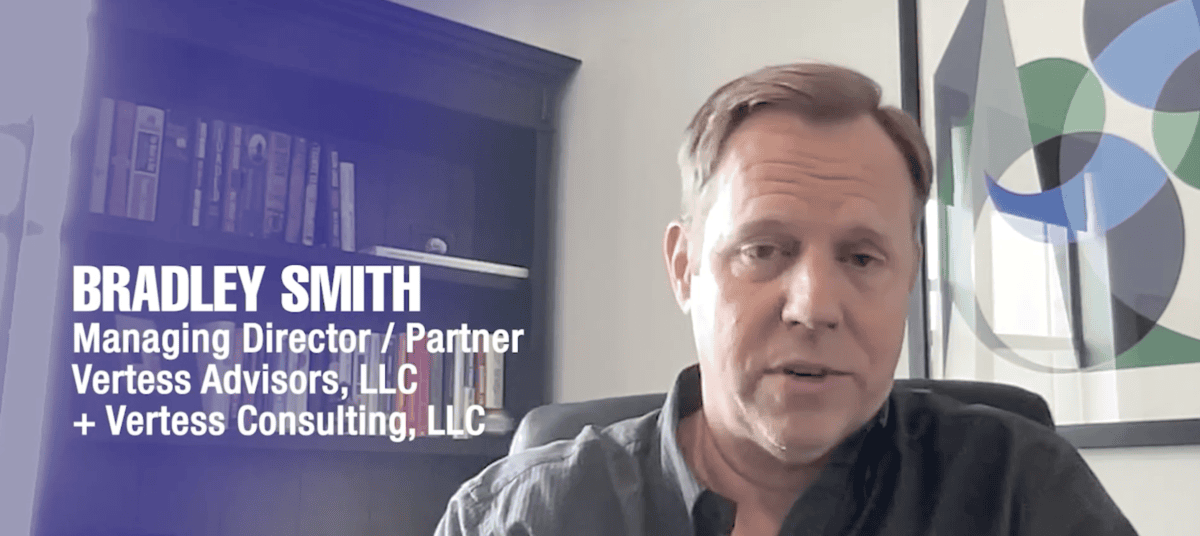
Alex and Wayne interview Bradley “Brad” Smith of Vertes, a healthcare M&A firm focused on DME/HME, to discuss the grow-vs-sell decision and current market dynamics.
Episode Breakdown
Brad shares his background building a Texas DME company, expanding from mobility into oxygen via acquisition, completing a private equity recap in 2004, pursuing a continuum-of-care acquisition strategy, and ultimately selling after Medicare competitive bidding in 2008; he then shifted into transaction work and co-founded Vertes. He describes how acquisitions can be faster and less risky than organic growth and stresses transaction nuances and buyer protections. Brad notes 2020–2022 were boom years with higher valuations, 2023–2024 saw declines, and 2025 feels normalized but uneven; smaller DME valuations are lower unless there’s scale or a niche. He advises sellers to avoid single-buyer situations, focus on cash flow and strong teams, and says private equity-backed platforms will keep gaining share.
- Podcast Episode: Bradley Smith on DME M&A: When to Sell, How to Grow via Acquisition, and What Drives Valuations
- Guest: Bradley “Brad” Smith, ATP, Managing Director/Partner, VERTESS
- Hosts: Alex and Wayne (NikoHealth)
(1:35) Introduction — Who Is Bradley Smith?
Bradley Smith started his first DME company in Tyler, Texas in the late 1990s, specializing in mobility equipment, and grew it organically to five to seven locations before acquiring a local oxygen provider — a deal that taught him respiratory and turned out to be highly accretive. That experience convinced him acquisition was a faster, more predictable way to grow than building organically. He completed a private equity recapitalization in 2004, then shifted toward a continuum-of-care strategy, acquiring companies across labs, pharmacy, and home care. After the 2008 Medicare competitive bidding round, his board opted to sell the business in pieces. Smith moved into transactional and clinical work, eventually co-founding VERTESS around 12-13 years ago — a healthcare-focused M&A firm where he and his colleagues concentrate heavily on DME and home care deals, with a 16-person team operating across all 50 states and internationally.
(8:40) The State of the Industry: Consolidation and New Entrants
Smith describes further consolidation as one of the clearest trends he’s watching — enough gaps have opened up in the number of providers that some businesses are growing organically without much effort. He’s encouraged by a wave of younger entrepreneurs entering DME, often bringing outside industry experience and more tech-forward approaches, which he sees as something the space has historically lacked.
(11:10) What Running a DME Taught Him About Advising Owners Today
Having lived through the operational grind himself — fragmented systems requiring the same patient data to be entered repeatedly, tight cash flow months, and the emotional weight of patient relationships — Smith says that firsthand experience shapes how he counsels owners today. He sees an owner’s “story,” including the legacy of how employees and patients are cared for post-sale, as a real factor buyers and sellers both weigh, not just a sentimental afterthought.
(14:57) Where DME Valuations Stand Right Now
Smith describes 2020-2022 as boom years for DME M&A with valuations rising sharply, followed by a noticeable decline in 2023-2024 tied to broader macroeconomic pressure — rising interest rates and inflation. 2025 and this year, he says, have normalized, though activity runs hot and cold rather than steady. Valuations on smaller providers currently sit toward the lower end historically, while providers with scale or a defined niche continue to command stronger multiples.
(16:23) Signals That It’s Time to Sell
Smith’s core advice: don’t sell when the business is down. The right time to transact is when the business is performing well and the timing is right for the owner personally — not when the broader market happens to be hot. He also flags a common seller mistake: treating a single inbound offer as if it’s the only option, when a genuinely healthy business typically has dozens of interested buyers. Negotiating with just one buyer gives that buyer outsized leverage to set — and later change — the terms.
(19:53) What Actually Drives DME Valuations
Beyond free cash flow and EBITDA, Smith points to the management team and staff as the factor buyers ask about first and weigh most heavily — because finding good people who know the business is difficult in this market. Softer qualitative factors like culture fit are harder to quantify but are often what separates a business that earns a standard multiple from one that commands a premium.
(21:34) Using Acquisition to Grow, Not Just to Exit
For owners looking to expand across multiple states or locations, Smith calls acquisition the fastest path — usually built around geographic or product-line targets. He notes today’s market has more built-in sophistication than when he started (no more paper billing, for one), which gives buyers real KPIs and data to evaluate a target against their own systems before deciding whether a deal is worth the integration risk.
(23:50) Who Wins the Next Few Years in DME
Smith expects private equity-backed platforms to keep gaining share, pointing to the capital and resources they bring that smaller independent providers can’t easily match. He traces private equity’s serious interest in DME back to around the pandemic, when firms began recognizing the value in the industry’s consolidation potential.
(25:44) What Owners Thinking About Selling Should Do Today
For owners considering a sale in the next two to three years, Smith recommends starting with free cash flow and reducing personal day-to-day involvement in the business — a strong management team running things without the owner is a more attractive position than an owner who’s hands-on everywhere. He also flags the emotional side sellers often underestimate: owners who get close to a deal and back out because they haven’t figured out what they’ll do with their time once they’re out.
(28:07) One Piece of Advice for Building Long-Term Value
Smith’s advice for owners building a business with lasting value comes back to people: empower employees to make decisions rather than requiring approval for everything, even knowing they’ll sometimes get it wrong. In his experience, giving people real ownership over decisions is what gets them to go above and beyond.
(29:19) Rapid Fire Round
- Early bird or night owl? Night owl.
- Coffee or tea? Both — coffee in the morning, tea in the afternoon.
- Plan everything or wing it? Wing it.
- Always ten minutes early or five minutes late? Right on time.
- Work hard then relax, or relax then work hard? Work hard, then relax.
- Spend money or save it? Spend it.

Explore More Episodes