


 29:36 to watch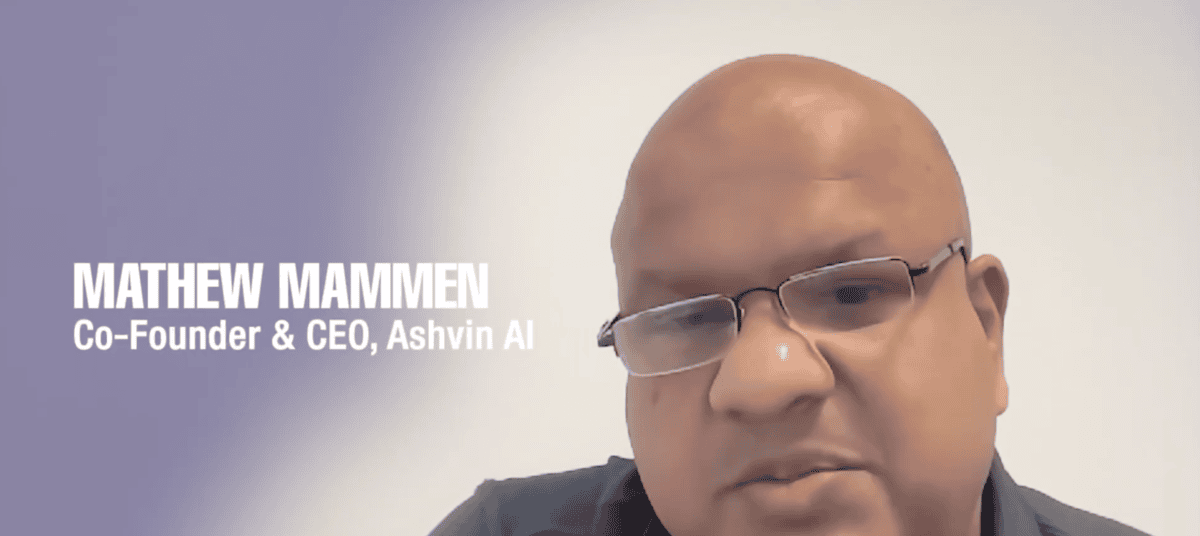
On this episode Alex and Wayne interview Mathew Mammen of Ashwin AI, who shares his background as a software engineer, longtime DME owner, founder of a sleep diagnostics software platform, and leader at Prochant, and explains how DME “decisioning” from referral to cash is broken by portals, paperwork, faxes, conflicting orders, and repeated human adjudication that create rework and slow payment.
Episode at a Glance
He describes Ashwin AI as a decisioning layer aimed at near real-time, absolutely certain intake clearance by combining multiple steps into one and enabling workflow reconfiguration using gen AI, not just speeding up existing tasks. Mommen argues DMEs must modernize to avoid being left behind, advises adopting consumer-grade KPIs while meeting payer requirements, and says winners will stay humble, take risks, and “stay foolish.”
- Podcast Episode: Mathew Mammen on Fixing DME Decisioning with Ashvin AI’s Financial Operating System
- Guest: Mathew Mammen, Co-founder & CEO, Ashvin AI
- Hosts: Alex and Wayne (NikoHealth)
(1:52) Introduction — Who Is Mathew Mammen?
Mathew Mammen trained as a software engineer before spending 14 years owning DME and sleep lab businesses across nearly every product category, including custom rehab, wheelchairs, compression stockings, and orthopedic supplies. Along the way he founded Somnoware, a sleep diagnostics software platform later acquired by ResMed, and became chairman of Prochant, a revenue cycle management company for DME, home infusion, and home health providers. Ashvin AI, he says, is his attempt to bring those three vantage points — operator, software builder, and revenue cycle expert — together into one platform.
(3:04) What’s Actually Broken in DME Today
Mammen’s core diagnosis: the decisioning process from referral to cash is riddled with variability rather than certainty, and that variability is what creates friction, rework, and float — the time it takes to get paid. His view is that fixing DME operations means removing decision points from that variability rather than simply speeding up the existing steps.
(3:57) Working in the “Messy Middle” Between Operations, Technology, and Money
Mammen describes DME as full of scatter: multiple portals that each tell a different story, paperwork, faxes, and conflicting orders that all require the same decisions to be made and remade at every step between referral and cash. That repetition, not any single broken step, is what drives so much of the industry’s rework.
(5:22) Lessons from Building a DME and Sleep Lab from Scratch
Starting in 2002 across nearly every DME product category, Mammen learned early that a provider can’t specialize in one narrow niche but also can’t be excellent at everything — and that payers, who set the rules and change them constantly, effectively dictate the terms a provider has to operate within. He also stresses the weight of choosing technology partners: the wrong one can cap a business’s capabilities and its long-term outlook.
(7:20) From DME Owner to Prochant
Mammen recalls visiting Prochant’s office in 2005, when it was a nine-person billing company run out of a basement with a room full of file cabinets. Seeing an opportunity to digitize the operation and build scale, he helped grow it into a company with roughly 3,000 employees today.
(8:34) From Paper to Digital to AI: Three Waves of Change
Mammen traces DME’s technology evolution in stages: the initial shift from paper claims to digital platforms, followed by automation built on top of those digital systems, and now generative AI as what he calls a new foundational building block reshaping workflows again. Alongside the technology shifts, he points to competitive bidding and managed care contracts as parallel forces that have reshaped the DME business model over the same period.
(11:36) What a “Financial Operating System” Means for a DME Provider
Mammen frames typical DME operations as running on compounding uncertainty: if each step in a process carries roughly 80% certainty, two steps in sequence only carry about 64% combined certainty. He compares this to paying for coffee with a card — a process that has existed since the 1960s but now happens with near-instant, absolute certainty because the right platform was built for it. Ashvin AI’s goal is to provide that same certainty as a decisioning layer that sits above systems of record like NikoHealth, so providers can operate more efficiently and ultimately serve more patients.
(14:05) What People Get Wrong About AI
Mammen compares the moment to the shift from horses to engines: before cars existed, people asked for faster horses because they couldn’t picture the new category being created. His view is that people underestimate how much true AI-native systems can accomplish, while overestimating how close any single implementation gets to full reliability — many efforts can move quickly from a low baseline to roughly 80% capable, which feels like major progress but can still trail a competitor’s platform built the same way.
(16:05) Where Automation Is Headed Next
Mammen’s near-term focus is fully automating intake clearance — not building faster versions of individual tasks like insurance verification, but collapsing several existing steps into one and reconfiguring the workflow itself around what AI enables, rather than layering AI onto an unchanged process.
(17:51) What Sets Ashvin AI Apart
Mammen positions Ashvin AI as DME-specific rather than a horizontal platform adapted from other industries, pricing per completed order instead of a flat subscription, and able to bring a new customer live in two to three weeks. He frames the company’s edge as coming from lived experience across ownership, software building, and revenue cycle work — not just technology built by outsiders looking in.
(20:12) Is DME at a Breaking Point?
Mammen compares the risk of standing still to the boiling-frog effect: providers on the wrong technology path may not feel the consequences for a long time, then experience them all at once. He argues DME has shifted enough in recent years that staying complacent, the way providers might have a decade ago, is no longer a safe option.
(23:56) What He’d Do Differently Running a DME Today
Looking back, Mammen says he’d model a DME operation on consumer e-commerce businesses rather than legacy DME norms — borrowing their KPIs and customer experience standards as a target to build toward, while still meeting the distinct requirements of serving both patients and insurance payers as two very different kinds of buyers.
(26:20) Who Wins Over the Next 3-5 Years
Mammen expects the providers who succeed to be the ones willing to approach AI and new platforms with humility — treating themselves as beginners again despite deep industry experience — rather than assuming existing knowledge is sufficient for what’s coming next.
(28:20) Rapid Fire Round
- Uber or drive yourself? Uber.
- Ice cream or donuts? Ice cream.
- Know everything or be good at one thing? Be good at one thing.
- Big risk or safe bet? Big risk.
- Unlimited money or unlimited time? Unlimited time.
- Always late or always 30 minutes early? Neither — right on time.

Explore More Episodes