


 35:37 to watch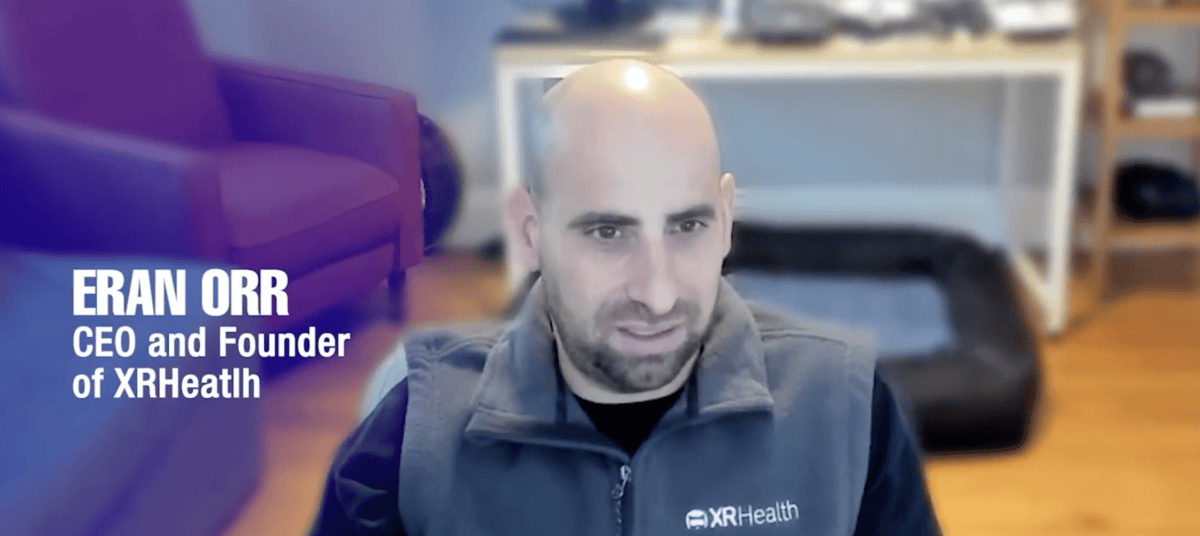
On the Claim to Fame DME podcast, hosts Alex and Wayne interview Eran Orr, founder of XRHealth and a former Israeli F-16 pilot who turned a whiplash injury into a VR therapy company now delivered as Medicare-reimbursable durable medical equipment.
In This Episode
Orr explains how a whiplash injury from years of high-G flight led him to build a VR therapy company that now runs more than 150 FDA Class II applications across physical therapy, occupational therapy, mental health, and pain management. He traces the shift from expensive, tethered VR rigs to affordable Meta Quest hardware, and how CMS reimbursement for VR-based cognitive behavioral therapy — a path pushed hard by AppliedVR — opened the door for VR to be dispensed as durable medical equipment, now used across 25 states with one million sessions completed last year. Orr walks through how XRHealth strips consumer games off Quest headsets, loads only medical applications, ships to the patient’s home, supports onboarding, and lets clinicians monitor outcomes and tailor apps per patient, including remote therapeutic monitoring (RTM) billing for providers. He contrasts XRHealth’s reported 97% session completion against the drop-off in traditional in-person therapy, and closes with advice for founders: FDA clearance, reimbursement, clinician buy-in, and patient adoption all have to line up before a digital therapy actually scales.
- Podcast Episode: XRHealth’s Eran Orr on VR as Medicare-Reimbursable DME for Rehab, Pain, and Mental Health
- Guest: Eran Orr, Founder & CEO, XRHealth
- Hosts: Alex and Wayne (NikoHealth)
(1:24) Introduction — Who Is Eran Orr and What Is XRHealth?
Eran Orr is the founder of XRHealth and a former F-16 pilot who served 15 years before a whiplash injury from active flight pushed him toward healthcare. His first idea was narrow — use virtual reality to treat whiplash patients — and it grew from physical therapy into occupational therapy, mental health, and pain management. Today Orr says XRHealth runs more than 150 application types, operates in 25 states, and recorded one million patient sessions last year, which he believes makes it the largest company in its category by session volume.
(3:04) How VR Went From $5,000 Rigs to a Reimbursable DME
Orr frames VR as one of the most heavily researched areas in medicine, citing more than 15,000 papers on VR’s therapeutic effectiveness. When he started, a single VR station meant a $5,000 computer, tethered hardware, and 30 minutes of setup; today a Meta Quest costs a few hundred dollars with more compute than those early rigs. The missing piece was commercialization — and Orr credits AppliedVR’s push to convince CMS that VR for cognitive behavioral therapy should be reimbursable, roughly 18 months ago, as the moment that opened VR as a DME category for the whole industry.
(5:20) Convincing Payers, Providers, and Patients That VR Is Real Medicine
Orr says the industry is still in an educational phase — most people associate VR with gaming, and many have never tried it. He attributes CMS’s decision to reimburse VR for cognitive behavioral therapy, a fairly broad indication, to the weight of the evidence, pointing to 50 clinical trials on XRHealth’s side plus additional research from other companies. His argument is that the effect isn’t tied to one app: the immersive nature of VR itself lets clinicians apply techniques like CBT and neuroplasticity work in ways that reach patients more completely.
(8:54) How the Platform Works: PT, CBT, and Exposure Therapy in VR
Orr breaks the platform down through three examples. In physical therapy, well-researched but repetitive range-of-motion exercises are rebuilt as 360-degree games, so patients do the right movements while the system measures range of motion and reaction time and feeds results back to the clinician. In cognitive behavioral therapy, coping techniques that are hard to practice with eyes closed in a clinician’s office become guided, repeatable VR experiences patients can run on their own. For exposure-based work — substance use, PTSD, anxiety triggers — VR simulates the triggering scenario at a controlled intensity, so a patient can rehearse a stressful situation many times before facing it in real life. Orr notes VR’s advantage is combining modalities on one device rather than the three or more separate tools these interventions usually require.
(14:47) What Patients Receive and How the Device Gets Provisioned
To qualify as durable medical equipment, the device can only serve medical purposes, so XRHealth takes an off-the-shelf Meta Quest, removes all consumer games, and loads only FDA Class II medical applications, then runs QA including HIPAA and cybersecurity checks before repackaging it as a certified DME. When a supplier places an order, XRHealth ships the headset to the patient’s home and provides a team to help with unboxing and setup, while a certified clinician can monitor data and select applications tailored to that patient. Orr says CMS currently covers the device for up to 13 months, after which the patient keeps it — which for suppliers works much like a capped-rental item they bill Medicare against.
(17:00) What Surprises Patients Most
Orr says the biggest surprise for patients is that VR doesn’t require being young or tech-savvy — most XRHealth patients are Medicare beneficiaries over 65, some older than 90. Once the headset is on, interactions are 3D and intuitive, and he argues it’s often easier to use than a smartphone. He points to a newly added VR peer-support feature where patients in different locations feel present in the same room, which he sees as a distinctly VR capability; the real hurdle, he says, is simply getting someone to try it the first time.
(20:19) VR vs. Traditional In-Person Therapy: Adherence and Completion
Orr leans on completion data to make his case. He says roughly 50% of mental health patients drop out after the first session, and fewer than a third of physical therapy patients finish a typical 12-to-18-session plan, while XRHealth reports 97% of patients completing their therapeutic sessions. He credits the engagement of the experience and the removal of friction — no 45-minute drive, no waiting room, no back-to-back clinician schedule. Orr is explicit that he sees technology as a complement to clinicians, not a replacement: with fewer clinicians available and high burnout, the goal is to let the technology handle the heavy lifting so clinicians focus on the patients who actually need intervention.
(23:16) Why Medicare DME Coverage Is the Pivotal Milestone
Asked how significant Medicare DME coverage is, Orr is blunt: without it, the technology couldn’t be adopted at all. In a system that optimizes for clinician time and session volume, he argues, the only way to bring in new technology is a business model that works for everyone involved. He reads CMS’s move — reimbursing at an economically viable rate — as a deliberate signal to bring more players into the category, and says the burden now shifts to the industry to make suppliers aware the option exists.
(24:37) What VR Means for DME Providers Looking to Grow
Orr makes the supplier pitch directly: he argues there isn’t a more attractive new DME offering available right now. Because the reimbursement covers VR for cognitive behavioral therapy — which can address chronic pain, stress, anxiety, and post-discharge conditions — he estimates at least half of a typical supplier’s patient base could benefit. He frames it as an immediate new revenue line backed by expanding coverage (he notes Humana and additional plans beginning to cover it), plus a marketing signal that positions a supplier as technology-forward and a reason to engage referring providers.
(27:00) How Providers Respond — and the RTM Billing Angle
Orr says XRHealth’s differentiator with providers is visibility. With a traditional DME, a provider prescribes and then hears nothing until a patient returns in crisis; XRHealth instead feeds outcome data back to the provider continuously and lets them intervene. He adds a financial hook for providers: the device supports remote therapeutic monitoring (RTM) billing, so monitoring and adjusting the device becomes its own reimbursable activity. His broader point is that most DME in use today lacks that monitoring layer, and closing the data gap between provider and patient benefits both sides.
(29:19) Will More Digital Therapies Be Reimbursed as DME?
Orr sees a meaningful shift in Washington toward digital tools, driven by the recognition that technology is the main lever for lowering system cost while improving supply, satisfaction, and outcomes. But he stresses the economic incentive has to be solved first — no volume of clinical trials matters if the reimbursement model doesn’t fit the actual use case, and distribution still has to work. He says XRHealth is already exploring modalities beyond VR, with announcements likely in the coming months, always anchored to a payer arrangement that works for both sides.
(31:14) Advice for Healthcare Entrepreneurs: The Four Pillars
Orr’s biggest early mistake was misreading the economics — assuming that another trial or FDA listing would bring customers to the door. His framework for succeeding in U.S. healthcare is four pillars that each have to be checked: FDA clearance with the right claims, reimbursement (a high and complex bar), clinician buy-in, and patient adoption. Each is hard on its own, and he warns founders — especially venture-backed teams expecting 10x in a year — that healthcare moves slowly and rewards stamina and resilience over speed.
(33:32) Rapid Fire Round
- AI or XR? Both — Orr sees XR as the interface for AI.
- Build or partner? Build early; partner as you mature.
- Apple Vision Pro or Meta Quest? Meta Quest.
- Coffee or espresso? Espresso, easily.
- ChatGPT or Claude? Claude, by far — for now.
- Most-used app on your phone? X.
- Most futuristic technology you wish already existed? Humanoid robots.

Explore More Episodes