


 27:14 to watch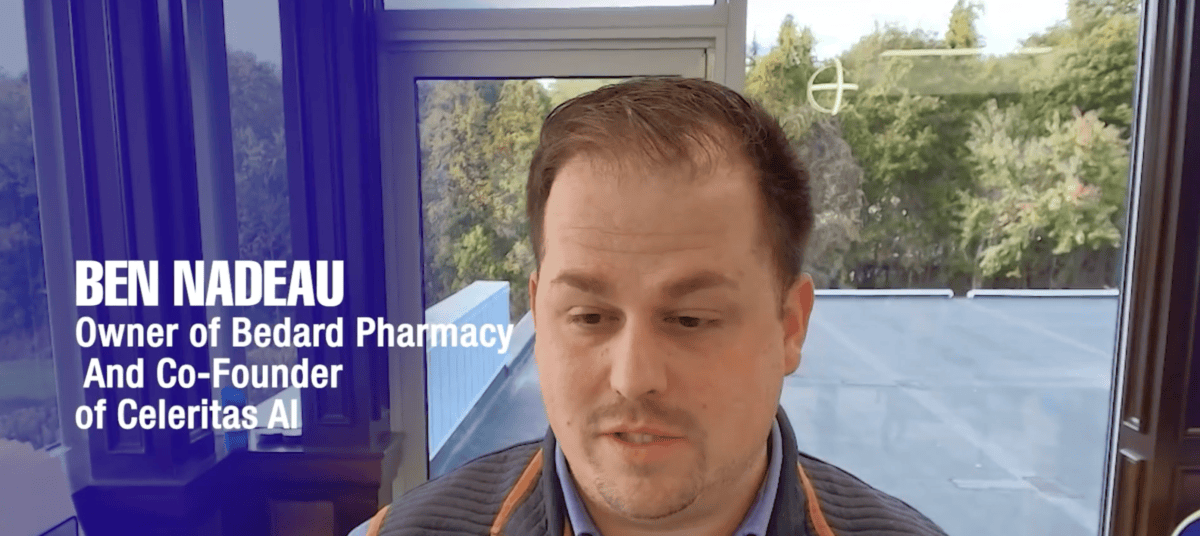
Ben Nadeau joins Claim to Fame to talk about what it really takes to bring AI into pharmacy and DME operations. As the owner of Bedard Pharmacy, a family-run business dating back to the 1960s, and the co-founder of Celeritas, Ben shares how he’s balancing legacy workflows with modern AI innovation.
Key Takeaways
We dig into Elsa, an AI advisor built to reduce errors and improve efficiency in DME insurance and billing, the challenges of adopting AI in healthcare, and where he sees the biggest opportunities ahead for providers focused on better reimbursement and patient care. Plus, a rapid-fire round to wrap things up.
- Podcast Episode: Bringing AI Into DME with Ben Nadeau
- Guest: Ben Nadeau, Owner of Bedard Pharmacy and Medical Supplies, Co-Founder of Celeritas
- Hosts: Alex & Wayne (NikoHealth)
(0:00) Introduction — Who Is Ben Nadeau?
Ben Nadeau runs Bedard Pharmacy and Medical Supplies out of Auburn, Maine — a company with records dating back to 1898, family-owned since his grandfather bought it in the 1960s. His parents later bought it themselves in the ’90s and 2000s and diversified the business into three arms: Bedard Pharmacy (traditional retail), Bedard Senior Care (a closed-shop long-term care pharmacy), and Bedard Medical Supplies (the DME side, which runs on NikoHealth). That DME migration led Ben into a deep dive on technology, and with the help of a mentor from previous startups, he co-founded Celeritas AI — an AI company that integrates directly with NikoHealth and other DME platforms, built on the back of the family’s century-plus of billing and insurance experience.
(3:12) The Engineering Mindset Behind the Business
Ben’s background is in electromechanical engineering, and he describes himself as wired to look for inefficiency wherever he sees it. Working inside a 125-plus-year-old pharmacy business, he kept running into the “we’ve always done it that way” mentality — and that’s what pushed him to look for what could be automated or improved, including the knowledge gaps that show up whenever staff turn over or a new provider comes on board.
(4:11) The Knowledge Gap That Started It All
Bedard Medical was a two-time Inc. 5000 company, growing from around 10 employees to 40 or 50. That kind of growth creates knowledge gaps — it takes months or years for new hires to get comfortable speaking to product and insurance details, especially at a company as diverse as Bedard, which handles nearly everything outside of CPAP. Even after migrating to NikoHealth, Ben still saw the same bottleneck: a customer calls with a question, and the call gets put on hold until the one experienced staffer is free to answer it. That gap is what led to building Elsa — designed to replicate the knowledge of a 20-year veteran team member, monitor orders in progress, and catch things like a missing modifier before they become a problem.
(6:13) Balancing Tradition and Innovation
Bedard’s core values include “grow together,” “inspire change,” and — the one Ben leans on most — “care deeply.” He frames innovation at Bedard as something aimed squarely at the employee experience, not at replacing the human side of patient care. The goal is to take paperwork, calls to doctors’ offices, and administrative burden off staff so they have more time for the conversations that actually matter — like realizing a patient going home with a walker might also need a walker tray for carrying things. Bedard isn’t trying to automate the customer relationship; as Ben puts it, they’re a healthcare company, not Amazon.
(8:18) What Elsa the AI Advisor Actually Does
Elsa started as an idea for faster staff training — something like a learning management system — but evolved once Ben and his team saw how their customer service reps actually wanted to work. Elsa integrates directly with the patient management system, continuously pulling from publicly available insurance and product information as well as company-specific internal documentation. When staff pull up an order in NikoHealth, Elsa runs checks in real time — flagging a missing modifier, an order quantity that exceeds coverage limits, and citing the exact source, whether that’s an internal document or a specific line in an LCD, often with a direct hyperlink to the relevant tab. Beyond that, Elsa handles fax intake (reading incoming faxes and making coverage recommendations based on the notes inside), creates orders and patient profiles in NikoHealth, and assists with audit response by helping pull and organize the data needed to demonstrate a clean claim.
(14:14) Earning Trust in AI
Ben’s seen the AI hype cycle create real skepticism. A lot of companies rebranded as “AI” simply by white-labeling ChatGPT with no real underlying system behind it, and customers who had a bad experience with that kind of tool became understandably wary of anything that sounded too good to be true. Ben also draws a distinction between real AI and older “fax wrangling” technology that’s been relabeled as AI — technology that’s been around for 10-15 years and isn’t new. His CTO, Ravi, frames their long-term vision as a future full of narrow, hyper-focused AI assistants rather than one system that knows everything — because trying to cover too much ground is where hallucinations creep in. Celeritas’s approach with Elsa is to stay tightly focused on DME and insurance, and push accuracy as high as possible within that lane.
(17:42) How Celeritas Differentiates from Other DME AI Players
Ben names Tennr, Synthpop, Notable Systems, and CompliantRx as other players in the space, but says Celeritas’s edge comes from a deep understanding of the insurance side of DME — sharpened by Bedard’s years of hands-on billing experience before Celeritas even existed. Rather than automating away staff positions, the goal is to upskill the team already in place, so employees can lean on product knowledge while Elsa handles the insurance complexity — reducing denied claims and improving cash flow along the way.
(20:26) What Healthcare Leaders Get Wrong About AI Integration
Ben’s biggest wish: that leaders understood how easy real AI integration can be. Connecting Elsa to NikoHealth takes about 15 seconds; more complex integrations take a bit more time, but full onboarding is measured in days, not the months of training and data migration people assume it requires.
(21:35) Where AI Takes Reimbursement and Patient Care Next
Ben describes Celeritas’s mission as fighting for the underdog — DME providers who’ve been squeezed by payers for the better part of 15 years. His vision: providers submitting claims backed by AI-verified clean documentation, forcing payers to either build comparable AI-driven review tools or accept that clean, well-documented claims don’t need to be second-guessed. Ideally, providers using Elsa see fewer audits altogether, simply because payers know the underlying claims have already been checked.
(23:14) One Fix for Healthcare, If Ben Could Pick Anything
Ben’s dream fix: a single point of contact for people navigating healthcare — something that tells a newly discharged patient exactly what they need and where to go, the way Amazon simplifies shopping, but built around a real conversation rather than a one-click transaction. He sees Elsa, and AI more broadly, as a path toward that kind of concierge-style guidance.
(24:42) Rapid Fire Round
- AI handling emails or folding laundry? Emails.
- More terrifying — a CMS audit or your AI saying “I’ve learned too much”? The AI learning too much — his audits are usually clean.
- If Celeritas AI were a movie: The Social Network or Iron Man? Iron Man.
- Should the AI’s personality sound like Morgan Freeman or Tony Stark? Definitely not Morgan Freeman.
- Pitch investors with no slides, or customer support for a full day? Pitching investors — he genuinely enjoys it.
- More painful — insurance paperwork or stepping on a Lego? Insurance paperwork, by far. (He’s got two kids, so he’s stepped on plenty of Legos.)

Explore More Episodes