


 28:48 to watch
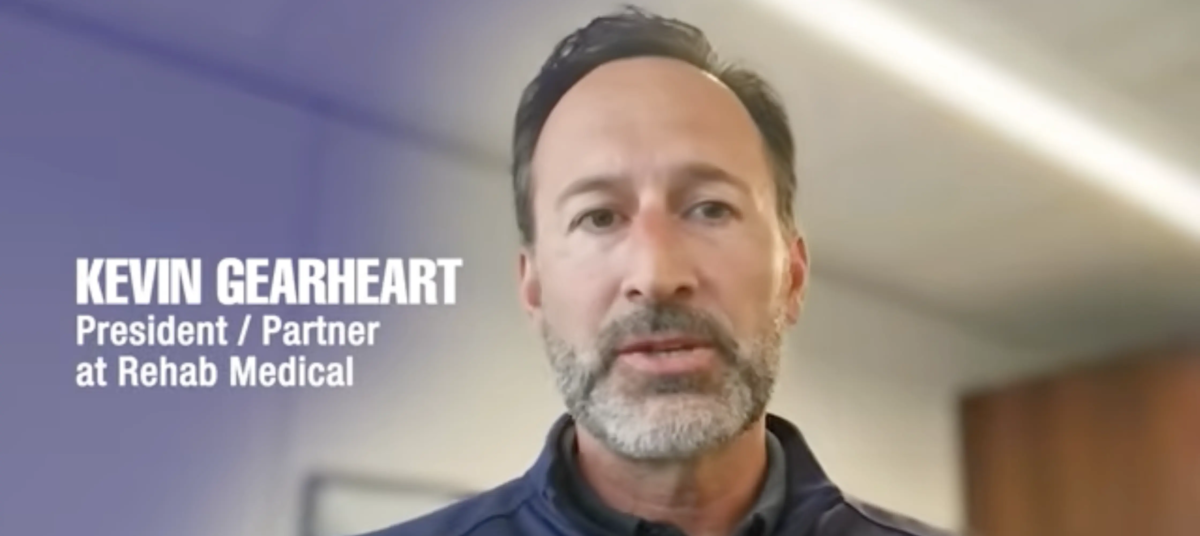
On the Claim to Fame DME podcast, Kevin Gearheart, president and partner of Rehab Medical, explains how complex rehab technology (CRT) differs from other DME because it is highly specialized, involves many stakeholders (patients, physicians, caregivers, therapists, ATPs, and insurers), and requires a longer, carefully managed process focused on speed and communication.
In This Episode
He shares why he’s committed to the mission, helping patients regain mobility and supporting employee growth, and describes Rehab Medical’s transition from standard DME and respiratory to CRT, including a key shift from a sales-driven approach to clinical service excellence. Gearheart discusses barriers such as documentation delays, payer prior authorizations, fraud-and-abuse scrutiny, reimbursement pressures, and narrow networks that restrict access, especially in rural areas, and highlights advocacy efforts. He also outlines technology and AI priorities to automate repeatable tasks, improve document review and communication, and find data trends while keeping care personal, plus equipment innovations and a focus on streamlining access over the next 5–10 years.
Duration: 28:48
Guest: Kevin Gearheart, President and Partner, Rehab Medical
Hosts: Alex and Wayne (Claim to Fame DME Podcast)
(1:30) Introduction — 15 Years Building a CRT Company
Kevin Gearheart is president of Rehab Medical, a complex rehab technology (CRT) company he’s been with for about 15 years, growing the business and, in his words, “just trying to be a good part of the organization, a good part of the industry.” Rehab Medical has helped more than 250,000 people regain independence through mobility — a category that is among the most personal in all of DME, because it isn’t about delivering a wheelchair so much as returning mobility, dignity, and freedom.
(2:19) What Outsiders Misunderstand: CRT Is Not Just DME
“With the CRT space, I think sometimes it gets lumped in with DME” — and Gearheart’s point is that it’s a very unique, highly specialized niche with a fundamentally different delivery model. Some DME categories, resupply among them, move fast. CRT doesn’t, because it requires so many components and so many stakeholders: the patient, the physician, the caregiver, an ATP, usually a PT, plus insurance and everything attached to it. The longer cycle demands that every single step be done correctly while still pushing on speed and communication. As the hosts put it: it’s called complex for a reason.
(3:23) Why He’s Stayed: Patients and the Team
Two things keep Gearheart committed. The first is the patients, whose needs are unique, and the chance “to really give them an opportunity to regain mobility and retain mobility and independence.” The second is the people he works with — years of deliberate growth that created jobs and opportunities for employees. “It’s quite honestly, it’s never even been a thought in my mind as to what else I would do.”
(4:33) The Original Opportunity: Shifting Out of Standard DME and Respiratory
Gearheart joined 15 years ago specifically to move the company away from standard power, standard DME, oxygen, and respiratory, and into CRT. The appeal was the scale of the change itself — figuring out how to transition an existing business into a different subsection of the industry and then build it up.
(5:18) The Turning Point: From a Sales Organization to Service Excellence
Rehab Medical’s DNA is sales — “we’re a really strong sales organization” — and the initial assumption was that this strength would carry the CRT transition. It didn’t. Walking into clinics asking for the opportunity, the answer came back: I’ve been working with so-and-so for years, they know what they’re doing, and you want me to shift my business to you?Gearheart calls it a punch in the face, and credits it with defining the company. CRT demands a clinical approach with real clinical background and acumen — “it can’t just be about, hey, can we sell?” That recognition is where the service excellence mindset came from, “because that’s the only way that we’re going to continue to get business.”
(6:49) Long-Term Outcomes, Not a One-Time Sale
In CRT, the equipment stays with the patient for five years, which changes what the transaction actually is. Does the patient know how to use it? How are they getting in and out of their home? Is it the right environment? And then the service that follows: “How do we make sure that we’re keeping that service at a high level, and they’re still able to use it all five years?” The goal is equipment that delivers good clinical and personal outcomes across that full stretch.
(7:43) Why Collaboration Between ATPs, Therapists, and Physicians Is Non-Negotiable
Gearheart questions whether a patient could navigate this process at all without a company quarterbacking it, given the volume of requirements, regulations, and people involved. The critical pairing is the ATP and the therapist working hand in hand: the therapist defines the patient’s functional limitations, and the ATP responds with how to resolve them through a specific component configured a specific way. “Things can’t be done in sections. They have to be done in collaboration.” The equipment is customized, so the process has to be customized too — every patient is unique.
(9:06) Where Delays Come From — and Why Speed and Communication Are the Answer
The delay risk lives in the handoffs: initial evaluation with the physician, then how quickly to the therapist, then how quickly the ATP gets involved, then how quickly documentation returns to the doctor to close the loop and sign off on the therapy evaluation. Without someone actively moving it along, it stretches. Gearheart is hyper-focused on making each next step happen as fast as possible with the highest level of communication — and he ties communication directly to patient experience: “Frustration comes when there’s a disparity between expectations and reality. And that communication is what keeps those expectations and reality in line.”
(10:46) Keeping Patients and Families Informed: The Patient Care Rep Model
Rehab Medical’s approach is structured and starts with mindset — heavy communication expected at every point in the process. On top of that sit defined communication points and defined roles, including a patient care rep position designed several years ago whose entire job the name describes: communicating with the patient, updating them on where things stand, what the next step is, and whether the company needs their help to move things forward. Technology layers on from there: automated text notifications at certain stages, and an internal system that lets a patient call in, verify identity, and get an automated order status update by phone. “It’s a combination of positions, expectations, certain points in the process, and then how do we layer in technology on top of that.”
(12:18) Why Post-Delivery Service and Repair Are Critical
The stakes with CRT equipment failure are not inconvenience. “If it doesn’t work — they’re either bedbound, they can’t move,” which cascades into other physical problems. So the questions are how the patient reaches the company quickly, how they can help the company help them, and how fast the service actually gets resolved.
(13:04) The Biggest Challenges Facing CRT Providers
Gearheart starts with fraud, waste, and abuse scrutiny — and the DME moratorium that was recently lifted, which he’s glad about, since growth and adding locations gets harder when “because of a few bad actors, some of those hurdles can be put in place” for the many organizations doing things the right way.
The second is the payer side, specifically prior authorization on service. “I’ve got to get a prescription and I’ve got to get a pre-auth for a part, for a chair that has already been deemed medically necessary. So why are we doing this?” He credits CMS with real progress on mandating PA turnaround times and extending those mandates into MA plans, but the administrative burden still slows everything down — “you better have a really good process in place, or you can just get eaten up.” He also flags insurers moving to TPA models, and reimbursement pressure, which he notes is common across all of DME, not unique to CRT.
(15:21) Narrow Networks and the Access Problem in Rural Areas
The friction Gearheart singles out is third-party administrators consolidating access state by state. His example is Tennessee, where companies that had provided service for decades were told the state was moving to a narrow network. “I get it from an insurance payer standpoint. They’re a business. They’ve got to make money. But when they do this, they’re not recognizing what you’re now doing to access to patients, especially in some of these rural areas. You can’t have four providers in a state.” Some patients simply cannot reach a provider once the contracts are cut that far down.
(16:36) Where Advocacy Has to Get Better: Education and Outcomes
Gearheart credits AAHomecare, NCART on the CRT side, and the state associations with doing good work and collaborating well. The hard part is education that actually produces outcomes — getting legislators to understand which challenges will hurt their constituents, and then translating that into enough emphasis or influence on payers who are, legitimately, businesses. The question he’d pose to them: are you aware of the long-term effects of this decision? What the industry gets right, he says, is working together: “Our competitors, our suppliers — even though we might be competing with each other, we’re still working together… because we’re fighting for patients. We’re fighting for access.”
(18:34) One Piece of Advice for Payers and Policymakers
Asked what he’d tell every payer, policymaker, or healthcare leader about CRT, Gearheart explicitly declines to make it about money. “I wouldn’t go the route of, hey, we need more reimbursement.” Instead: “It’s already a complicated process. Don’t make it more complicated… It’s a tough model. It’s a tough business. Don’t make it harder. Don’t add more restrictions. Don’t add more barriers. Don’t add more hurdles. Let’s try and figure out how we can make this streamlined and more efficient for patient care.”
(19:48) Technology and AI: Automate the Repeatable, Protect Critical Thinking
Rehab Medical is a tech-focused company with in-house developers and its own process flow and document management system — “one of the big ways that we’ve been able to grow sustainably over the years.” The challenge now is picking the right tools, implementing them in a way that fits the business, and doing it without simply replacing employees. His framing: automate what’s repeatable, keep people on critical thinking tasks. Insurance is complicated enough that employee-level understanding is essential; what he wants gone is the simple data transfer work.
Beyond that, he’s using AI to capture information faster and — the use he personally values most — to find trends in large chunks of data. “There’s a lot of data out there. How do I use it to clear away some of the noise and find problems and have them brought to light faster so I can go fix them.” Active areas include an AI tool for the call center, billing and processing, and document review for compliance accuracy. He’s bullish but deliberate: “You think something’s going to be easy and it’s going to solve a problem, and you just might have created another one. We’re constantly like, hey, what are the potential unintended consequences of this move?”
(23:11) Keeping It Personal: Technology That Doesn’t Replace the Human
The clearest patient-facing win is speed through document review — catching what the doctor didn’t fill in or what wasn’t clarified before submission, so prior authorization gets approved the first time. On communication, Gearheart is deliberate about the balance: a text message update is useful, “but I don’t want that to be the whole solution, because now all of a sudden patients are like, listen, I want to talk to somebody. I’ve got a problem. I need to reach someone.” Service excellence requires communication, “but it’s not just all communication. It has to be the right type of communication.”
(24:33) Equipment Innovation: Batteries, Footprint, and Durability
On the hardware side, Gearheart credits manufacturers with meaningful progress on practical problems: making batteries faster and easier to swap — potentially by patients themselves — building narrower chairs that actually fit through a patient’s door, making equipment easier to repair, and making it last, which matters when the patient keeps it for five years.
(25:33) CRT in Five to Ten Years: Streamlined Process and Better Access
His hope is a more streamlined process with continued focus on patient care, and above all improvement in access. “There’s a lot of patients out there that don’t have the right access, or because of a lack of access, they might be in the wrong equipment.”
(26:27) Advice for Scaling a Mission-Driven Business: Define the Culture First
Gearheart’s answer is people — but with a prerequisite. “Define your culture. Make sure you know who you are and who you want to be, and clearly define that. Because then when you go look for the right people, you want them aligned with your culture.” Once you have people aligned to it, “it doesn’t matter what business you’re in, it’s going to be really hard to stop.”
He puts a deliberately provocative edge on it: “I literally want a culture that is so strong that it’s toxic to anyone who doesn’t align with it.” The point isn’t hostility but self-selection — a culture clear enough that someone stepping into the room knows immediately whether it fits them. “And either answer is fine.”
Connect with Kevin: rehabmedical.com, or reach him directly on LinkedIn — he’s open to collaborating with others in the industry.

Explore More Episodes