


 39:12 to watch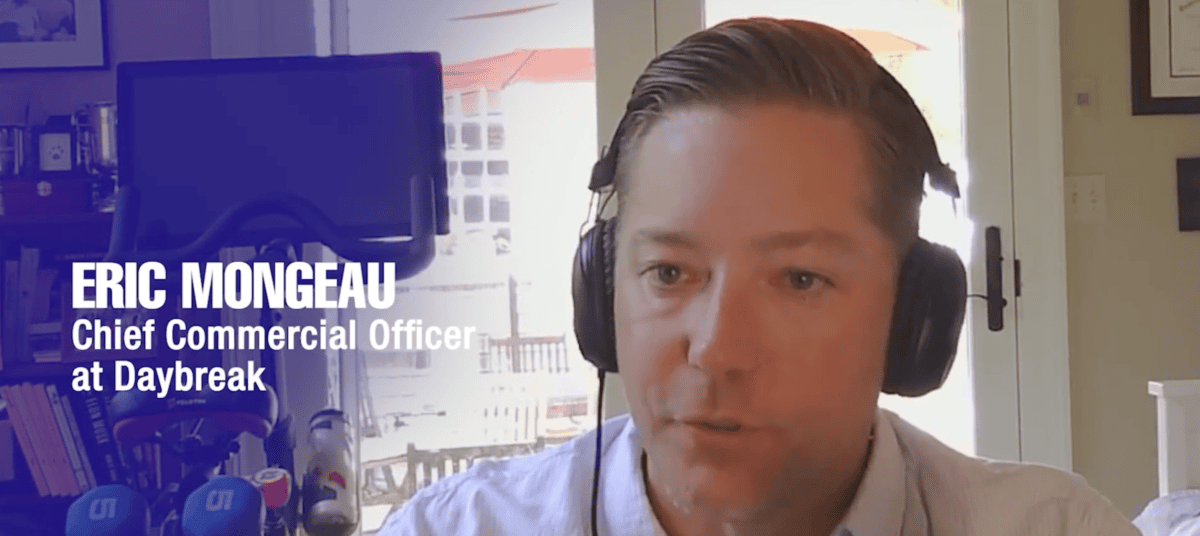
On this week’s episode of the Claim to Fame podcast, Eric Mongeau shares his 16-year sleep industry path from ResMed to scaling Aeroflow and now leading commercial strategy at Daybreak, arguing the industry is entering a major shift with more diagnostic and therapy options.
Topics Covered
He credits Aeroflow’s growth to reducing “abrasion,” embracing technology and automation, and building a consumer-like patient experience that compressed intake, pricing, paperwork, AI mask fitting, and telehealth scheduling into seconds, while emphasizing people, learning and development, and aligning the “three Ps” (patient, provider, payer). Mongeau discusses healthcare fragmentation, policy misalignment, and the need for payer/provider collaboration, then explains Daybreak’s at-home oral appliance model using telehealth, impressions, teledentistry screening, U.S. manufacturing, and gradual titration, plus how DMEs can convert CPAP drop-offs into oral appliance therapy; he also describes awareness efforts like state Sleep Apnea Awareness Month resolutions.
- Podcast Episode: Daybreak’s Eric Mongeau on the Shift Beyond CPAP: Reducing Abrasion, Scaling DME and At-Home Therapy
- Guest: Eric Mongeau, Commercial Strategy Lead, Daybreak
- Hosts: Alex and Wayne (NikoHealth)
(1:40) Introduction — Who Is Eric Mongeau?
Eric Mongeau has spent close to 16 years in sleep, starting at ResMed early in his career before moving to the DME side — a less common career direction, since many providers move toward manufacturers rather than away from them. He spent eight years at Aeroflow, where he began implementing the Daybreak process before joining Daybreak directly to bring that model to DME providers nationwide.
(2:48) Is Sleep Entering Its Biggest Shift Since CPAP?
Mongeau believes it is, pointing to the range of new diagnostic and therapy channels reaching the market — pharmaceutical treatments launching this year, new devices, and surgical options among them. His view: patients are consumers of healthcare now more than ever, and breaking down fragmentation between these options is where the industry’s next wave of opportunity will come from.
(4:15) Lessons from Scaling Aeroflow
Mongeau credits Aeroflow’s embrace of technology and its focus on treating the patient like a consumer — captured in the term “abrasion,” a concept he says has stuck with him ever since. Aeroflow’s daily goal was reducing abrasion in every patient interaction, in an industry that has historically, often through no fault of its own, added friction at nearly every step. He also emphasizes that DME remains fundamentally a people business — scaling well means finding great people who share the same culture and values, not just adopting new technology.
(7:55) What Actually Drives Sustainable Growth
Mongeau describes automating Aeroflow’s entire sleep intake process during 2020 — from referral intake by fax, email, or any other channel, to instant patient notification, AI-assisted mask fitting, full pricing transparency, payment, e-signature, and telehealth scheduling, all compressed into roughly 30 seconds. That automation, paired with a physician-grade telehealth platform requiring no downloads or logins, became a major differentiator. His broader takeaway: explaining to healthcare providers why a different approach is better — not just building it — was the real driver of Aeroflow’s growth.
(11:10) Building High-Performing Teams
Mongeau is candid that scaling Aeroflow through COVID meant shifting overnight from in-person training to fully virtual onboarding, with mixed early results. His current hiring philosophy: hire for attitude and aptitude rather than DME experience specifically, since DME background isn’t common and transferable skills — from teaching, franchising, or pharma, for example — often translate well. He frames success around what he calls the three P’s: patient, provider, and payer, and finding solutions that serve all three rather than treating DME as a product business.
(14:36) Why Alignment Across Healthcare Stays So Difficult
Mongeau points to disconnects between federal agencies like CMS and the FDA as a root cause — an issue he saw firsthand during the Philips recall. He’s encouraged by increasing industry engagement in state and federal policy, citing Daybreak’s own success passing Sleep Apnea Awareness Month resolutions in Massachusetts, California, and Arizona as an example of providers building coalitions to be heard.
(17:22) Why Patients Are Looking Beyond CPAP
Mongeau traces the industry’s messaging about the roughly 80% of undiagnosed sleep apnea patients back nearly 20 years, describing the effort as still in its early stages. He points to the Philips recall, COVID-era supply constraints, and pharmaceutical companies now promoting sleep-related messaging (including GLP-1 manufacturers) as forces expanding awareness and options for patients — a shift he’s experienced personally as someone recently diagnosed himself after avoiding testing for years.
(21:02) The Biggest Frustrations with Traditional Treatment
Mongeau describes a familiar pattern of symptoms — high blood pressure, weight gain, being told by a partner about loud snoring — that often goes unaddressed for years due to fragmented care pathways. He cites the CPAP recall period, when some patients waited up to six months for a replacement device, as an example of delays he considers unacceptable, and argues the industry should be working toward diagnosis-to-treatment timelines closer to filling a routine prescription.
(23:24) How Daybreak’s Model Actually Works
Daybreak began as a direct-to-consumer proof of concept: patients (diagnosed or not) go through a telehealth visit and health history review, then receive an at-home impression kit reviewed by a tele-dentist for suitability — screening out patients who aren’t good candidates for an oral appliance. Devices are custom-manufactured in Oklahoma, then titrated gradually at home in small increments rather than the roughly 50%-of-maximal-protrusion starting point common in traditional dental settings — an approach Mongeau credits with an internally studied 83% success rate. For DME providers, Daybreak targets the 25-40% of CPAP referrals that never get set up, plus patients who fall off compliance in the first 90 days or drop resupply altogether — offering oral appliance therapy as a path to recovering that lost revenue while getting more patients treated.
(31:05) Educating Patients Who Don’t Know This Exists
Mongeau describes reaching younger and less-aware populations through channels like community colleges and professional sports teams, both interested in screening entire groups who are unlikely to ever use a CPAP. Daybreak also recently became a VA-contracted provider to support veterans, alongside a broader marketing effort built around real employees rather than actors, and a “therapy agnostic” awareness message focused on getting more patients diagnosed and treated regardless of which option they ultimately choose.
(35:10) Where the Sleep Industry Is Headed in 5 Years
Mongeau expects growing collaboration across diagnostic and therapy modalities rather than competition between them, drawing a parallel to how sleep labs adapted rather than closed when home sleep testing gained payer approval years ago. His view: the shared “enemy” is the disease itself, not competing therapies or diagnostic approaches — and providers who embrace that mindset stand to benefit as options continue to expand.
(37:24) Rapid Fire Round
- Most overrated buzzword in healthcare? AI.
- Coffee or energy drinks? Coffee.
- Most-used app on your phone? Google Maps.
- If you weren’t in healthcare, what would you be doing? Pre-med, before realizing the competition wasn’t for him.
- One thing your team would roast you for? Talking too much and leaning on questionable analogies.
- Best sleep you’ve ever gotten? At home, on a Purple mattress with a Pillow Cube.

Explore More Episodes