


 34:21 to watch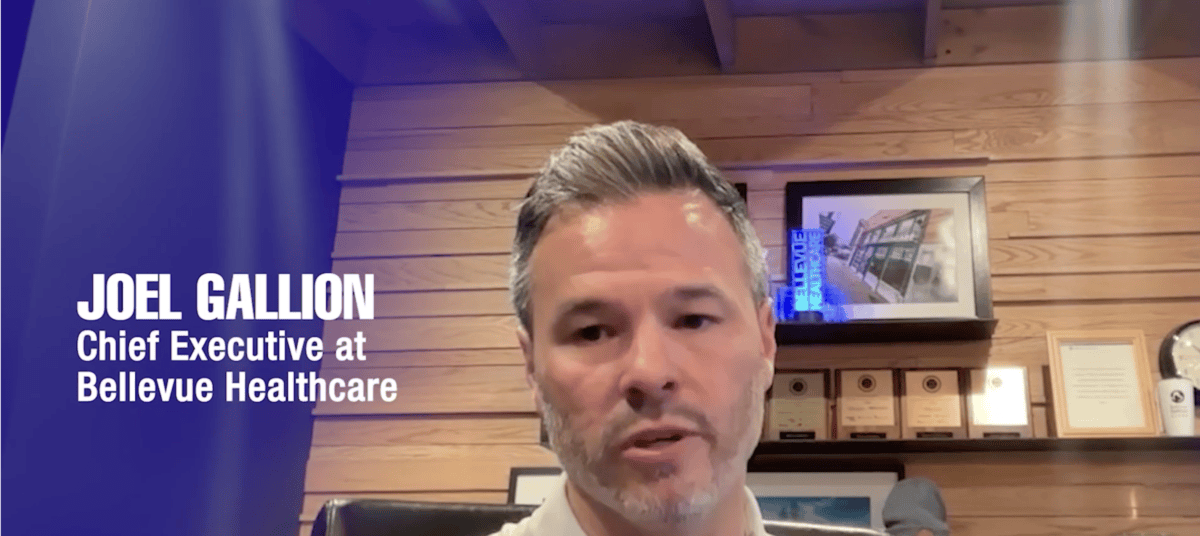
This week Alex and Wayne are joined by Joel Gallion, President and CEO of Bellevue Healthcare, discusses the company’s evolution and the broader DME landscape.
What This Episode Covers
Founded in 2000, Bellevue now has 23 locations across Washington, Oregon, and Idaho, and Gallion shares how early “wear many hats” bootstrapping (starting with hospice) shaped a people-first culture and long-tenure leadership. He recaps advocacy work at NCART and AAHomecare legislative events, emphasizing the need to educate policymakers on home care’s value in keeping patients out of acute settings. Gallion explains Bellevue’s organic growth approach, adding services like complex rehab through internal talent, and the advantages of independence, including the ability to decline unsustainable business. He highlights shifting consumer expectations, technology’s role in visibility, and practical AI use such as automating fax intake, with future disruption expected in revenue cycle processes.
- Podcast Episode: Bellevue Healthcare CEO Joel Gallion on Advocacy, Organic Growth, and AI in DME
- Guest: Joel Gallion, President & CEO, Bellevue Healthcare
- Hosts: Alex and Wayne (NikoHealth)
(1:20) Introduction — Who Is Joel Gallion and What Is Bellevue Healthcare?
Bellevue Healthcare was founded in 2000 and now operates 23 locations across Washington, Oregon, and Idaho as a full-service home medical equipment provider. Gallion has been with the company for 22 years, starting as a delivery technician before working through territory management and regional VP roles on his way to president in 2016 and CEO more recently.
(2:23) Advocacy on Capitol Hill
Gallion recaps a recent trip to Washington, D.C. that combined NCART’s Hill visits and product expo with AAHomecare’s legislative day. His main takeaway: many legislators and staffers simply aren’t aware of how home care affects the bills they’re voting on, making basic education about home care’s cost-saving value — keeping patients out of acute care settings — one of the most important things providers can do when they engage policymakers directly.
(4:09) From Delivery Technician to CEO
Bellevue Healthcare was founded by Peter Norman, who bootstrapped the company by working at UPS at night while building the business during the day, eventually landing an early hospice contract that shaped the company’s do-everything culture. Gallion says that early “wear every hat” mentality — deliveries, billing, customer service, cleaning equipment — carried through the organization for its first 7-8 years and still shapes how Bellevue develops people today.
(8:05) The Biggest Turning Points in Bellevue’s Growth
Gallion frames Bellevue’s growth around people — both the goal of building long-term customer relationships that last decades rather than a year or two, and giving employees meaningful work with room to grow into a career. Services like complex rehab were added roughly 15-16 years ago not through acquisition, but because internal staff identified the need and pursued the credentialing themselves, with the company simply providing the platform to act on it.
(9:14) Maintaining Culture and Service Quality While Growing
Gallion credits organic growth — rather than acquisition — as central to preserving Bellevue’s culture. The company has completed only two small acquisitions in 26 years, choosing instead to open new locations organically, hire locally, and stay grounded in what he calls being “truly local”: most new locations are staffed by people with existing ties to that community who carry Bellevue’s culture with them.
(17:00) Technology’s Role in Operational Scalability
Gallion says visibility has been the single biggest shift technology has brought to DME, an industry he felt lagged badly behind general business tools for years. What’s changed recently, in his view, is the ability to build custom dashboards and reporting almost instantly rather than exporting data to third-party tools and waiting on a build — a shift he attributes largely to AI-assisted development.
(19:10) Where Independent Providers Still Have an Advantage
Gallion points to decision-making control as Bellevue’s biggest structural advantage over larger, investor-backed organizations. Bellevue has grown revenue every year of its 26-year history, which he credits partly to the freedom to walk away from business that isn’t sustainable — including turning down multi-million-dollar contracts that didn’t fit the organization long-term, a decision he says would carry far more pressure under investor ownership focused on short-term numbers.
(21:47) What Separates Great DME Operators from Average Ones
Gallion’s answer centers on conviction: knowing your principles and what you’re genuinely good at, then continuing to double down on it rather than trying to be everything to everyone. He points to Bellevue’s intentional focus on service quality — surveying every customer touchpoint and following up personally on negative reviews within minutes — as an example of consistently reinforcing a specific strength rather than chasing every opportunity that comes along.
(25:11) Staying Connected to the Business at Scale
With an executive team where nobody has less than 20 years of tenure, Gallion describes his role as largely staying out of the way and supporting a team that already knows the business deeply. He still visits every location at least once a year, rides along with ATPs, holds weekly meetings with department heads, and personally reviews every customer review the company receives — solicited or not.
(27:03) Where DME Is Headed Over the Next 5-10 Years
Gallion sees home-based care as a needed, cost-effective function of the broader healthcare system, even as payer models and reimbursement complexity continue to shift. His view: challenges have historically created opportunity for providers who stay focused on doing their core work well, and he expects that pattern to hold even as new competitive and payer models emerge.
(30:11) Where AI and Automation Will Actually Matter in DME
Gallion is candid that the market is flooded with AI vendor pitches, and that trying to adopt every point solution isn’t operationally realistic. His approach: choose a small number of good technology partners willing to stay current without needing Bellevue to chase the cutting edge itself. A concrete example already in place — an AI partner now processes incoming faxes directly into Bellevue’s system, replacing what used to be manual reading or outsourced OCR, so staff start with usable information instead of decoding a 30-page fax by hand. He expects the next few years to bring significant change specifically to revenue cycle processes.
(32:24) Rapid Fire Round
- Golf or fishing? Golf.
- Seahawks or Mariners? Seahawks.
- Early mornings or late nights? Early mornings.
- Road trip or fly? Road trip.
- Favorite city in the Northwest? Bend, Oregon.
- Sneakers or hiking boots? Sneakers.
- Most “dad” thing about you? Acting as an Uber driver for his kids’ sports and school

Explore More Episodes