


 31:06 to watch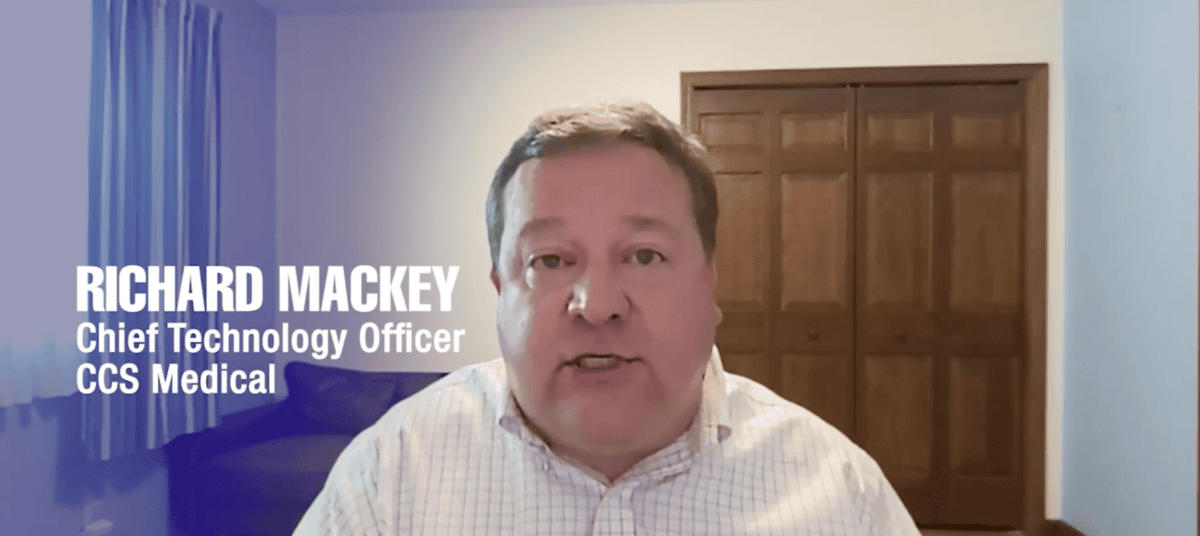
On the Claim to Fame DME podcast, hosts Alex and Wayne interview Richard Mackey, CTO of CCS Medical, a 30+ year company evolving from traditional DME into chronic care management, especially for diabetes.
Episode Summary
Mackie describes how AI and analytics can digitize patient interactions, connect fragmented systems, and deliver more personalized, multi-channel experiences across portals, texts, emails, and live conversations. He explains CCS’s expansion beyond shipping supplies to providing coaching and predictive analytics, including identifying CGM users at risk of discontinuation (noting up to 40% struggle to stay on therapy). Mackie discusses changing patient expectations, emphasizing increased comfort with digital tools among older adults, and outlines AI’s real value in conversational documentation and workflow efficiency while keeping humans in the loop and clinicians central. He highlights adoption success factors such as integrated workflows, organizational change management, and regulatory compliance.
- Podcast Episode: CCS Medical CTO Richard Mackey on AI, Data, and the Future of DME in Chronic Care Management
- Guest: Richard Mackey, Chief Technology Officer, CCS Medical
- Hosts: Alex and Wayne (NikoHealth)
(1:25) Introduction — Who Is Richard Mackey and What Is CCS Medical?
Richard Mackey is Chief Technology Officer at CCS Medical, a company with more than 30 years of history as a traditional DME provider that has broadened into chronic care management, primarily for patients managing diabetes. Mackey’s career has been almost entirely in healthcare technology, with the last 15-plus years focused specifically on data and analytics leadership across multiple healthcare organizations.
(3:03) The Future of DME from a CTO’s Seat
Mackey frames the next five years around AI’s ability to digitize interactions and conversations that were historically unstructured — data that never fit neatly into a spreadsheet. His view: DME has always been about delivering a product or service reliably, but AI now lets providers extract insight and value from every interaction in ways that were previously constrained by fragmented, disconnected systems.
(5:21) What Drew Him to Healthcare Technology
Mackey, who has worked at organizations including Philips and Accenture, describes healthcare as a field that touches everyone personally — through direct experience or family members — and frames improving patient outcomes as close to a calling that motivates the long hours the work demands.
(7:29) What CCS Medical Actually Does
CCS Medical provides equipment like blood glucose monitors and continuous glucose monitors (CGMs) to patients managing diabetes, primarily in the home setting, but increasingly layers on coaching from certified clinicians and predictive analytics that identify patients at risk of discontinuing device use. Mackey frames this as a shift from simply delivering a product in a box to managing a patient’s entire condition over time.
(9:43) From Shipping Supplies to a Data-Driven Patient Relationship
Mackey credits CCS’s multi-decade relationships with patients as the foundation for its predictive capabilities — the company began building machine learning models around structured, quantitative data well before generative AI became a mainstream topic. He points to CCS’s position as a DME provider, often interacting with patients more regularly than their own physician, as a unique source of trust that payer relationships don’t always carry, given the sometimes tense dynamic between patients and insurers.
(12:43) How Patient Expectations Have Shifted
Mackey says assumptions about older patients struggling with technology have largely disappeared over the past five years — many older patients are now comfortable with tools like Alexa or Siri and expect more sophisticated, anticipatory service rather than simply being asked whether they can use a device.
(15:49) What a Great Digital Patient Experience Looks Like
CCS’s approach spans a full digital ecosystem — portal, text, email, and live conversation — rather than a single channel, matching interaction style to what each patient actually wants. Mackey notes that as many as 40% of patients prescribed CGM therapy struggle to stay on it, and that some patients prefer quick SMS check-ins while others want a deeper voice conversation, whether with a human or AI agent, particularly when loneliness or social isolation plays a role in their engagement.
(18:22) Where Fragmentation Still Creates Inefficiency
Mackey identifies fragmentation across disparate, poorly integrated systems as the most persistent inefficiency in DME and chronic care management, exacerbated by the number of distinct actors and regulatory requirements involved. He sees this as a key reason healthcare has adopted AI faster than some past technology trends — much of the value comes specifically from de-fragmenting disconnected systems and workflows.
(20:01) What’s Real vs. Hype in Healthcare AI
Mackey points to conversational AI and documentation tools — AI scribes, for example — as clearly delivering real, measurable value with strong adoption from both patients and providers. He describes agentic AI as CCS’s current growth area, particularly for tasks like advancing orders or capturing consent, but stresses that because these systems are non-deterministic, they require careful guardrails to ensure consistent, appropriate outcomes in a regulated industry — the goal isn’t hype, but disciplined investment in getting it right.
(22:07) Where Human Judgment Will Always Be Required
Mackey is clear that CCS isn’t replacing clinicians or clinical decision-making — its AI tools handle administrative work, generally with a human still in the loop, freeing up time for the coaching and clinical interactions that require genuine judgment. He doesn’t see that changing in the near term.
(23:15) What Separates Organizations That Adopt Technology Successfully
Mackey credits CCS’s scale — large enough to have real resources, but not so large that it’s running dozens of disconnected enterprise systems — as an advantage for building genuinely integrated AI workflows. Beyond the technical side, he points to organizational willingness to try new things and a disciplined, staged product development process as equally important; in his view, aligning people around a change is often harder than building the system itself.
(26:02) What Healthcare Leaders Are Really Discussing Privately
Mackey describes spending significant time reconciling contradictory public narratives about AI — massive data center investment on one hand, reports of underwhelming AI deployments on the other. Given the stakes of getting healthcare AI right, he says much of his own time, publicly and privately with advisors, goes toward making sure large-scale AI deployments succeed the first time rather than chasing hype.
(28:30) What Makes Someone Successful in Healthcare Technology Today
Mackey points to the ability to quickly synthesize information and understand the incentives of every actor in the system — DME providers, payers, providers, and chronic care management alike — while respecting the weight of regulatory and compliance requirements that make healthcare technology distinct from other industries.
(29:28) Rapid Fire Round
- iPhone or Android? iPhone.
- ChatGPT or Claude? Claude.
- Work from home or office? Office.
- Favorite piece of technology you’ve ever owned? A Palm Pilot with a built-in restaurant and city directory for Manhattan.
- If you weren’t in healthcare technology, what would you be doing? Possibly playing pickleball.
- If AI could do one household chore forever, what would you choose? Laundry.

Explore More Episodes