


 36:10 to watch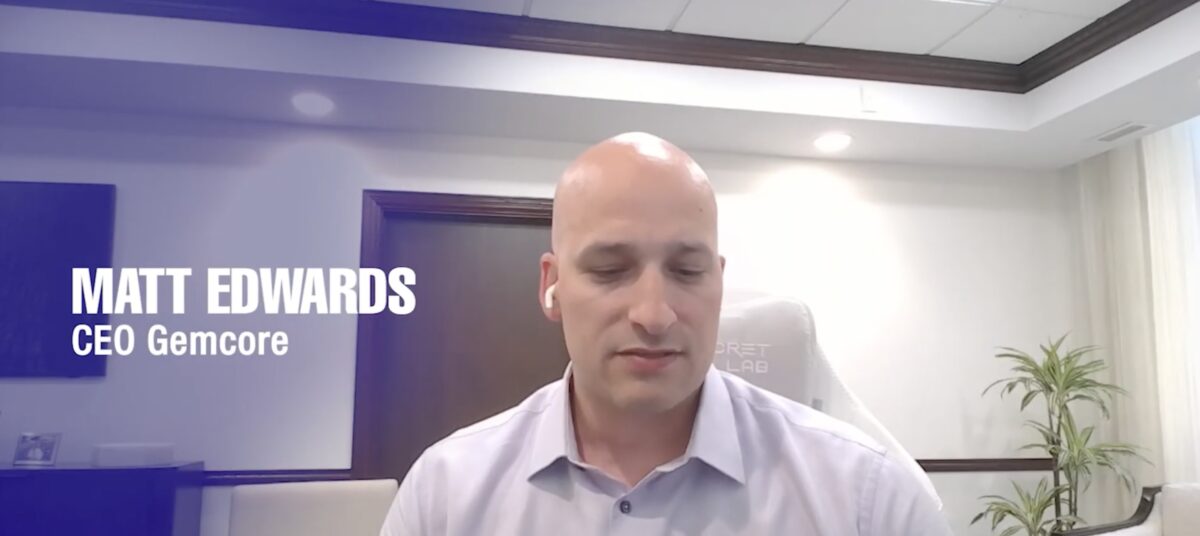
Matt Edwards, CEO of Gemcore, traces his company’s path from a 1992 over-the-counter mail order catalog founded by his parents into a pharmaceutical-grade diabetes supply distributor built to serve the CGM and insulin pump boom. Edwards shares how packing boxes and traveling the country in an entry-level sales role taught him the DME industry from the ground up, and how open communication, networking, and hiring people who complement his weaknesses shaped his leadership style.
In This Episode
The conversation covers how healthcare distribution has become more regulated and technology-driven, rapid CGM adoption, expanding pump and CGM eligibility (including type 2 patients), the growing overlap between pharmacy and DME channels, and concerns about CMS competitive bidding. Edwards closes with predictions on how DMEs will modernize through APIs and eligibility visibility, and advice for young leaders to prioritize data literacy and face-to-face networking.
Key Section Headings & Content
- Duration: 36:10
- Guest: Matt Edwards, CEO, Gemcore
- Hosts: Alex and Wayne (Claim to Fame DME Podcast)
(1:25) Introduction — From Stapling Catalogs to CEO: Matt Edwards’ Gemcore Story
Matt Edwards is the CEO of Gemcore, a second-generation, family-owned business his parents founded in 1992 after his father left a logistics role at Revco Drug Store and his mother, a registered ICU nurse, backed him in starting the company from their basement. What began as an over-the-counter mail order catalog for products like toothbrushes and toilet paper flopped — until diabetes supplies took off, driven by a lack of existing distribution and manufacturers who needed help getting large, early devices into patients’ hands. “You can’t start a business in your basement anymore, especially with prescription medical devices,” Edwards says, reflecting on how far the industry has come in 34 years.
(3:23) Learning the Industry From the Road: Sales, Reimbursement, and Building a Network
Edwards didn’t have much of a choice about entering healthcare — he joined the family business full-time in 2006 after Ohio State, starting on the phones before spending years traveling to DME businesses around the country. That time on the road, he says, is where he learned the most about reimbursement, workflows, and the challenges facing DME owners. “I just love the fact that this industry is so close and everyone can be competitors, but friends at the same time, because we’re all facing common challenges, especially in diabetes.”
(5:25) Lessons Before Leadership: Packing Boxes, Open Communication, and Hiring for Your Weaknesses
Even now, Edwards still goes out to pack boxes to understand workflows firsthand before making strategic decisions. He credits open, granular communication between managers and staff for surfacing investments that pay off at scale, and points to networking as essential for sharing expertise across the industry. His biggest lesson: “Surround yourself with people that are smarter than you” and hire talent that turns your personal weaknesses into organizational strengths.
(7:00) From Paper Pick to AI-Driven Warehouses: How Distribution Has Modernized
Gemcore’s operations have gone from paper pack slips to fully automated, serialized, scanned fulfillment — a shift driven by diabetes supplies becoming regulated prescription devices requiring temperature, humidity, storage, and security controls. Edwards describes a two-and-a-half-year search for automation technology suited to small package parcels (as opposed to large industrial goods), and credits software and AI-driven prioritization for making warehouse decisions faster and more precise than the old paper-stack system.
(8:55) Why Diabetes Distribution Has to Be Pharmaceutical-Grade
One of the biggest misconceptions about healthcare distribution, Edwards says, is what the facilities actually look like. Because diabetes supplies are prescription devices, the shipping facility has to be “pharmaceutical grade, almost like a manufacturing facility” — a standard his father, a former pharmaceutical industry veteran, instilled early. “You’d eat a steak off the floor,” Edwards says, pushing back on assumptions that warehousing means dirt floors and no climate control.
(9:52) The Diabetes Growth Story: Patch Pumps, Expanding Eligibility, and the Pharmacy Channel
Edwards describes diabetes technology as still in its “early innings,” with rapid advancement in disposable patch pumps and CGMs opening eligibility beyond type 1 patients to type 2 patients, who are now showing significant benefits from connected pump and CGM use. He also points to pharmacies increasingly carrying CGMs and patch pumps as a major shift, creating dual-channel access alongside traditional DME distribution — something Gemcore, through its role on the Home Care Diabetes Council, advocates keeping open so patients and doctors can choose the channel that fits.
(13:58) More Than a Distributor: Gemcore as an Extension of the DME and a Resource Hub
Gemcore’s core competency, Edwards explains, is moving truckloads of CGM and pump product in and shipping small patient packages back out under the DME’s own branding — making Gemcore an invisible extension of its DME partners. Beyond logistics, Gemcore acts as a connector, routing DMEs to the right consultants, associations, and industry contacts when questions arise that Gemcore itself can’t answer, like Medicare billing or LCD guidance.
(15:33) Why CGM Adoption Took Off: Data, Connected Health, and the “Badge” Effect
Edwards attributes rapid CGM adoption to a broader cultural shift toward wearable health data — the same instinct driving Apple Watch adoption. Where blood glucose checks used to be single-point-in-time finger pricks, CGMs now reveal patterns tied to food, stress, sleep, and hydration in real time. He also notes CGMs have become socially normalized, moving from OTC lifestyle tools for non-diabetics to an accepted, almost unremarkable wearable.
(19:02) The Next Generation of Diabetes Tech: Smaller Devices, Smarter Algorithms
Looking ahead, Edwards expects insulin pumps to keep shrinking into smaller, patch-based, iPhone-controlled form factors, with CGMs and pumps growing more interconnected through AI algorithms that learn a patient’s body and eventually automate dosing. He compares the shift to Tesla’s software update model — the hardware stays largely the same while firmware upgrades continuously improve the experience, reducing the burden on patients to interpret their own data.
(22:03) Where DME Is Headed: APIs, Eligibility Visibility, and the “Pizza Tracker” Patient Experience
Edwards predicts DMEs will need to modernize using software the way pharmacy already has — automated prior auth, real-time eligibility checks, and fewer manual steps. He envisions API connectivity giving patients a “Papa John’s Pizza Tracker”-style view of their order status and coverage across both DME and pharmacy channels. “A DME shouldn’t be just this back-office paperwork company anymore.”
(24:24) Concerns on the Horizon: CMS Competitive Bidding, GLP-1s, and Access
Edwards flags CMS competitive bidding and potential 2028 changes bundling insulin pumps into a rental model as real access risks the Home Care Diabetes Council is actively working to address. On GLP-1s and weight loss drugs, he notes type 2 diabetes penetration is still under 10%, so even significant reductions in type 2 incidence still leave a large underserved population — meaning he doesn’t see GLP-1 adoption undercutting long-term diabetes distribution demand.
(30:23) Building Trust: Partnerships, Networking, and Advice for Young Leaders
Edwards credits Gemcore’s relationships with manufacturers, DMEs, payers, and even software vendors — plus his new role chairing the Home Care Diabetes Council — as proof that collaboration, not competition, sustains the industry through challenges like competitive bidding. His advice to young healthcare leaders: get comfortable with data and dashboards early, and prioritize face-to-face networking with industry veterans whose experience “you can’t learn in a book.”
Rapid Fire Round
- CGMs or insulin pumps? Insulin pumps.
- Most overrated healthcare buzzword? Workflow.
- Cleveland Browns or Ohio State football? Ohio State.
- Most-used app on your phone? Probably Game Changer — or Microsoft Outlook, if we’re talking work.
- If you weren’t in healthcare, what would you be doing? Probably selling something — “don’t know why.”
- If Gemcore had a mascot, what would it be? Superman.
- Favorite family tradition? A big Christmas Eve gathering with the whole family — Christmas Day was never really a thing.

Explore More Episodes