


 22:23 to watch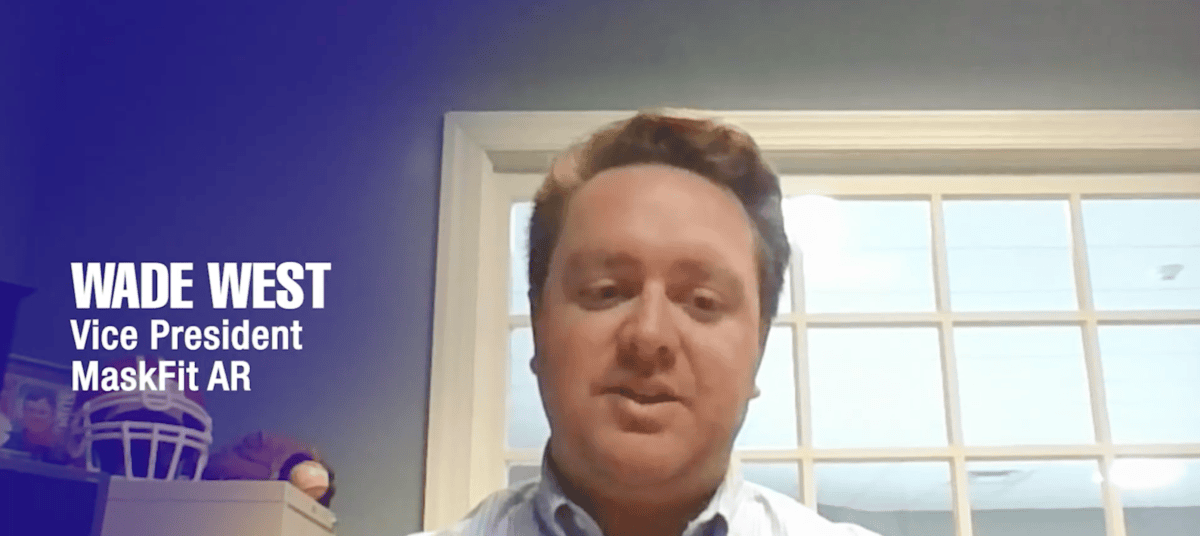
In this episode for the Claim to Fame podcast, Alex and Wayne interview Wade West, Vice President of MaskFit AR, about the company’s facial scanning technology designed to help CPAP patients find the right mask and size the first time.
What Topics Does This Episode Cover?
West explains MaskFit AR’s origins (about 14 years in development), its mask recommendations based on facial anatomy plus clinical questions (pressure, sleep position, deviated septum), and key differentiators including global patents for privacy/security (no patient photos transmitted) and nostril scanning accuracy under 0.1 mm for nasal pillow sizing. He discusses how poor mask fit drives noncompliance (50–55% average compliance; many cite the mask), ROI from reducing costly refits, and a fast workflow via web link/QR code with optional patient mask selection and virtual try-on. The conversation covers adoption barriers, interoperability via open APIs, and a future “Amazon-like” remote, monitored CPAP journey.
- Podcast Episode: How MaskFit AR Uses Facial Scanning and AI to Improve CPAP Mask Fit and Compliance
- Guest: Wade West, Vice President, MaskFit AR
- Hosts: Alex & Wayne (NikoHealth)
(1:08) Introduction — Who Is Wade West?
Wade West is Vice President of MaskFit AR, a facial scanning technology company built to help CPAP patients find the right mask the first time. The company’s underlying technology has been in development for close to 14 years, originating out of Vancouver, B.C., with founders whose background includes respiratory therapy. The team was deep into development when COVID hit in 2020, delaying launch — meaning MaskFit AR was early to start building but later to market than some competitors.
(2:02) Anatomical Scanning, Not Guesswork
MaskFit AR scans a patient’s face to capture anatomical data, then combines that with clinical inputs — pressure settings, sleep position, deviated septum, and other questionnaire responses — to recommend the right mask. Two features set it apart: a global patent around security (MaskFit AR never transmits or stores patient photos), and a patent on nostril scanning, which measures nostril dimensions at sub-millimeter accuracy to size nasal pillows precisely rather than relying on guesswork.
(4:11) How Much of CPAP Non-Compliance Comes Down to Mask Fit
West points to the scale of the problem: an estimated 80% of OSA patients remain undiagnosed, and even once patients start therapy, national CPAP compliance sits around 50-55%. Of those non-compliant patients, roughly 80% cite the mask itself as the reason. MaskFit AR’s core mission is squarely aimed at that gap — getting the right mask to the patient on the first try.
(5:39) Why Mask Fitting Has Historically Been Hard to Get Right
Traditional mask fitting relied on tools like cardboard cutout sizing guides, which offer no reliable way to determine whether a patient needs a small, medium, or large nasal pillow. MaskFit AR’s scan-based nostril measurement replaces that guesswork with a specific size recommendation — which also has a direct revenue implication for DME providers, since knowing the correct size and cushion upfront means providers can dispense the right supplies on day one and capture reimbursement in the first 90 days, rather than shipping fit packs or guessing and absorbing replacement shipping costs later.
(7:32) Walking Through the Patient Scan Experience
MaskFit AR is a cloud-based, web platform (the company has moved away from a downloadable app). Providers can deploy the scan via text, email, or an in-store QR code. The patient sees instructions, runs a practice scan, then completes the real scan — which measures nostrils via a head-tilt prompt and never displays or stores the patient’s face. A clinical questionnaire follows. Depending on how the DME provider sets things up, the patient can either browse and select from the provider’s mask formulary directly — including a virtual try-on feature to preview how a given mask style looks on their face — or simply have the results routed straight to the provider under their own private label, without the patient seeing the recommendation themselves. The entire process, scan plus questionnaire, takes under 30 seconds.
(10:55) Where the ROI Comes From
West cites refit costs in the range of $50-100 per instance, compared to just a couple of dollars for a scan. Beyond the direct cost savings, getting the mask right the first time correlates with better long-term compliance — every additional refit or mask swap tends to correlate with declining adherence. Given CPAP’s resupply-driven business model, getting patients into the correct mask early also sets them up to be reliable long-term resupply patients.
(12:31) What Actually Differentiates MaskFit AR
Beyond first-mover development, West points to the security patent as foundational — MaskFit AR is built so that no patient photos are ever transmitted, which he frames as increasingly important in an era of AI-driven deepfake concerns. That security-first design has also allowed the platform to launch globally, which matters for an AI-driven system that improves by learning from scans across different regions and ethnicities.
(13:35) Has Provider Adoption Been Slow?
West is candid that adoption has been an uphill climb, more so than he initially expected — building trust in facial scanning technology takes time. He points to recent momentum, though, including a Medtrade conversation where a longtime holdout provider said they were finally ready to adopt mask scanning technology, and describes providers increasingly recognizing the tool is backed by real data on reduced refits.
(14:37) What It Actually Takes for a DME to Implement This Successfully
MaskFit AR shifted from an app to a web-based platform specifically to lower the adoption barrier, and has built a modular system with open APIs so the technology can embed into a provider’s existing daily workflow rather than requiring the provider to adapt to a new one. The approach: ask providers how their day already works, then build the integration around that.
(17:22) Biggest Barriers to Adoption
The top barrier, in West’s experience, is lingering concern about facial scanning and data security — which is why MaskFit AR treats security messaging as a priority when onboarding new customers. The second barrier is simply behavior change, which the company addresses by embedding the technology into workflows providers already use rather than asking them to adopt an entirely new process.
(18:41) Where AI Takes Sleep Therapy Next
West sees AI playing an increasing role across the entire CPAP journey — from more efficient OSA diagnosis, through mask selection and therapy initiation, to long-term resupply support.
(19:27) The Ideal CPAP Patient Journey of the Future
West’s vision leans on what he calls the “Amazon effect” — the convenience patients now expect from same-day delivery translating into DME. In his ideal version, a patient is diagnosed efficiently by their physician, receives a scan link to identify the right mask, gets that product delivered conveniently, and has their therapy monitored remotely going forward — removing friction at every step of the journey.
(21:10) Rapid Fire Round
- Early mornings or late nights? Early mornings.
- Coffee or energy drinks? Coffee, all day.
- iPhone or Android? iPhone.
- Road trip or flight? Road trip.
- One food you could eat every day without getting sick of it? Fried okra.
- If you weren’t in healthcare, what would you be doing? Something in sports — coaching, most likely.

Explore More Episodes