


 25:52 to watch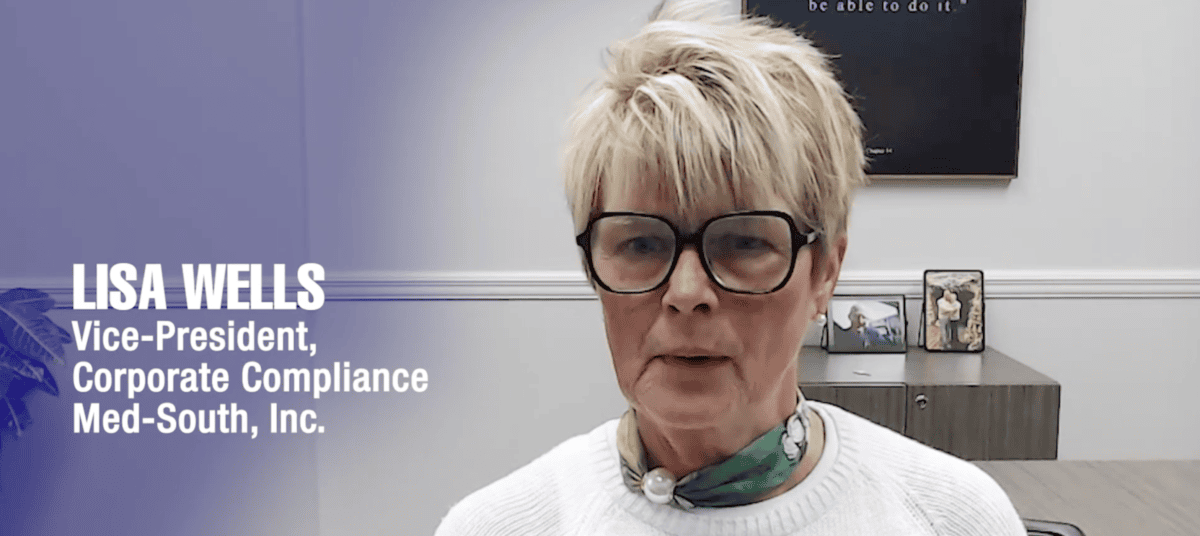
On the Claim to Fame podcast, Alex and Wayne interview Lisa Wells, Senior Vice President at MedSouth Inc., a multi-state home medical equipment provider based in Alabama and licensed in over 40 states, with physical presence in Alabama, Florida, and South Carolina and recent acquisition-driven growth.
Key Topics
Wells describes her 24-year path from knowing nothing about DME to leading organization-wide compliance and operations, emphasizing the industry’s constant regulatory change, payer guideline shifts, competitive bidding impacts, and operational challenges like integrating different software and training staff. She highlights common compliance pitfalls around CMS provider enrollment maintenance amid a moratorium and increased scrutiny on fraud, waste, and abuse, urging suppliers to engage with AAHomecare, VGM, and state associations like ADMEA to advocate effectively. Wells stresses culture, trust-based leadership, and servant leadership, and predicts growth in home-based care, rising Medicare beneficiaries, greater disease management focus, and major technology-driven change and efficiency gains.
- Podcast Episode: Med-South’s Lisa Wells on DME Compliance, Provider Enrollment, and the Future of Home-Based Care
- Guest: Lisa Wells, Senior Vice President, Med-South, Inc.
- Hosts: Alex and Wayne (NikoHealth)
(1:41) Introduction — Who Is Lisa Wells and What Is Med-South?
Lisa Wells is Senior Vice President at Med-South, a home medical equipment provider headquartered in Alabama with a physical presence in Alabama, Florida, and South Carolina, and licensed in over 40 states. Wells joined the company nearly 24 years ago with no DME background, initially expecting to be responsible only for her own work — she ended up becoming the organization’s compliance officer, responsible for compliance across the entire company, and has since chaired state boards, advised AAHomecare, and served on Medicare advisory councils.
(3:08) From Compliance Officer to Senior Vice President
Wells never expected her career to move from credentialing and compliance into leading operations statewide. The shift happened when Med-South’s senior vice president passed away unexpectedly, and Wells stepped in alongside another partner to help run the company — a role she’s now held for about two years. Of everything she’s done, she says compliance taught her the most; operations, negotiation, and collaborative problem-solving are where she feels she thrives.
(4:32) What’s Changed Most in DME Since She Started
Wells points to shifts in payer guidelines as the biggest change over her career — more third-party contractors, changing rates, and providers lost to competitive bidding. She’s careful to note the industry needs to protect good suppliers of every size, since no single company can serve every patient alone.
(5:25) Scaling Through Acquisition: The Operational Challenges
Med-South has completed a number of acquisitions in recent years, and Wells says the recurring challenge is integrating different software systems while training incoming staff on regulations that keep changing before anyone fully masters them. Beyond understanding the letter of each guideline, she stresses understanding the intent behind it — Med-South’s focus has been on outcomes: making sure customers’ needs are met so they can stay safely at home.
(6:45) What Separates Great DME Operators from Average Ones
Wells’s answer centers on never losing sight of who a provider serves — referral sources, hospital partners, patients, and employees alike. She frames this as a servant leadership mindset that has to hold across every one of those relationships at once.
(7:17) Where Providers Commonly Get Compliance Wrong
Wells identifies provider enrollment maintenance as the area suppliers most often underestimate, especially with CMS’s current moratorium in place — a supplier that loses its billing number risks not getting it back, and the moratorium (initially framed as six months) has been extended for years in other program areas before. Her read: the industry supports fighting fraud and abuse, but smaller suppliers in particular tend to treat enrollment as a one-time task rather than something requiring constant updates.
(8:49) Is the Industry Improving on Compliance?
Wells sees real progress — providers have the desire and the intent, and Med-South has focused on educating suppliers nationally and connecting them to the right help when problems arise. Her assessment: improvement is happening, but there’s still substantial work to do on education.
(9:49) Leadership Style and Building Trust
Wells describes her approach as surrounding herself with people who know more than she does and giving them the tools to succeed. She credits mentors who helped her grow from zero DME knowledge into her current role, and says paying that forward is a driving motivation. On culture, she emphasizes trust over fear: teams need to feel safe bringing problems forward rather than hiding them, with a focus on collaborative fixes rather than blame.
(11:11) Staying Motivated Through Regulatory Upheaval
Wells’s approach is to find the silver lining in every shift — competitive bidding, provider enrollment changes, and the rise of third-party administrators among them. Her personal motto, “be unstoppable,” is something she says she reinforces daily.
(12:43) Top-of-Mind Challenges with Medicare and Payers
Wells flags confusion around how the current Medicare enrollment moratorium affects acquisitions (they’re still possible, but have to be structured correctly) and the shift toward more supply-driven, regionally distributed competitive bidding models, including mail-order components some providers aren’t positioned to serve. She notes new entrants continue to join the industry despite the complexity, often bringing fresh perspective from outside DME.
(14:17) Do Providers Have Enough of a Voice in Policy?
Wells doesn’t think providers currently have enough input before rules are finalized — by the time a proposed rule is posted for comment, many of the underlying decisions have already been made. She sees growing engagement now and encourages providers to get involved through associations rather than stay on the sidelines.
(15:33) Advisory Councils and State Associations Worth Following
Wells points to AAHomecare and VGM as organizations with strong policy connections and collaborative reach across the industry. Her own path started with involvement in the Alabama Durable Medical Equipment Association (ADMEA), which opened doors to the Jurisdiction C Council, a national provider enrollment advisory council, and payer-focused councils with AAHomecare — advocacy, she says, only works if providers actually show up and participate.
(19:33) Where DME Is Headed Over the Next 3-5 Years
Wells expects a wave of new Medicare beneficiaries as the population ages, alongside continued growth in commercial disease management. She sees home as the safest and most cost-effective care setting compared to hospital or skilled nursing, and expects the industry to keep investing in making that possible at scale.
(20:42) Which Providers Are Positioned to Win Long Term
Wells sees room for multiple business models to succeed — national platforms, strong regional players, and smaller, locally owned providers alike — but expects technology to reshape the industry substantially over the next five years, to the point that it won’t look like it does today.
(21:16) Operational Efficiency as Margins Tighten
Wells calls operational efficiency critical, and pushes back on the fear that automation eliminates jobs. Her view: technology frees staff who currently have to know everything to focus specifically on patient-facing customer service — a better use of that skill set, not a reduction of it.
(22:41) What Excites Her Most About the Future of Home-Based Care
Wells expects the industry to look unrecognizable within five to ten years given how much opportunity exists to serve more patients at home. She frames the pace of innovation and opportunity in the U.S. market as what excites her most about what’s ahead.
(23:48) Rapid Fire Round
- Medicare audit or commercial insurance denial? Medicare audit.
- Accreditation survey or software migration? Accreditation survey.
- Favorite conference city? Anywhere in the USA.
- One DME buzzword you’d ban forever? “Durable medical equipment” — Wells prefers “home medical equipment.”
- Beach vacation or mountain cabin? Beach vacation.
- Early bird or night owl? Early bird.
- Most Alabama thing about you? Her accent.

Explore More Episodes