


 28:41 to watch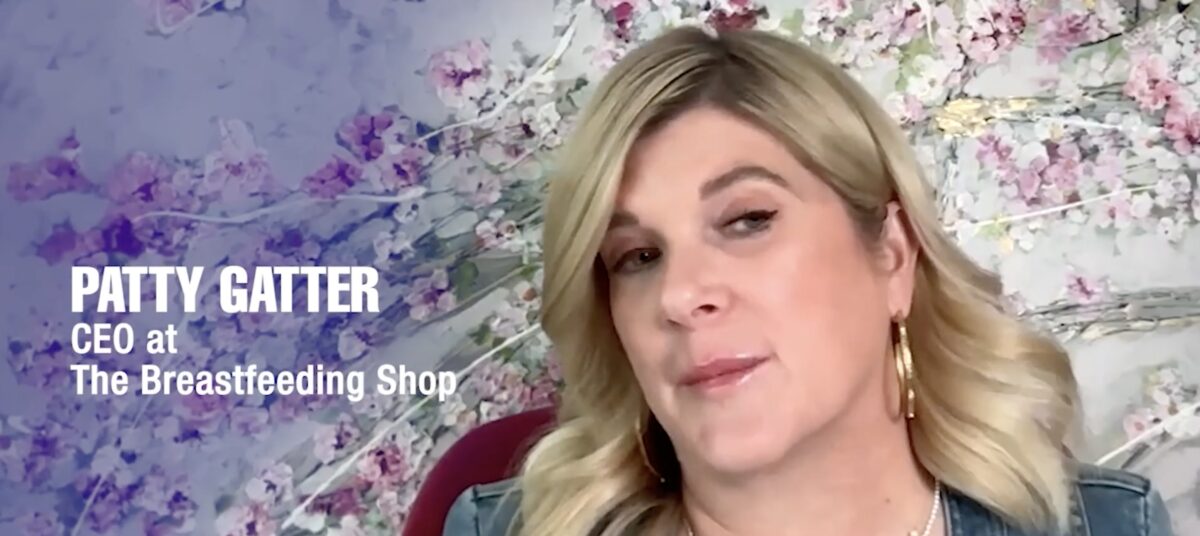
On the Claim to Fame DME podcast, Patty Gatter, founder of The Breastfeeding Shop, shares how she started the company in 2015 as a mom and breastfeeding advocate after recognizing that the Affordable Care Act would make breast pumps a covered insurance benefit starting January 2015.
In This Episode
Drawing on prior DME and manufacturing experience plus social media marketing, she grew quickly by going direct-to-consumer online rather than traditional hospital-based DME sales, reaching a breakout point in July 2015. She discusses early challenges (credentialing, contracting, billing, hiring, workflows), the importance of authenticity, and today’s maternal health trends: wearable pumps, new features like warming/massaging, newly covered pump supplies (valves/membranes), and interest in pelvic floor therapy products, including Medicare approval of non-implantable pelvic floor stimulation. She emphasizes making ordering easy and fast, like an Amazon experience, and offers entrepreneurial advice focused on grit and doing the “unfun” work.”
- Duration: 28:41
- Guest: Patty Gatter, Founder, The Breastfeeding Shop
- Hosts: Alex and Wayne (Claim to Fame DME Podcast)
(1:33) Introduction — “I Always Start Every Sentence With ‘I’m a Mom'”
Patty Gatter is the founder of The Breastfeeding Shop, which she launched in 2015 as a mom and an advocate for breastfeeding. She describes the start as “a little bit of a terrifying moment” — a leap of faith that began with turning to her husband and saying, “hey, listen, I’ve got to start this business. Now is the time.” He gave her a thumbs up. Today the company is a national brand, and Gatter is candid about what growth actually feels like from the inside: learning how to be a CEO through “so many different iterations” of a company that keeps expanding.
(2:59) Seeing What Others Missed: The ACA and a Consumer-Driven Product
When most people picture DME, they picture wheelchairs, CPAP machines, and “bent metal” — not one of the industry’s fastest-growing categories. Gatter saw the opening when the Affordable Care Act passed and she realized breast pumps would become a covered benefit for the first time. She already had the two halves of the puzzle: DME and manufacturing experience (Princeton Medical Equipment out of college, then Invacare) plus social media marketing skills learned running online baby boutiques. Her key insight was channel, not product: “What I recognized very early on is this is a consumer driven product. So in my mind, we’re a .com, we’re a tech company at first.” Instead of calling on hospital case managers, she marketed directly to moms — who then walked into their doctor’s offices asking for a breast pump prescription.
(5:01) The Early Years: Contracting, Billing, Workflows, and a Lot of Hats
The startup years meant trying a lot of things and wearing a lot of hats — figuring out how to contract with insurance companies, how to bill, how to build a platform and a workflow, and how to hire the right people at the right time. Gatter set a modest goal of 50 pumps a month, enough to pay the bills. Volume arrived faster than the infrastructure did: former colleagues who owned a DME company noticed she “couldn’t even carry a sentence” and offered to take over her billing. “It was just a lot of learning on the spot, which I love the grit. I still love the grit today.”
(6:24) The Breakout Moment: July 2015
Six months in — July 2015 — the numbers told her the business would work. After months of credentialing and insurance contracting, orders went from a couple a day to 50 a day. What surprised her most was how eagerly moms filled out the online forms, with the entire ordering process running start to finish on the web. She credits authenticity for the pull: Facebook Lives, YouTube, showing her face. “I remember years ago, people would say, just order from Patty.” Reconnecting founder to customer is something she wants to bring back this year.
(7:55) Authenticity in the Age of AI
With AI-generated content flooding every feed, Gatter argues the human element matters more, not less — and that audiences can smell inauthentic content. She keeps herself in front of the camera on purpose, and pressure-tests relevance with her own teenagers, who can spot AI instantly, even though the company’s core customer is a millennial mom.
(8:47) How Breast Pumps Became a Covered Benefit — and Why It Changed the Industry
Before the ACA, breast pumps were a rental item. Gatter followed the legislative push to make them a covered purchase item, and coverage began in January 2015. She contracted with local insurance plans first, then Tricare — “that’s really where the brand became national.” Her framing of the category is broader than the device: “I always say we don’t sell breast pumps, but we help women in their whole journey of healthcare.”
(10:11) Maternal Health Trends: Wearables, Valves and Membranes, and Pelvic Floor Therapy
Three shifts stand out. First, replacement supplies: valves and membranes — small parts with outsized control over suction — became covered in January, with payers gradually adding them to fee schedules. Second, pelvic floor therapy, a category Gatter is actively researching, boosted by Medicare’s approval of non-implantable pelvic floor stimulation replacing the TENS unit code. Because incontinence is so often tied to childbirth, she hopes it becomes a strong category. Third, wearable pumps: the “big blue box” she once shared with her sister-in-law has been replaced by compact, wearable devices that are “so much cooler than they used to be.”
(12:10) What Moms Care About: Content Creators vs. IBCLCs
Purchase decisions increasingly track whatever content creators are talking about — and creators often hold a very different opinion about the right pump than an IBCLC does. Manufacturers are releasing new pumps at a relentless pace, and the newest features coming this summer are warming and massaging in a wearable form factor. Because wearables don’t work for every mom, Gatter notes IBCLCs are pushing more traditional tabletop pumps back into the conversation. “Now they’re warming, massaging, now they have a night light, so we’ll see what happens next.”
(13:37) The Online Breast Pump Community and Influencer Marketing
There is a large, active community around pumping that most DME operators never see — search breast pumps on Facebook and the algorithm takes over from there. Gatter describes the company’s first viral TikTok moment in 12 years, a post from a doula or midwife explaining different sized babies, and confirms influencer marketing is “a huge thing” in the category.
(14:24) Removing Barriers: Most Moms Don’t Know a Pump Is Covered
The biggest barrier is awareness. After doing this for a decade, Gatter has to remind herself that many moms simply don’t know insurance covers a pump — which is why her social media team keeps making that exact video. For some families, a few hundred dollars decides whether they attempt breastfeeding at all. The second barrier is choosing correctly: pumps “all sort of seem similar, but they’re all a little different,” and one may fit a specific mom far better than another. Her staff are so invested they call each other on weekends.
(15:59) Why Understanding the Patient Journey Matters
Pregnancy and postpartum are overwhelming, and Gatter frames her competitors as friends and fellow advocates for women’s health. What she optimizes for is ease: reaching out to doctors’ offices for moms who don’t have a prescription in hand, meeting moms online where the conversations start, and shortening the path from interest to delivered pump — even for a mom at 27 weeks who wants it now. “So the easier, the better, the quicker the better.”
(17:08) The Amazon Effect: E-Commerce, Speed, and Modern Platforms
Two years ago a two-week order turnaround was acceptable. Not anymore. “For whatever reason, it has to be an Amazon like experience” — fast fulfillment, visible reviews, and knowing what you’re getting before it arrives. That expectation drove her technology decisions, including moving to a modern platform with resupply built in, and rethinking communication: SMS and email campaigns, because “nobody looks at their emails. I don’t even look at my emails.”
(18:28) What Success Looks Like Beyond Shipping Equipment
Gatter still jumps in to help a mom directly every so often, because that’s where she takes the most satisfaction — even though running the company keeps her out of the day-to-day. Success, for her, is a mix of competitive drive and staying power: dominating the breast pump market, building connections, and adding new products. Growth has been continuous year after year, and downsizing isn’t on the table: “I’m not going to downsize, so it can kind of stay mom and pop. I’m just going to keep going straight up.”
(19:52) Where the Innovation Opportunities Are
Women’s health keeps expanding, and Gatter’s constraint is reimbursement, not product availability: “if the insurance companies would just listen to me.” She reads constantly and works relevant trade shows looking for products that make patients healthier — from pelvic floor devices to neuromodulation for headaches — then hopes payers will cover them. “Sometimes we’re at odds with each other.”
(20:55) On Being a Female Founder in Healthcare
Gatter doesn’t dwell on it day to day — “it’s just the way I’m made” — though she notices the imbalance at conferences, and pays attention to female entrepreneur groups discussing chronic underfunding. Bootstrapped from the start, her conclusion is pragmatic: “if you can prove yourself anywhere you can, that’s just what you have to do. It doesn’t matter if you’re male or female.”
(22:14) Creating Opportunities for Women — and Building With a Complementary Partner
Gatter believes women bring a skill set that complements men’s, and that confidence, not capability, is often the gap — compounded by carrying a household, kids, and a business at once. Her own model is complementary partnership: she’s the creative who loves sales and marketing; her husband Jim, who came from IT, is the technical half. She asked him to leave his job for The Breastfeeding Shop once the business took off, and he said yes immediately. “The two of us, because of our personalities and our complementary skill set, have just taken it next level.”
(24:18) Advice for Aspiring Healthcare Entrepreneurs: Do the “Unfun” Work
Her advice is unglamorous on purpose. “You’ve got to do the grit. You’ve got to do the — I call it unfun stuff to get to the fun stuff.” Research and study before you start, reach out to peers and like-minded businesses, then act: “don’t be afraid. Just do it.” Expect long days, but know the flexibility is real — she never missed a school concert. She’s an open book for anyone starting a healthcare business.
(25:49) The Next Five to Ten Years in Maternal Health
Gatter expects continued growth in awareness, more online maternal health platforms, and expanding pilot programs like doula and lactation coverage. She anticipates coverage extending slowly to more products across women’s health, with ongoing innovation on the pump side — and keeps an eye on forums like the Women of Wearables conference for what’s coming next.
Rapid Fire Round
- Tabletop pumps or wearable pumps? Tabletop pump.
- Gold heels or sneakers? Sneakers — though she owns plenty of gold heels.
- Early bird or night owl? Early bird, 4 a.m.
- If you weren’t in healthcare, what would you be doing? Starting another business — “that’s all I love to do.” Maybe a shoe company, or a margarita hut on an island somewhere.
- Guilty pleasure TV show? The Brady Bunch (and Goonies, if movies count) — plus Selling Sunset, because she loves real estate shows.
- Window seat or aisle? Window seat.
Connect with Patty: patty@thebreastfeedingshop.com

Explore More Episodes