


 40:33 to watch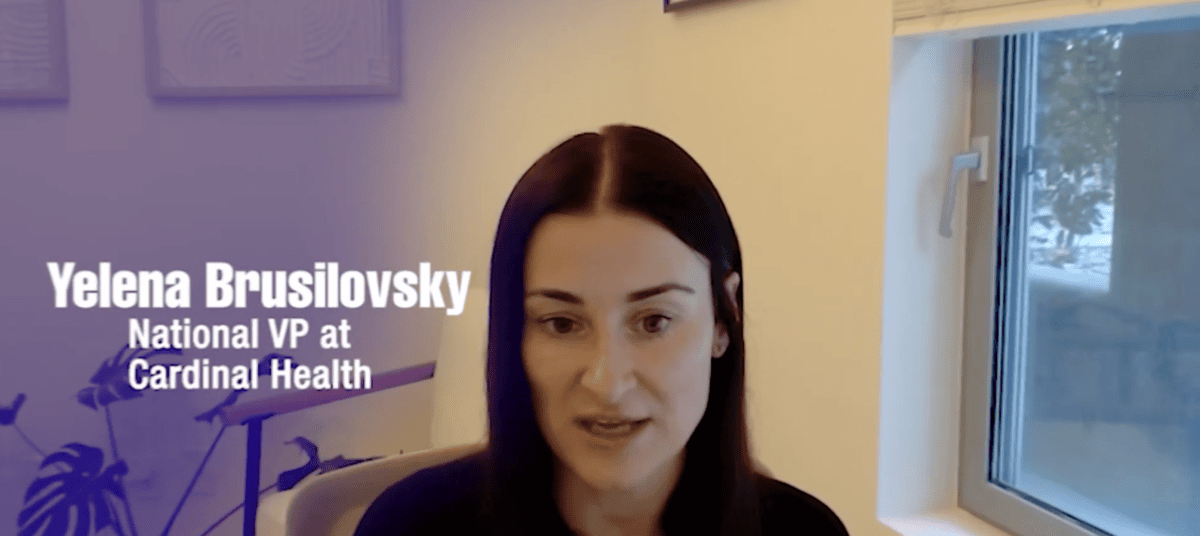
In this episode of the Claim to Fame podcast, Alex and Wayne host Yelena Brusilovsky, National Vice President of Commercial Sales for Edgepark and Advanced Diabetes Supply Group at Cardinal Health.
Main Takeaways From This Episode
Yelena shares her expansive journey in the healthcare industry, including insights into the evolution of payer relationships, the critical role of digital transformation, and opportunities for growth in the DME and HME sectors. The conversation highlights the importance of leveraging AI and technology to improve efficiencies and outcomes, while also emphasizing the enduring value of human elements and strategic partnerships in healthcare. The episode wraps up with a fun rapid-fire round and Yelena flipping the script with her own questions.
Podcast Transcription
- Podcast Episode: Transforming Healthcare Sales: AI, Partnerships, and Industry Evolution
- Guest:Yelena Brusilovsky, National Vice President of Commercial Sales for Edgepark and Advanced Diabetes Supply Group at Cardinal Health
- Hosts: Alex & Wayne (NikoHealth)
(0:00) Introduction — Who Is Yelena Brusilovsky?
Yelena Brusilovsky joins Claim to Fame as National Vice President of Commercial Sales for Edgepark and Advanced Diabetes Supply Group (ADSG), both part of Cardinal Health at Home Solutions. She’s spent 14 years at Cardinal Health and built her entire career in home care and long-term care. She started as a sales rep in Georgia carrying a bag for Covidien, selling incontinence products, wound care, enteral, and traditional DME supplies. When Medtronic acquired Covidien, she stayed in the home care and alternate-site market. In 2017, when Medtronic sold its patient recovery division to Cardinal Health, she came along with it — and she’s led at Edgepark and ADSG for the last four years.
(3:12) Leading Three Sales Teams at Edgepark and ADSG
In her current role, Yelena leads three selling teams: a Urology and Ostomy team focused on HCP relationships, a market access team that manages payer partnerships, and a Medicare Advantage broker sales team that works with brokers and agents on diabetes management referrals. She also oversees payer contracting and sales operations — giving her a wide view across clinical, payer, and commercial functions in the home care and long-term care space.
(4:24) How Payer Relationships Have Evolved Over 14 Years
Asked what’s changed most since she started, Yelena points to payers shifting away from traditional fee-for-service contracting toward value-based care and capitated arrangements. That shift has changed what a sales career in this industry looks like, too — she describes a move from a transactional model to one where sales professionals act as true consultants, aligning solutions with a customer’s specific goals rather than just moving product.
(6:06) From Equipment Suppliers to Vital Clinical Partners
Yelena believes the operators getting it right are the ones embracing DME’s evolution from a supply-delivery function into a vital clinical partner in the healthcare ecosystem. She backs this with the demographic tailwind behind it: roughly 11,000+ Americans turn 65 every day, about 90% say they want to age in place, and hospital-at-home models can cost 30–50% less than an inpatient stay. Combined with rising chronic condition rates, she sees home care becoming the connected hub for care that used to require a facility.
(10:25) Where the Biggest Growth Opportunities Lie in DME
On growth, Yelena points to payer mix diversification as a major lever — some DMEs lean heavily on government payers (Medicare, Medicare Advantage, Medicaid), others on commercial, and the strongest players build access across both. She also flags the current Medicare Advantage recalibration, where several major national payers are exiting markets in 2026 after two decades of steady MA enrollment growth. That’s opening the door for Special Needs Plans (SNP) and Chronic Condition Special Needs Plans (C-SNP), which are structured specifically for populations that are heavy DME users — including patients with chronic conditions or dual Medicare/Medicaid eligibility.
(13:07) The CMS Interoperability and Prior Authorization Rule
Yelena highlights the CMS interoperability and prior authorization final rule as a significant recent shift for HME operations. The rule requires impacted payers — Medicare Advantage and Medicaid among them — to modernize systems with standardized APIs for data exchange, moving away from manual faxes toward electronic prior authorization. (Note: confirm the exact effective date before publishing — Yelena references January, but this is worth a quick verification pass.)
(15:05) AI at the Point of Intake: Catching What Humans Miss
She points to AI’s growing role in reading incoming faxes and pulling structured data out of unstructured clinical notes — for example, identifying a specific mention of recurring hyperglycemia or a patient testing blood glucose four times a day, buried deep in a 50-page progress note. Matched against payer LCDs in real time, this reduces claim denials and helps patients start therapy faster.
(18:25) Has DME Resistance to New Technology Faded?
Wayne and Alex weigh in here too: resistance to adopting new technology has largely faded, but execution and implementation remain the real hurdle — especially for organizations trying to figure out what a “digital transformation” actually looks like in practice. Referencing Crossing the Chasm, Wayne suggests the industry has moved past early adopters and is now crossing from the early majority into the late majority, meaning broader adoption is coming. Yelena adds that early results are already showing up in the data — automated prior authorization workflows are cutting review turnaround times by roughly 70%, which is accelerating adoption elsewhere.
(21:32) What Separates a Vendor from a True Strategic Partner
Cardinal Health operates two relevant business lines: a wholesale distribution arm (Cardinal Health at Home Solutions) that fulfills and ships products on behalf of other DME/HME companies, and the direct-to-patient insurance billing arm (Edgepark and ADSG) that Yelena represents. On the distribution side, being a partner means a strong product portfolio, dedicated distribution infrastructure (including AutoStore robotics for faster picking and packing), and advocacy work alongside organizations like AAHomecare to support sustainable reimbursement. On the ADSG side, it means designing solutions that work for payers focused on reducing total cost of care and improving Star Ratings and HEDIS measures. The common thread: understanding the customer’s pain points well enough to solve for them intentionally.
(25:08) A Leadership Lesson on Giving Others Room to Grow
Yelena shares a leadership lesson from an article her HR business partner sent around: a story about a manager who took back a client presentation from a junior employee instead of letting them own it — effectively robbing them of a growth opportunity. It resonated with her approach to leading her own teams: giving people the chance to present to payers, build influence in the industry, and have a seat at the decision-making table, rather than keeping those moments for herself.
(28:12) Balancing Discipline with Autonomy for High Performers
Having spent years as an individual contributor herself, Yelena says the transition into managing teams meant learning to let go and trust her people — creating room for them to fail, try again, and grow, while staying open to coaching feedback in both directions.
(30:10) The Overlooked Trend: Network Resiliency
Asked what’s not getting enough attention in healthcare distribution, Yelena points to network resiliency — a priority that spiked during COVID-era supply disruptions but has faded from the conversation since. For an industry delivering life-sustaining equipment, she argues that partnering with distributors who’ve invested in stable, dedicated infrastructure still matters as much as it did during the pandemic.
(31:48) One Mindset Shift for DME Owners in 2026
Her advice for 2026: don’t try to boil the ocean. Smaller regional and local DMEs can feel pressure to chase enterprise-scale payer contracts, but Yelena argues the human element — the local provider who knows a patient by name — is a genuine, durable advantage that shouldn’t be sacrificed while chasing scale. Lean into what you already do best.
(33:54) Rapid Fire Round
- Planner or wing it? Planner.
- Loud laugh or silent laugh? Somewhere in the middle, depending on the moment.
- Airport early or just in time? Early — and she has strong opinions about travelers who roll their bags sideways through crowded terminals.
- Favorite city to travel to for work? Columbus is home, but Chicago or New York if she had to pick a favorite for work travel.
- Cats or dogs? Dogs.
- Group chat MVP or observer? Mostly an observer — though she admits to being a serial “text your thoughts as they happen” texter rather than someone who writes in paragraphs.
- Guilty pleasure TV show? The Sopranos — her current go-to background show while catching up on work at night.

Explore More Episodes